


Table of Contents
It is 10 o'clock at night in a city square and you are not inside the stadium. You are better off.
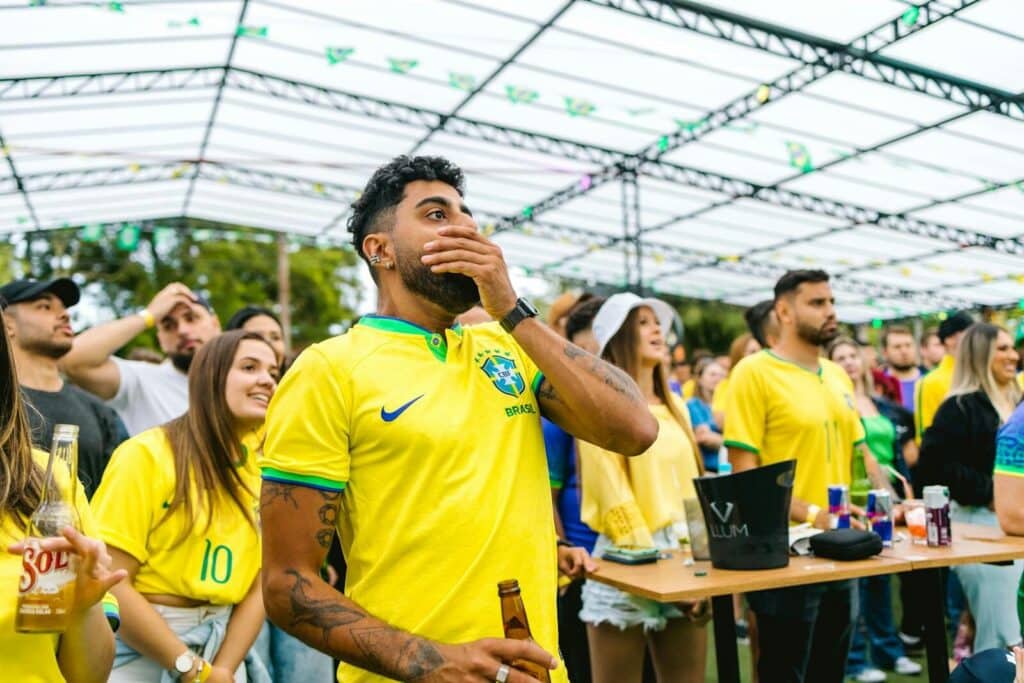
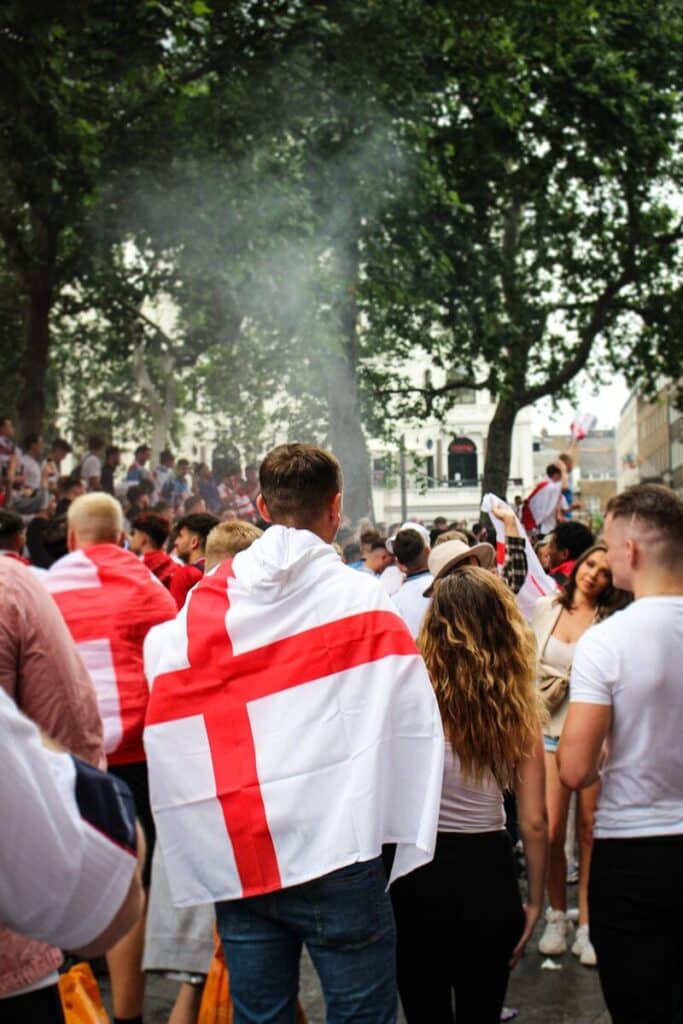
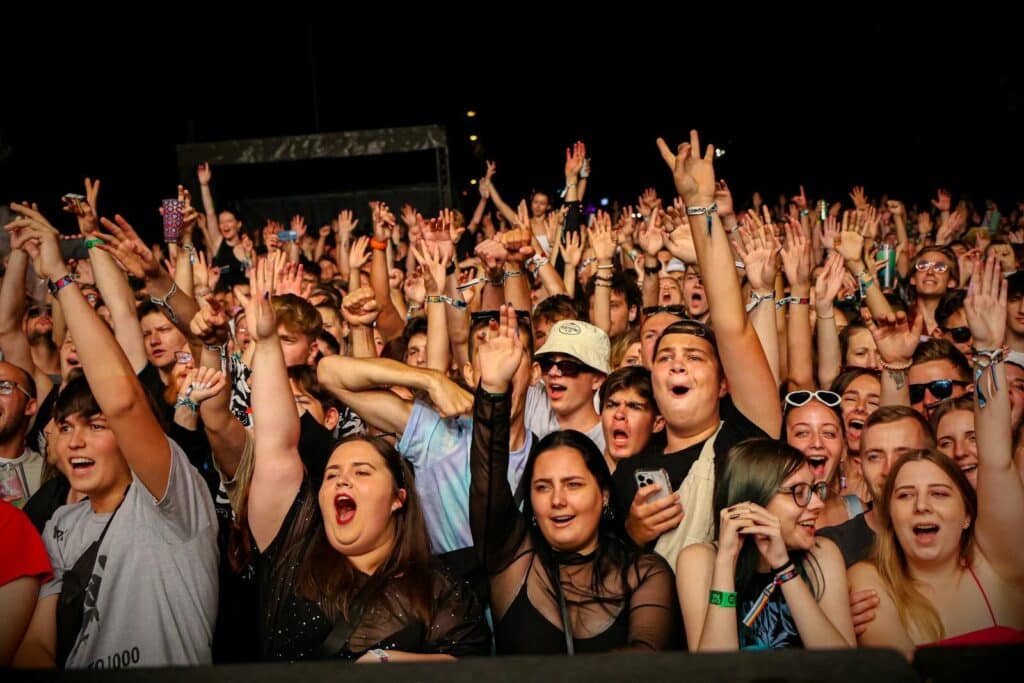
Anyone who has stood inside a FIFA Fan Festival when a goal goes in understands this immediately. Twenty thousand people erupting in unison, strangers from different countries embracing, chants bouncing off the walls of the buildings around you, the entire city feeling the same thing at the same second. A stadium has a roof. A fan zone does not. The sound goes straight up and so does everything else.
The World Cup 2026 FIFA Fan Festival network spans all 16 host cities across the USA, Canada, and Mexico — 39 days, 104 matches screened live, and a programming layer beyond the football that includes live concerts, cultural performances, street food markets, interactive football experiences, and the kind of cross-national gathering that only happens when the world's most-watched tournament comes to your city. This guide covers what each fan zone actually feels like, the cultural character of each city's festival, and how to choose between them.
At a Glance
Here is what this guide covers:
- What every fan zone includes: The consistent infrastructure across all 16 host cities
- What makes a great fan zone: The four factors that separate memorable from mediocre
- City-by-city atmospheres: The experience inside each fan zone — setting, crowd, cultural character
- Tier ranking: Which fan zones offer the best overall experience and why
- Concerts and cultural programming: What is confirmed beyond the football
- Best matches to attend each fan zone for: Which fixtures will create the best fan mix at each venue
- A day in the fan zone: What a typical fan zone match day actually looks like
What Every Fan Zone Includes
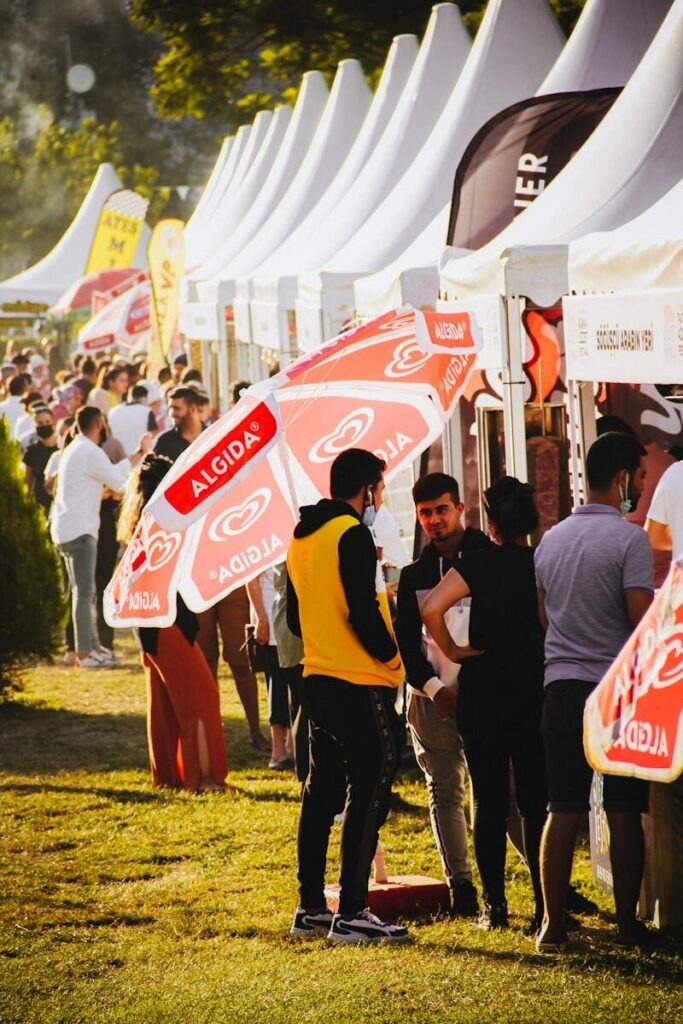
The FIFA Fan Festival is not just a screen in a car park. The 2026 edition — the first time the World Cup has been hosted across three countries with 16 cities — operates to a consistent standard at every location.
At every FIFA Fan Festival across all 16 host cities:
- Live big-screen screenings of all 104 matches, including simultaneous fixtures in other host cities
- Live music, DJ sets, and cultural performances before, during, and after matches
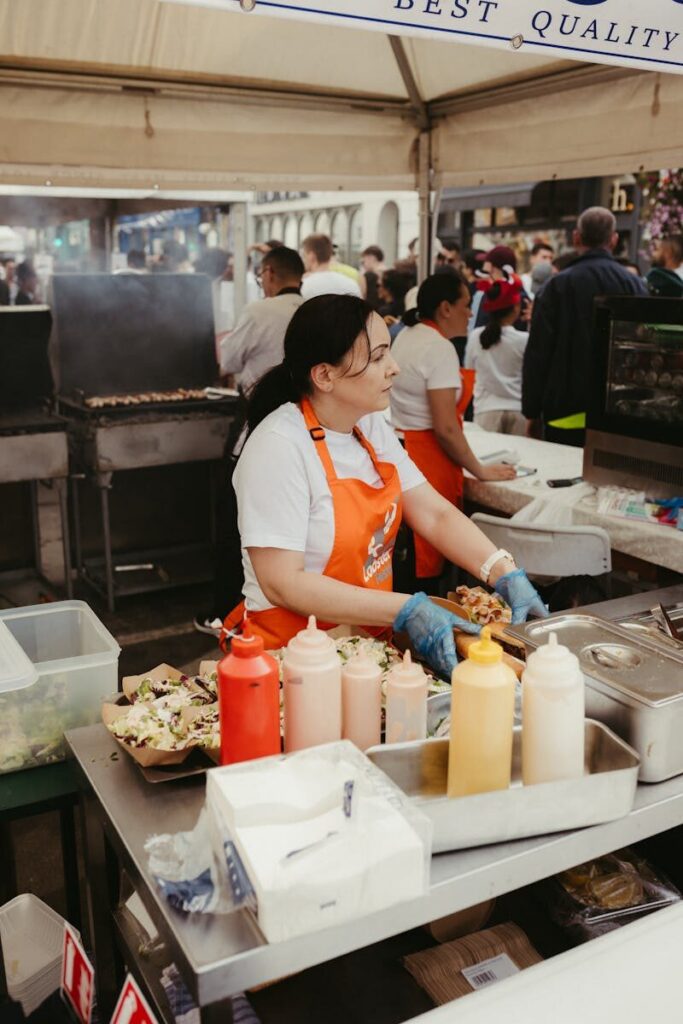
- Street food markets and food courts featuring local and international cuisine
- Football skills zones, mini-pitches, shooting challenges, and gaming installations
- Official FIFA World Cup 2026 merchandise zones
- Brand activations and sponsor experiences
- Photo moments and fan selfie installations
- Family-friendly areas with activities for children
The 2026 upgrade from previous editions: FIFA has described this as the most technologically advanced fan festival in the tournament's history. Real-time match statistics and interactive data visualisations are integrated into the fan zone screens, alongside AR (augmented reality) experiences at sponsor activation stations. The approach is more immersive and more locally inflected than previous editions — each host city has shaped its fan zone around its own cultural identity rather than a single FIFA template.
What Makes a Great Fan Zone
Not all fan zones are equal. The ones that become genuinely memorable — the kind fans talk about years later — share four factors.
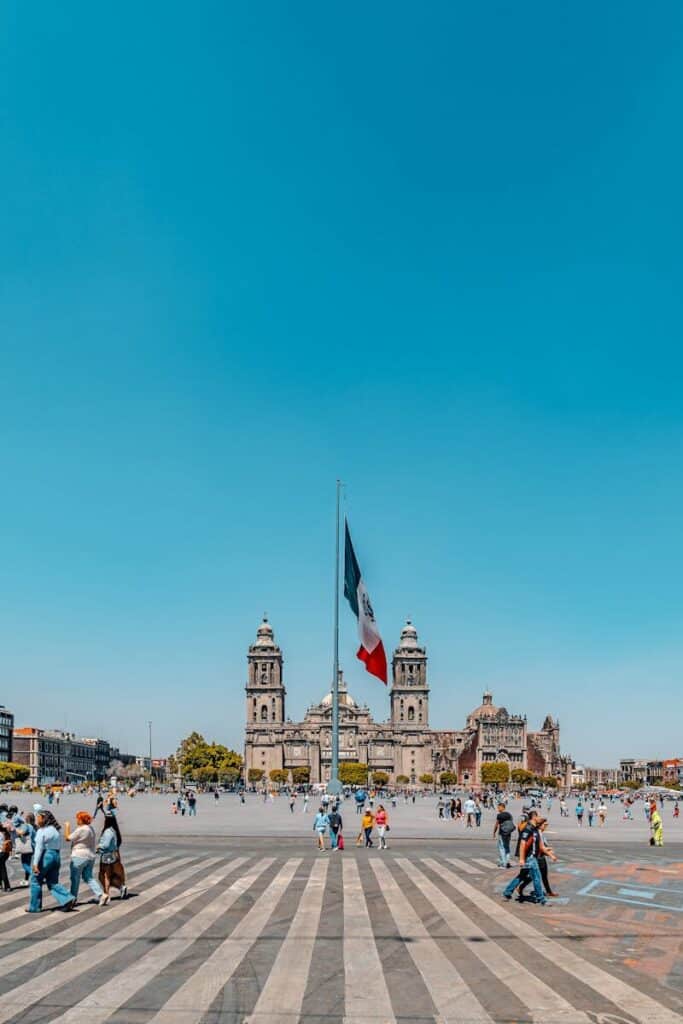
1. Setting: Where the fan zone is placed matters more than any other single factor. A fan zone in an architecturally significant public square, on a waterfront with a city skyline behind it, or against a mountain backdrop creates a visual and emotional context that a fenced-off car park cannot replicate regardless of screen size. Mexico City's Zócalo (one of the world's largest public plazas), Vancouver's Hastings Park (mountain backdrop), Dallas's Fair Park (Art Deco National Historic Landmark), and Miami's Bayfront Park (waterfront) all score highly here.
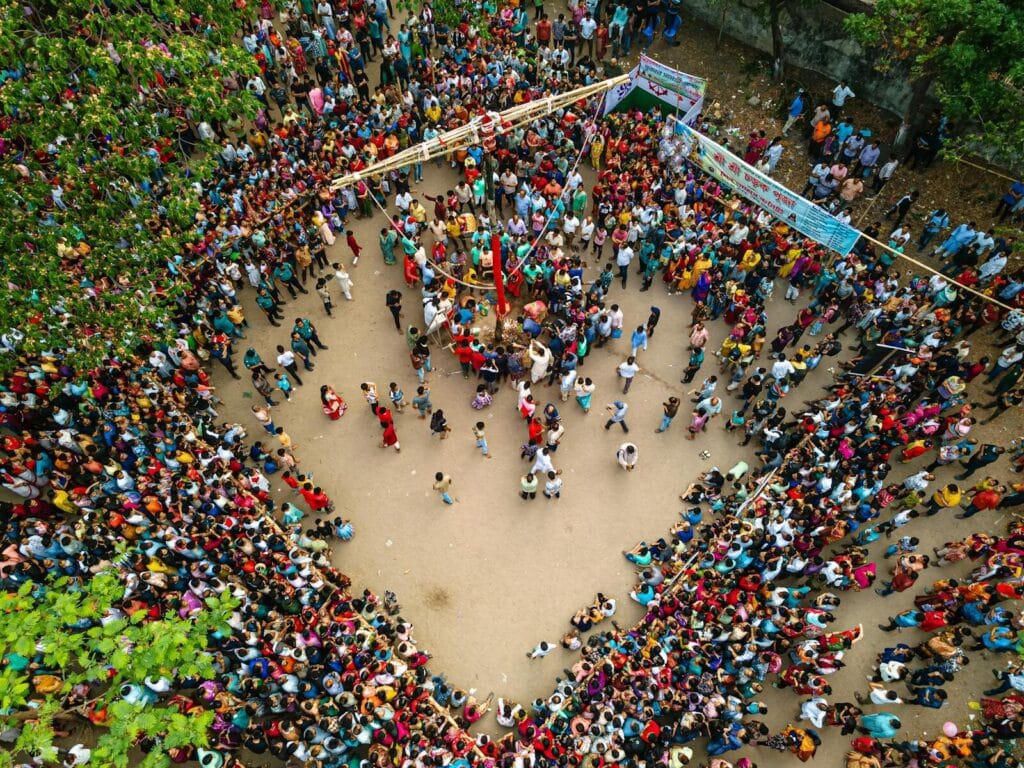
2. Crowd density and diversity: The best fan zone moments happen when the crowd is genuinely packed and genuinely mixed — multiple national fan bases sharing the same space, reacting to the same events. Fan zones for early group stage matches involving the host nation (Mexico playing at home, Canada at home, USA at home) will be the most intense atmospheres. Fan zones hosting neutral fixture screenings can still produce extraordinary crowd reactions when a decisive match is playing elsewhere.
3. Infrastructure flow: The practical architecture of the fan zone determines whether a long match day feels comfortable or exhausting. The best fan zones have clear entry and exit points that don't cause bottlenecks, shade and water access, space to sit or reset between matches on multi-match days, and a surrounding neighbourhood that absorbs the crowd naturally after the final whistle. Houston's EaDo (East Downtown) integration with the surrounding neighbourhood rather than a fenced enclave model is noted by planners as a template worth watching.
4. What happens around the football: At a great fan zone, the match is the centrepiece but not the only thing. The musical programming, food market quality, cultural performances, and the organic fan gatherings that form in the areas immediately adjacent to the fan zone create the full-day experience. A fan zone that ends abruptly when the final whistle blows — clearing out to an empty street — misses the most social hours of the day.
City-by-City Atmospheres
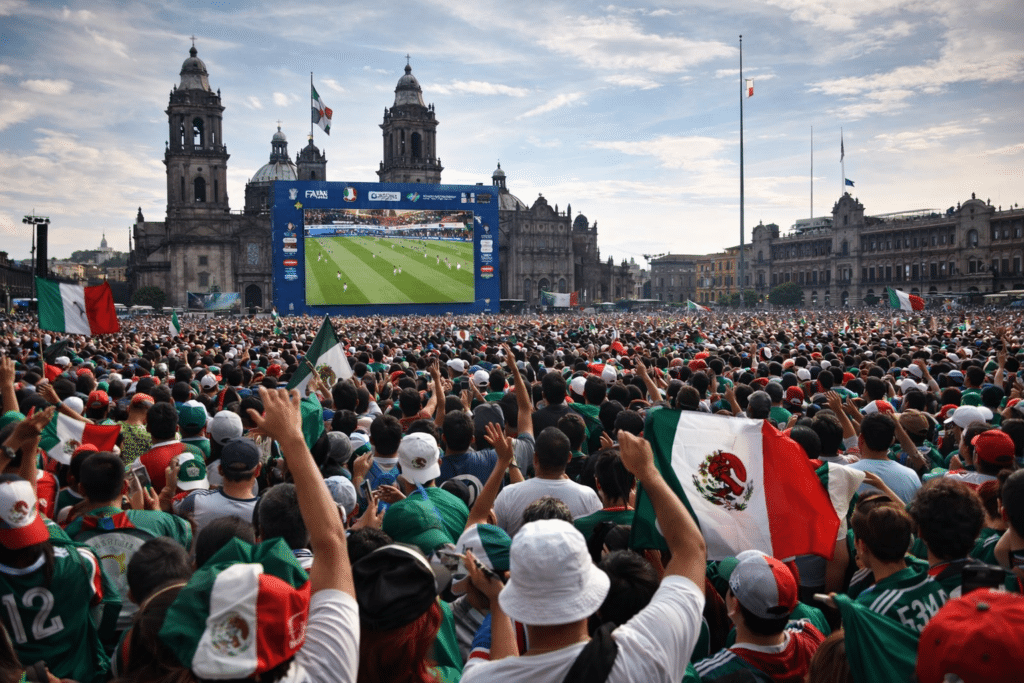
Mexico City — Zócalo: The Standard for Everything
Setting: One of the largest public squares in the world, surrounded on four sides by historic architecture — the Metropolitan Cathedral (17th century), the National Palace (containing Diego Rivera's famous murals), and the city government buildings. The square occupies the location of the ceremonial centre of the Aztec empire.
Capacity and scale: 100,000+ on major match days; additional fan zones in all 16 boroughs (alcaldías) of the metropolitan area reaching millions.
Crowd character: Mexico City's football culture is unlike anything in the USA or Canada — passionate, loud, technically knowledgeable, historically deep. When Mexico plays at Estadio Azteca (also in Mexico City), the Zócalo fan zone for that fixture will be simultaneously one of the most physically intense and most emotionally extraordinary football experiences available anywhere in the tournament. The city's 16-borough fan zone network means that local communities throughout the metropolitan area experience the World Cup in their own neighbourhoods, with each borough adding its own cultural programming.
Cultural programming: The Zócalo is Mexico City's stage for every significant national celebration, and the World Cup will be treated with the same cultural seriousness. Expect live traditional music (mariachi for opening night), contemporary Mexican artists throughout the tournament, traditional dance performances, and food markets representing all of Mexico's regional cuisines.
Best matches to attend for atmosphere: Any Mexico fixture — particularly the group stage matches. The opening night on June 11 (simultaneous with the opening match at Estadio Azteca) will be the highest-energy single fan zone session of the entire tournament.
Practical note: The Zócalo fills extremely early on Mexico match days. Arrive 2 hours before kick-off for a good position. Multiple Metro lines converge on Zócalo station.
Vancouver — Hastings Park: The Most Beautiful Fan Zone Setting
Setting: The PNE grounds at Hastings Park, a 114-acre urban park in East Vancouver with a purpose-built amphitheatre for the fan festival. The North Shore mountains — perpetually snow-capped until late spring, green-forested through summer — create a visual backdrop behind the stage that no other fan zone in the tournament can match. The surrounding park includes Playland (Vancouver's historic amusement park) and extensive green space.
Capacity and scale: Large-capacity purpose-built amphitheatre; additional park stage; free-entry zones and ticketed concert areas.
Crowd character: Vancouver's multicultural demographics mirror global football fandom better than almost any other North American city. The city has very large communities from South Korea, Japan, Mexico, Italy, Portugal, Iran, and across South and Southeast Asia — all national teams represented at the 2026 World Cup and all with established supporter communities in Vancouver.
Cultural programming: Vancouver has released the most complete entertainment programme of any host city fan zone. The confirmed amphitheatre concert series includes two signature concerts: Mötley Crüe (rock legacy act) and Kx5 (the collaboration of Kaskade and Deadmau5 — one of electronic music's highest-profile pairings). Additional artists span rock, pop, hip-hop, indie, electronic, roots, and global sounds. The Canadian electronic duo The Funk Hunters — with over 50 million streams and festival credits including Coachella and Bonnaroo — are confirmed for multiple sets. A portion of the amphitheatre seating is free; some concerts are ticketed.
Indigenous programming: The Vancouver fan festival integrates First Nations cultural programming throughout — a direct reflection of the collaboration between the host committee and local Indigenous communities. This is unique among the 16 fan zone programmes.
Best matches to attend for atmosphere: Canada vs. any opponent — the host nation energy in Vancouver will be extraordinary. European fixtures with travelling support (England, Portugal, Germany) will draw large diaspora crowds given Vancouver's European-heritage communities.

Los Angeles — LA Memorial Coliseum & Venice Beach: Two Different Experiences
Los Angeles operates a distributed fan zone model across six locations, and the two most distinctive offer genuinely different experiences from each other.
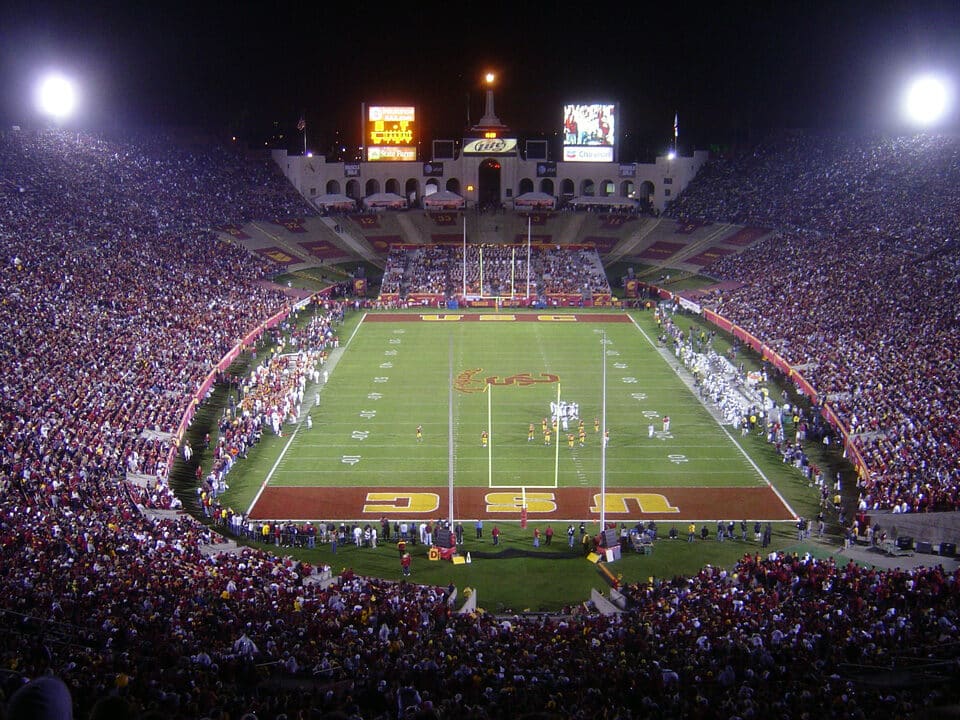
LA Memorial Coliseum (Exposition Park):
The headline fan zone venue occupies the grounds around the 94-year-old LA Memorial Coliseum — itself a historic sporting venue and the only facility in the world to have hosted both the Summer Olympics (1932 and 1984) and a Super Bowl. The fan festival opens here for a five-day festival from June 10–14, creating the opening weekend centrepiece for LA's World Cup experience. Additional zones operate at Union Station and the Original Farmers Market in West Hollywood.
Venice Beach:
The distributed LA model's most visually striking location. An outdoor screen on the Venice Beach boardwalk with the Pacific Ocean behind the crowd, skateboarders on the adjacent skate park, and the eccentric permanent life of Venice Beach folded into the football event. There is no equivalent setting in any other host city fan zone — a beach, a boardwalk, an ocean, and 20,000 football fans watching a giant screen.
Crowd character: Los Angeles brings the most ethnically diverse football fan demographic in the tournament — the city's Latin American, Central American, Mexican, Korean, Japanese, Filipino, Iranian, and Armenian communities all have national teams in the tournament, and all have large, football-active presences in the metro. The fan zone atmosphere shifts dramatically by fixture depending on which communities are activated.
Best matches to attend for atmosphere: Mexico fixtures (enormous Mexican-American community in LA), CONCACAF nation fixtures (Honduras, El Salvador, Costa Rica, Jamaica, Panama, Canada, Trinidad and Tobago all have large LA diaspora communities), and the Korea–Japan regional rivalry if it materialises in the knockout rounds.
Houston — EaDo: The Most Ambitious US Fan Zone
Setting: East Downtown (EaDo) anchored at Shell Energy Stadium (Houston Dynamo FC's home), with a 4-block festival footprint integrated into the evolving EaDo neighbourhood rather than built as a fenced temporary event.
Capacity and scale: 500,000 total visitors expected across the tournament — the highest-volume projection of any US host city fan zone. The EaDo integration model is designed to activate existing bars, restaurants, and venues within the footprint rather than building a self-contained festival village.
The cooling zones distinction: Houston in June and July is genuinely hot — daily highs regularly reach 35°C (95°F) with high humidity. Houston is the only US host city that has built indoor air-conditioned cooling zones into the fan zone infrastructure as a primary feature, not an afterthought. This practical distinction makes Houston's fan zone uniquely suited to marathon match days covering three group stage fixtures.
Crowd character: Houston's fan zone will feel “local first, global second” — diverse, loud, and rhythm-heavy, reflecting the city's character. Houston has very large Latin American communities (particularly Mexican and Central American), a significant Nigerian and West African community, and a Vietnamese community, all of which have national teams in the tournament.
Best matches to attend for atmosphere: Mexico vs. any opponent; any West African national team fixture (Nigeria, Senegal, Ghana, Morocco); late-afternoon and evening sessions when the outdoor temperature drops and the EaDo neighbourhood activates.
Dallas — Fair Park: Scale with Architectural Substance
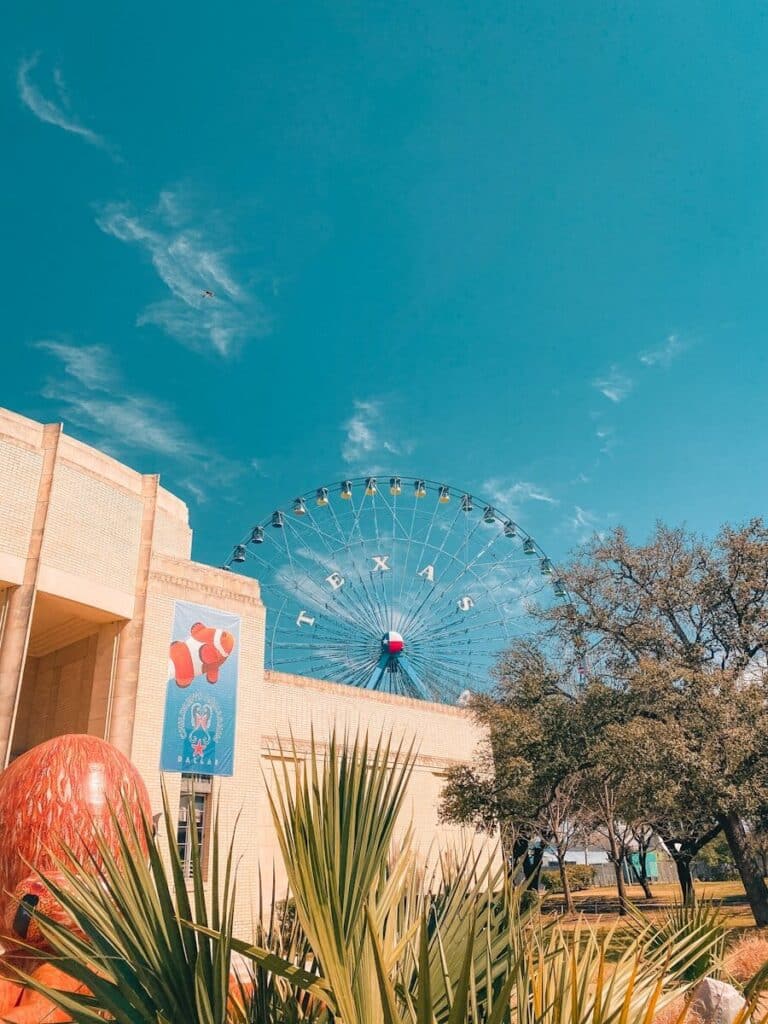
Setting: Fair Park, a 277-acre National Historic Landmark in East Dallas built for the 1936 Texas Centennial Exposition. The grounds feature Art Deco buildings, a performance bandshell, the Cotton Bowl stadium, and the State Fair of Texas's permanent infrastructure — meaning the fan zone is not built on a blank field but into an existing event landscape with real architectural character.
Capacity and scale: Up to 100,000 on peak match days. DART Green Line direct access (Fair Park station at the main entrance) makes it the most transit-accessible US fan zone.
Crowd character: Dallas brings strong US domestic football support, a large Latin American diaspora fan community, and what promises to be one of the strongest crowds of any US venue for any CONCACAF region match. The city's combination of a major sports culture and a large international community creates a broad base.
Best matches to attend: Group stage fixtures involving Mexico or Central American nations; the USA national team if they play to late rounds with a Dallas fixture.
Guadalajara — Plaza Liberación: The Most Authentic Football Culture
Setting: The Plaza Liberación in Guadalajara's historic centre — a compact, walkable urban setting surrounded by the Teatro Degollado (a 19th-century neoclassical theatre), the Palacio Municipal, and the city's regional government buildings. Guadalajara is Mexico's second city and the birthplace of mariachi music and tequila.
Why it stands out: Guadalajara lacks Mexico City's sheer scale but delivers what experts consistently describe as the most authentic football culture in Mexico outside the capital. The city is the home of Club Deportivo Guadalajara (Chivas), Mexico's most-supported domestic club, and has a football identity that runs deeper per capita than even Mexico City's more cosmopolitan fan base.
Cultural programming: Mariachi performances are integrated into the fan zone programme, reflecting Jalisco state's cultural traditions. Tequila and traditional Jalisco food (birria, tortas ahogadas, pozole rojo) are prominent in the food market. The surrounding historic centre provides a natural fan zone extension — the streets immediately adjacent fill with fans before and after sessions.
Best matches to attend: Any Mexico fixture. Guadalajara's domestic fan community will fill the Zócalo equivalent here for every Mexican national team match.
Miami — Bayfront Park: Football on the Bay
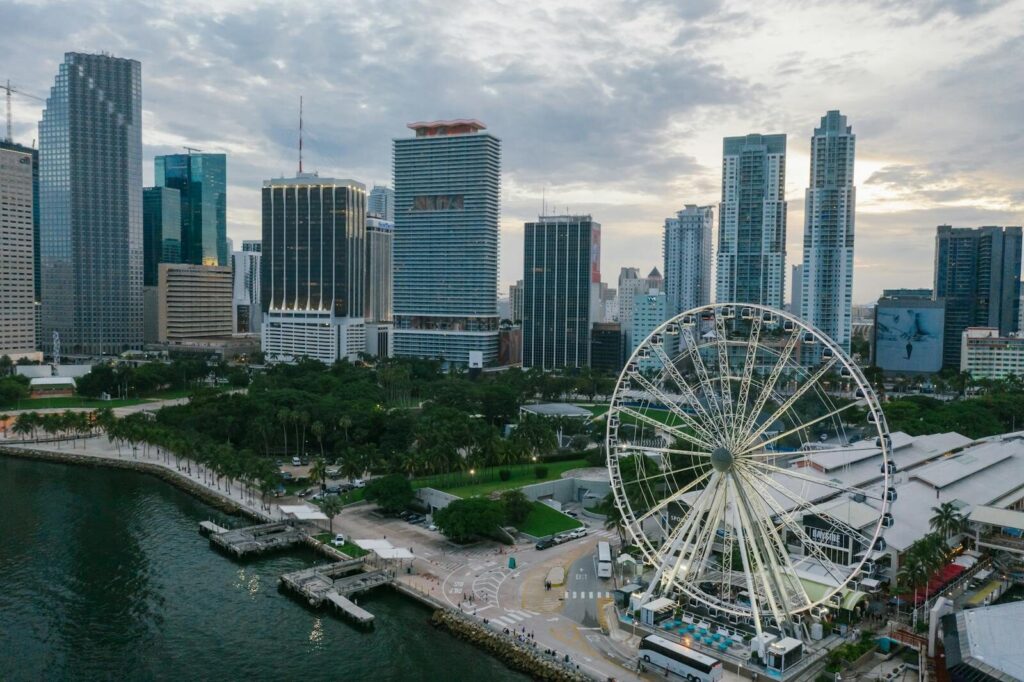
Setting: Bayfront Park on Biscayne Boulevard — 32 acres of waterfront park in downtown Miami, with Biscayne Bay behind the screen and the Miami skyline beside it. The combination of water, city skyline, subtropical heat, and Miami's particular cultural energy creates a fan zone unlike any other in the continental USA.
Crowd character: Miami's fan zone will be dominated by Latin American communities — the city has the second-largest Cuban community in the world after Havana itself, very large Venezuelan, Colombian, Brazilian, Argentinian, and Haitian communities, and a general football culture that runs deeper than most other US host cities.
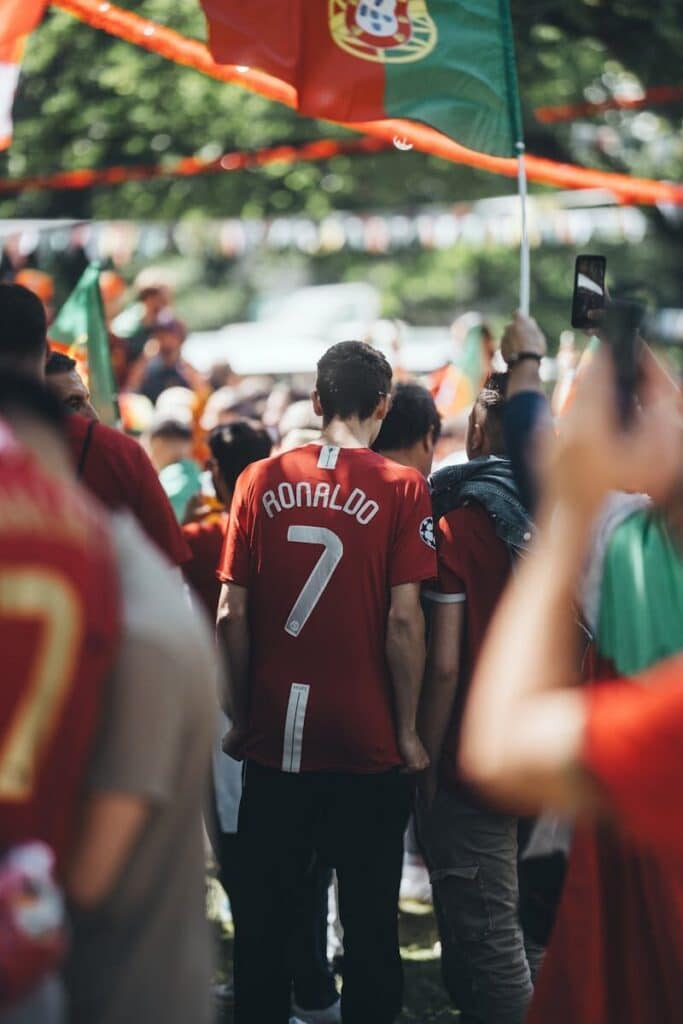
Best matches to attend: South American national team fixtures — Argentina, Brazil, Uruguay, Colombia, and Venezuela all have enormous Miami diaspora communities. The atmosphere at a Brazil vs. Argentina fixture screening in Miami's fan zone would be one of the most intense in the tournament.
Boston — City Hall Plaza: The Most Focused Experience
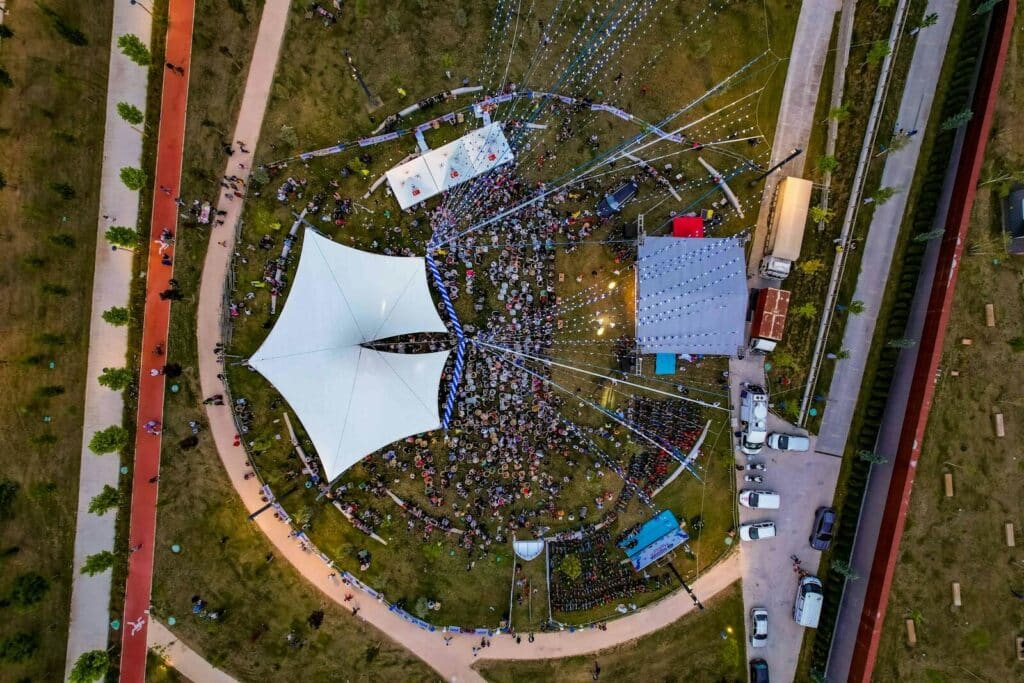
Setting: City Hall Plaza in downtown Boston — a large urban civic square with the brutalist Boston City Hall as its backdrop, connecting to the Faneuil Hall and Government Center area. The fan festival here operates for 16 days during the tournament rather than the full 39 days.
Why the limited run matters: The 16-day programme means Boston's fan zone is active for specific match windows rather than the continuous run of larger host cities. Check the official schedule to confirm which match days are covered.
Crowd character: Boston's football community is strong — the city has a significant Irish-American community with strong interest in Republic of Ireland and Northern Ireland fixtures, growing Central American and Dominican diaspora communities, and a large student population that tracks international football. The Boston Celtics and Red Sox dominate sports culture here, but the World Cup creates a genuine shift.
Best matches to attend: Any Republic of Ireland, England, or Portugal fixture (strong Irish-American and Lusophone communities); USA national team matches.
Fan Zone Atmosphere Ranking — Tier System
Based on setting quality, crowd intensity, cultural programming, scale, and infrastructure, the 16 World Cup 2026 fan zones tier as follows.
Tier 1 — Must-Experience
- Mexico City (Zócalo): Raw scale, cultural intensity, and historical significance that no other fan zone in the tournament can match. For the opening night and every Mexico fixture, the Zócalo is the single most important fan gathering point in the entire World Cup.
- Vancouver (Hastings Park): Best setting in the tournament; most complete entertainment programme; Mötley Crüe and Kx5 confirmed; Indigenous cultural programming that is genuinely unique.
Tier 2 — Excellent
- Houston (EaDo): Highest capacity; only indoor cooling zones; best infrastructure for marathon match days; neighbourhood integration model.
- Los Angeles (Venice Beach / Coliseum): Venice Beach setting is irreplaceable; six-zone model serves the most diverse football fan community in the tournament.
- Dallas (Fair Park): Best transit access of any US fan zone; Art Deco architectural setting; 100,000 capacity.
- Guadalajara (Plaza Liberación): Best pure football culture atmosphere in Mexico outside Mexico City; mariachi and tequila make it culturally distinctive.
Tier 3 — Strong
- Miami (Bayfront Park): Waterfront setting; Latin American fan atmosphere unmatched in the US; programming dependent on confirmed funding.
- Toronto: Strong multicultural fan base; solid infrastructure; downtown waterfront connection.
- Atlanta (Centennial Olympic Park): Good capacity; well-tested event infrastructure from 1996 Olympics; 20-day programme limits tournament-wide coverage.
- New York / New Jersey: Multiple zones across the metro; the scale of NYC fan energy for major fixtures compensates for logistical complexity.
Tier 4 — Good but Limited
- Boston (City Hall Plaza): 16-day run limits availability; strong when operating; good city centre setting.
- Seattle, Kansas City, Philadelphia, San Francisco Bay Area, Monterrey: Confirmed but full programming details not yet published as of April 2026.
Concerts and Cultural Programming — What Is Confirmed
Beyond the football, the 2026 fan festivals represent a genuine summer concert and cultural series operating for six weeks across three countries.
Vancouver (most fully announced):
- Mötley Crüe — signature concert (ticketed)
- Kx5 (Kaskade + Deadmau5) — signature concert (ticketed; portion of amphitheatre free)
- The Funk Hunters — multiple sets (Canadian electronic act; 50M+ streams; Coachella and Bonnaroo credits)
- Full lineup spans rock, pop, hip-hop, indie, electronic, roots, and global sounds; full schedule at vancouverfwc26.ca
Mexico City:
- Traditional Mexican music (mariachi, son jarocho) for opening night
- Contemporary Mexican artists throughout the tournament
- Cultural performances including traditional dance
- Ongoing announcement of full programme
Los Angeles:
- Opening weekend festival (June 10–14) at the Memorial Coliseum with music programming
- Venice Beach sessions likely to incorporate LA's music scene (not yet confirmed in full)
Other host cities: Full entertainment announcements expected May–June 2026. Check each host city's official website for updates.
A Day in the Fan Zone — What It Actually Looks Like
Understanding the rhythm of a fan zone day helps you get the most from it.
7:00am–9:00am: Fan zone opens 2–3 hours before first match of the day. During group stage, first matches kick off as early as 9am local time in North American time zones. Morning sessions are the most relaxed — smaller crowds, easier screen access, cooler temperatures for outdoor zones.
10:00am–12:00pm: First match of the day in progress. Crowd builds towards half-time. Food vendors begin operating. This is the best time to explore the non-football programming — skills zones, gaming installations, food market.
12:30pm–2:30pm: Second match of the day begins. The fan zone is now at partial capacity. Groups settle into different screen areas by national affiliation. The most photogenic time in outdoor fan zones — good natural light, active crowd without full peak density.
3:00pm–5:00pm: For the third match of the day (group stage days with 3 fixtures), this is the highest-attendance window. Full fan zone capacity at the largest venues. Queue to enter large fan zones may exist — plan arrival 30–45 minutes ahead of the intended kick-off.
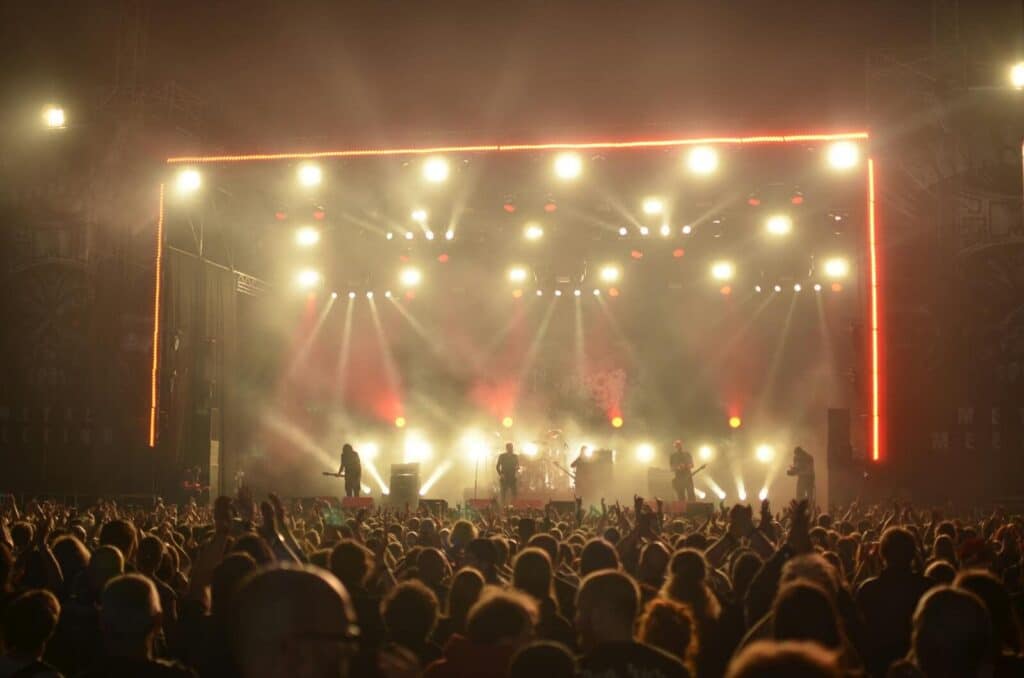
5:00pm–9:00pm: Post-match entertainment begins. Concert programming typically activates after the final match of the day. The evening fan zone session — with cooling air, city lights, and the energy of a completed match day — is often the best 2-hour window of the entire day.
9:00pm–11:00pm: Fan zone closes. Adjacent bars and restaurants absorb the crowd. In cities like Mexico City, Dallas, Houston, and Miami, the surrounding districts are built to handle this transition — plan a dinner reservation or a next venue in advance.

Covers USA, Canada, and Mexico on a single eSIM. No swapping, no reactivation when you cross a border.
Frequently Asked Questions
Do fan zones broadcast all 104 matches including those played in other cities?
Yes. Every FIFA Fan Festival screens all 104 World Cup 2026 matches live — including matches being played simultaneously in other host cities. This means that on a day with three group stage matches, fans in the fan zone watch all three across the full match day, even if none of those matches are being played in their host city. This is one of the most underappreciated features of the fan festival — you do not need to be in the host city for a specific match to watch it in a world-class fan zone atmosphere.
Which fan zone has the best concert programme?
Vancouver has released the most comprehensive entertainment lineup of any host city, with Mötley Crüe and Kx5 (Kaskade + Deadmau5) as confirmed headline concerts, The Funk Hunters for multiple sets, and a full programme spanning multiple musical genres. Some concerts are ticketed; a portion of amphitheatre seating is free. Mexico City's cultural programming will be the most culturally significant — mariachi, traditional dance, and contemporary Mexican music in the Zócalo — but the full programme has not yet been published.
Are there separate fan zones near the stadiums on match days?
Most host cities operate a “match day experience zone” or activation area near the stadium in addition to the central fan festival. These stadium-adjacent zones are primarily for ticketholders before and after the match and may have limited public access. The official FIFA Fan Festival is the primary public viewing venue in each city and is specifically designed for fans without match tickets.
How does the fan zone handle simultaneous matches in the group stage?
Fan zones with multiple screens display different matches simultaneously. At peak group stage days with three concurrent matches, the main central screen typically shows the highest-demand fixture while secondary screens show the other matches. Fans self-organise around the screen showing their preferred match — a natural clustering that creates micro-atmospheres within the larger fan zone space.
Is food and drink expensive inside fan zones?
Pricing varies by city and vendor. As a general guide: official sponsor food and beverage stands within fan zones are priced at standard event pricing (premium versus street/restaurant) — expect to pay 30–50% more than regular restaurant prices. Independent food market vendors within the fan zones tend to offer better value and more interesting food. Most fan zones allow entry and re-entry, so leaving to eat at a nearby restaurant and returning is a viable option in cities where the fan zone has managed entry/exit flow.
What time do fan zones open and close?
Fan zones generally open 2–3 hours before the first match of the day and close 1–2 hours after the last match ends. On days with evening matches, this means fan zones may be open until 11pm–midnight. Specific hours vary by city and are available through each host city's official website.
Final Thoughts
The World Cup 2026 fan festival network is the largest public viewing infrastructure in the tournament's history — 16 cities, 39 days, every match live. Each city has shaped its fan zone around its own character: the historical grandeur of Mexico City, Vancouver's mountain beauty and music culture, Houston's capacity and practicality, Dallas's architectural setting, Guadalajara's football authenticity.
The fan zone is not the same experience as the stadium. It is a different experience — broader, louder in different ways, more social, and in several cities more visually extraordinary. Plan around the matches that matter most to you, know which fan zone fits your priorities, and arrive early for the big sessions. The best moments will be the ones you did not predict.
➡ Best Places to Watch World Cup 2026 Without Tickets
➡ World Cup 2026 Travel Tips Nobody Tells You
➡ Last-Minute Accommodation During the World Cup: What Still Works
Add your first comment to this post