


Table of Contents
Getting internet in Italy is easier than many travellers expect — but the right option depends on how long you're staying, what phone you have, and whether you want to sort it before you fly or on arrival. The gap between the most expensive and most affordable choices for the same amount of data is surprisingly large.
The challenge most visitors face is a familiar one: you land at Fiumicino or Malpensa, you see a SIM card kiosk in the arrivals hall, and you're not sure whether that's the best deal or just the most convenient one. In many cases, it isn't — and if your phone supports an eSIM, there's a faster and often cheaper route that bypasses the airport entirely.
We've put together this guide comparing every way to get internet in Italy — eSIMs, local tourist SIM cards, roaming plans, and public WiFi — with current prices, network coverage notes, and a clear recommendation for different trip types. Here's what you need to know.
At a Glance
Here is what this guide covers:
- Your five options: eSIM, local physical SIM, roaming, pocket WiFi, and public WiFi — compared clearly
- Italy's three main networks: TIM, Vodafone, and WindTre — what each covers and which is best for tourists
- Tourist SIM prices: Vodafone and WindTre's best tourist plans for 2026, with what's included and what ID you need
- eSIM providers for Italy: Holafly, Saily, Airalo, and others — price comparison and which works best for short vs long trips
- Coverage by destination: What to expect in Rome, Amalfi Coast, Cinque Terre, the Dolomites, and other key areas
- EU travellers: Whether your home plan already covers Italy — and what the fair use limits mean in practice


Your Options for Getting Internet in Italy
There are five main ways to get internet in Italy as a tourist. Each makes sense for a different situation.
Option 1 — eSIM (Best for Most Travellers)
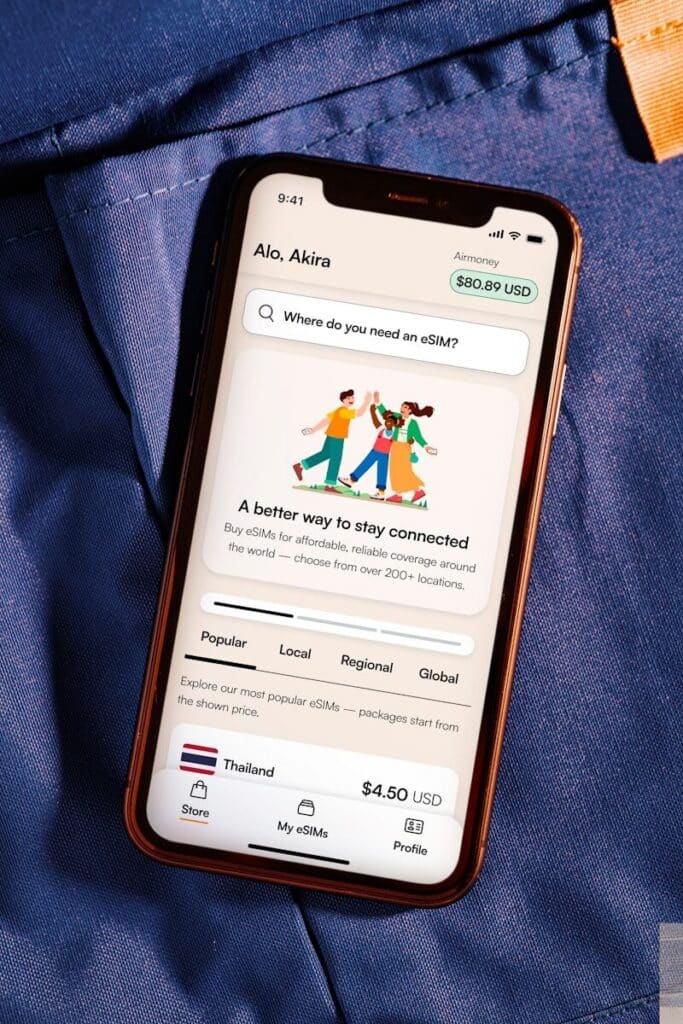
An eSIM is a digital SIM card built into your phone. Instead of inserting a physical card, you download a plan online, scan a QR code, and activate it — all without visiting a store or even leaving your home.
For most travellers visiting Italy in 2026, an eSIM is the fastest and most convenient option. You can set it up before you fly, activate it the moment you land, and keep your existing number active on the same device for calls and texts. No queuing at the airport. No ID documents to hand over. No risk of losing a tiny plastic card in the bottom of your bag.
eSIM is the right choice if:
- Your phone supports eSIM (iPhone XS or newer, most Google Pixel 3+ models, Samsung Galaxy S20+, and many recent Android devices — check your settings under Mobile Data or Network)
- You're visiting for any length of trip from a few days to a month
- You want to set everything up before you travel
eSIM is not the right choice if:
- Your phone doesn't support eSIM (older or budget Android phones often don't)
- You need a local Italian phone number (most eSIM travel plans are data-only)
- You're staying long-term and need the best possible price per gigabyte

Stay connected across Italy with instant mobile data. Activate before you fly and use your phone as soon as you land.
Option 2 — Local Physical SIM Card (Best Value for Longer Stays)
Buying a physical SIM card from an Italian network operator — Vodafone, WindTre, or TIM — gives you a local Italian number, strong network coverage, and the best price per gigabyte for longer stays.
The trade-off is that you need to visit a store (or a kiosk at the airport), show your passport for ID registration — this is required under Italian law — and swap out the SIM in your phone, which means your existing number won't receive calls unless you also use a dual-SIM setup or call forwarding.
Airport SIM cards are sold at kiosks by all three major operators in the arrivals halls of Rome Fiumicino, Milan Malpensa, Milan Linate, Naples, Venice, and most other major Italian airports. They're convenient but more expensive than the same plans bought in a city-centre store.
Physical SIM is the right choice if:
- Your phone doesn't support eSIM
- You're staying for 2+ weeks and want the cheapest price per gigabyte
- You want a local Italian number for making local calls

Option 3 — International Roaming (Most Expensive Option)
Most non-EU mobile plans charge roaming fees when used in Italy. Rates vary by provider and country, but daily roaming add-ons from US, UK, Australian, and Asian carriers typically range from 5–15perdayforlimiteddata.Onatwo−weektrip,that′s70–210 just for data — before you hit any daily caps.
Roaming only makes sense if:
- You're in Italy for just 1–2 days as part of a longer trip and the per-day roaming cost is cheaper than buying a separate plan
- Your carrier already includes Italy in a global plan you're subscribed to (check your plan details)
For any trip of 3 days or more, buying a dedicated Italy data plan — either via eSIM or physical SIM — will almost always cost less than roaming.
Option 4 — Pocket WiFi (Good for Groups)
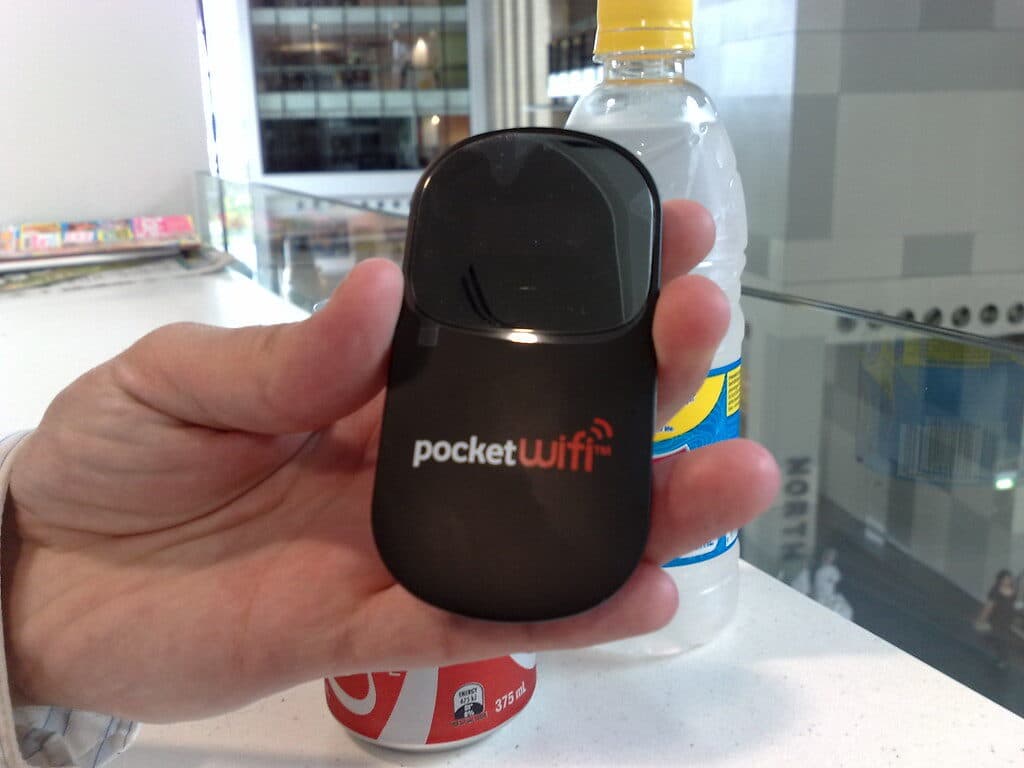
A pocket WiFi device is a small portable router that creates a personal WiFi hotspot — connecting multiple devices at once using a local SIM. You rent one from an airport desk or pre-order online and return it on departure.
Rental prices typically run €5–10 per day. The advantage is that everyone in your group connects to one device — no need for each person to buy their own SIM. The disadvantage is that you're carrying an extra device, remembering to charge it each night, and dealing with a return process on the way home.
Pocket WiFi makes sense for: families or groups of 3+ where splitting the rental is significantly cheaper than 3+ individual SIM purchases. For solo travellers or couples, an eSIM is almost always the simpler choice.
Option 5 — Free Public WiFi
Free WiFi is available at most Italian hotels, B&Bs, Airbnbs, airports, and many cafés and restaurants. Quality varies significantly — hotel WiFi is generally reliable in urban areas; café WiFi is often slow or patchy.
Italy's public WiFi infrastructure is less developed than in northern Europe or Japan. Cities like Milan and Rome have some public hotspots in tourist areas, but they're not as comprehensive as the free WiFi networks you'll find in Singapore, Tokyo, or even Paris. Relying on WiFi alone for a full Italian trip — navigating in real time, using maps, checking transportation — is workable for very light users but frustrating for most travellers.
Our recommendation: Use hotel/accommodation WiFi for heavier tasks (downloading maps, video calls) and supplement with a data plan for on-the-go use.
Italy's Three Main Mobile Networks
Three operators dominate Italy's mobile market: TIM, Vodafone, and WindTre. Each has different strengths, and the network your eSIM or SIM card runs on affects your coverage — particularly outside major cities.
TIM (Telecom Italia Mobile)
TIM is Italy's historical market leader and has the most extensive legacy network infrastructure, particularly in rural areas and smaller towns. In 2026, TIM offers 5G in major cities and continues to lead in rural mountain coverage — making it the best choice for travellers exploring the Dolomites, inland Tuscany, or remote areas of Calabria and Sicily.
TIM's tourist SIM plans are slightly more expensive than Vodafone and WindTre, but the network quality justifies it for adventurous itineraries that go beyond the tourist trail.
Vodafone Italy
Vodafone is consistently the most recommended operator for tourists. It combines extensive 4G/5G coverage across cities and tourist regions, competitive tourist-focused prepaid plans, and a well-distributed store network. Coverage is strong in the Amalfi Coast, Cinque Terre, and across the major tourist circuits of Rome–Florence–Venice.
For most tourists visiting Italy's popular destinations, Vodafone offers the best balance of coverage, price, and reliability.
WindTre
WindTre holds approximately 26% of Italy's market and has strong urban coverage, including the broadest 5G rollout in Italian cities as of 2026. Its tourist prepaid plans are competitively priced — often the cheapest among the three operators in absolute terms — but the value is partly offset by a mandatory €10–11 SIM card fee that is added to the plan price.
Coverage in rural and mountain areas is WeakER than TIM and Vodafone. If your itinerary includes the Amalfi Coast, Cinque Terre, or the Dolomites, WindTre is the least reliable choice of the three.


Buying a Tourist SIM Card in Italy: What You Need to Know
ID Requirements
Italian law requires all SIM card purchasers to present valid ID — a passport for non-EU visitors or a national ID card for EU citizens. There are no exceptions. Keep your passport accessible when buying a SIM at an airport or store.
Where to Buy
At the airport: Kiosks from TIM, Vodafone, and WindTre are located in the arrivals halls of all major Italian airports. You can buy immediately on arrival. Plans at the airport are specifically designed for tourists and are convenient — but typically 20–40% more expensive than equivalent plans sold in city-centre stores.
At city-centre stores: Operator stores are found on the main shopping streets (Via del Corso in Rome, Via Torino in Milan, Via Calzaiuoli in Florence). Plans sold here are better value and staff can help with setup. The trade-off: you'll need to get around without mobile data for the first few hours of your trip.
Online pre-order (for SIM delivery before you fly): Some services (SimCorner, for example) will ship an Italian SIM card to your home address before departure, pre-loaded with a tourist plan. This removes the airport-or-store dilemma entirely — though the selection is more limited and delivery times apply.
Best Tourist SIM Plans for 2026
| Operator | Plan | Data | Calls | EU Roaming | Duration | Price |
|---|---|---|---|---|---|---|
| Vodafone | Dolce Vita 300 | 300 GB | 200 mins (intl) | 27 GB | 30 days | ~$28 USD |
| WindTre | Tourist Pass Full | 100 GB (5G) | Unlimited Italy + 100 intl mins | 15 GB | 30 days | ~27USD(incl.27USD(incl.11 SIM fee) |
| WindTre | Tourist Pass Extra | 200 GB (5G) | Unlimited Italy + 100 intl mins | 27 GB | 60 days | ~$35 USD (incl. SIM fee) |
| TIM | Various tourist plans | 50–100 GB | Limited intl | Included (varies) | 30 days | €25–35 |
Recommended for most tourists: Vodafone's Dolce Vita 300 gives 300GB of data, 27GB of EU roaming, and 200 international minutes for around $28 — the best overall value without hidden fees. WindTre is cheaper on paper but the €10–11 SIM card fee narrows the gap, and the weaker rural coverage is a consideration for non-urban itineraries.
eSIM for Italy: How It Works and What to Buy
How to Set Up an Italy eSIM
- Check compatibility: Go to Settings > Mobile Data (iOS) or Settings > Network (Android) and look for an “Add eSIM” or “Add Mobile Plan” option. If it's there, your phone supports eSIM.
- Buy a plan: Purchase from an eSIM provider (see below). You'll receive a QR code by email or within the provider's app.
- Install the eSIM: Go to Settings > Mobile Data > Add eSIM > Use QR Code. Scan the QR code. The eSIM profile installs within seconds.
- Set data routing: When prompted, set your eSIM as the line used for mobile data. Leave your existing SIM active for calls and texts.
- Activate on arrival: Some plans activate immediately; others activate when you first connect to an Italian network. Either way, you're online as soon as you land.
Important: Install your eSIM before you board your flight. You need a WiFi connection to download the profile, and the aircraft cabin is not the place to troubleshoot a setup problem.
Best eSIM Providers for Italy (2026)
| Provider | Best Plan | Price | Data | Notes |
|---|---|---|---|---|
| Holafly | Unlimited / 10 days | $36.90 | Unlimited | Best for heavy users. hotspot capped at 500MB/day |
| Saily | 10 GB / 30 days | $20.99 | 10 GB | Good mid-range option. reliable 4G/5G |
| Airalo | Bella Italia 10 GB | ~$15–18 | 10 GB | Cheapest per-GB. data-only. large provider network |
| Ubigi | 10 GB / 30 days | ~$14–16 | 10 GB | Strong speeds. well-reviewed for Italy specifically |
| aloSIM | 20 GB / 30 days | ~$29 | 20 GB | Includes calls and SMS — rare for travel eSIMs |
For short trips (1–7 days): Holafly's unlimited plans (from $19.90 for 5 days) remove all data anxiety — useful if you're navigating, streaming, or using your phone heavily.
For standard trips (7–14 days): Saily's 10 GB / 30-day plan at $20.99 or Airalo's equivalent are the best value. 10 GB is enough for navigation, photos, social media, and messaging for most travellers over two weeks.
For long stays (30+ days): A physical SIM from Vodafone or WindTre will be cheaper per gigabyte than any eSIM travel plan. eSIMs are optimised for convenience, not for the lowest possible price on extended stays.
Stay connected across Italy with instant mobile data. Activate before you fly and use your phone as soon as you land.
Mobile Coverage Across Italy's Key Destinations
Coverage in Italy is strong across major cities and tourist circuits, but varies in more remote areas. Here is what to expect in the destinations most travellers visit.
Rome
Coverage in Rome is excellent on all three networks. The Colosseum, Vatican area, Trastevere, Testaccio, Termini station, and all major tourist zones have strong 4G/5G signal. Rome's Metro (Lines A and B) maintains underground coverage throughout — useful for navigating between neighbourhoods. Some thick-walled ancient buildings reduce indoor signal, but you'll always have connectivity outdoors.
Both FCO (Fiumicino) and Ciampino airports have strong signal — ideal for activating your eSIM on arrival.
Milan
Milan has the most developed 5G infrastructure in Italy. Coverage is consistent across the city centre, Navigli, the Duomo district, and all major transport hubs. WindTre's 5G is particularly strong in Milan. Malpensa and Linate airports both have full coverage.
Florence
Coverage is excellent throughout the historic centre and across the city's main tourist areas. Vodafone and TIM perform well in Florence's older stone buildings, which can reduce indoor signal for weaker networks.



Venice
Venice presents a specific case: the city's water-based geography and lack of traditional street infrastructure means coverage can be patchier indoors in some of the older buildings away from the main tourist circuit. Outdoors and on the main tourist routes (Rialto, San Marco, Dorsoduro), all three networks perform well. The Alilaguna water bus routes and Vaporetto stops have consistent coverage.
The Amalfi Coast
The Amalfi Coast is one of the most challenging areas for mobile coverage in Italy. The combination of steep coastal cliffs, narrow roads, and scattered small towns means signal is variable. TIM and Vodafone perform best here — TIM in particular, owing to its stronger rural infrastructure. WindTre is the least reliable choice for this area. Download offline maps before you leave your accommodation each morning.
Cinque Terre
Similar to the Amalfi Coast, Cinque Terre's geography creates signal variability. TIM and Vodafone offer the most consistent coverage. Some of the villages — particularly Corniglia, the highest of the five — have weaker signal. The coastal walking trail and train connections between the villages generally have adequate coverage.



The Dolomites
The Dolomites are Italy's most challenging area for mobile coverage. Ski resort areas and major access points (Cortina d'Ampezzo, Val Gardena, Canazei) have good coverage on TIM and Vodafone. Higher altitude trails and remote huts may have no signal at all on any network. If hiking in the Dolomites, always download offline maps, save accommodation addresses and emergency numbers offline, and do not rely on live navigation.
Sicily and Sardinia
Both islands have solid coverage in cities and tourist areas — Palermo, Catania, Cagliari, and the main coastal resorts all perform well. Rural interior areas, particularly in central Sicily and inland Sardinia, have patchier signal. TIM is the strongest performer in Sicilian rural areas owing to its legacy infrastructure.



Should EU Travellers Use Their Home Mobile Plan?
If you're travelling to Italy from another EU country, EU roaming rules mean you can use your existing home plan in Italy at no extra charge — this has been standard across the EU since 2017.
However, fair use limits apply. Most EU mobile plans specify a maximum amount of data you can use while roaming before you either pay extra or have your speeds throttled. These limits vary by operator and plan — check your plan's roaming data allowance before you travel.
For most EU travellers on standard plans with 10–30GB of roaming data, Italy coverage through their home plan works seamlessly for a typical holiday. For heavy data users or those with older plans that still charge roaming fees, buying a local eSIM or SIM remains the better option.
UK travellers: Since Brexit, UK-based carriers no longer automatically offer free EU roaming. Major UK operators (EE, Vodafone UK, O2, Three) have varying roaming policies — some offer free or low-cost roaming as part of specific plans; others charge daily add-on fees. Check your contract before travelling.
WiFi in Italy: What to Expect
Hotel and accommodation WiFi: Reliable in the vast majority of Italian hotels, B&Bs, and Airbnbs. Urban properties generally offer fast connections; smaller rural agriturismos may have slower speeds. In booking an accommodation, WiFi is now essentially standard — it's worth checking reviews for any property outside major cities.
Café and restaurant WiFi: Variable. Most Italian cafés and restaurants offer WiFi but the quality and speed are inconsistent. Unlike northern European café culture, sitting for extended periods to work is less common in Italian coffee culture — expect good enough WiFi for light browsing but don't rely on it for calls or large uploads.
Airport WiFi: Available at all major Italian airports. Rome Fiumicino, Milan Malpensa, and Milan Linate all offer free WiFi in terminals. Connection typically requires email registration. Useful for activating an eSIM or making a video call while waiting — but download speeds vary with passenger volume.
Public WiFi hotspots: Some Italian cities have invested in public WiFi infrastructure — Rome's “Roma WiFi” and Milan's “MiWifi” networks offer hotspots in tourist areas and public squares. Connection quality and availability are inconsistent. These work best as a backup, not a primary connectivity solution.


Frequently Asked Questions
Do I need to show my passport to buy a SIM card in Italy?
Yes, Italian law requires ID verification for all SIM card purchases. You must present a valid passport (for non-EU visitors) or a national ID card (for EU citizens) at the point of purchase. There are no exceptions, regardless of whether you buy at the airport, a city-centre store, or an authorised retailer. This requirement applies to both tourist prepaid plans and standard plans. It does not apply to eSIM purchases made through international providers like Holafly, Airalo, or Saily — which is one reason why eSIMs have become the default choice for many travellers who want to avoid this step.
Is it worth buying a SIM at the airport in Italy, or should I wait?
If your phone doesn't support eSIM and you need data from the moment you arrive, the airport SIM is a reasonable choice — you'll pay a 20–40% premium over city-centre prices, but the convenience is real. If you have a compatible phone, setting up an eSIM before you fly eliminates both the premium and the queueing. If you have a non-eSIM phone and don't need data immediately, visiting a Vodafone or WindTre store in your first Italian city gives you better value. Most hotels and accommodation have WiFi, so navigating to your hotel from the airport using downloaded offline maps is workable for most arrivals.
How much mobile data does a typical Italian holiday use?
Most travellers use between 3–10 GB per week, depending on their usage. Google Maps navigation running in the background for several hours daily uses approximately 0.5–1 GB per day. Social media browsing and photo uploads use 0.5–2 GB per day depending on frequency. Video calls and streaming use significantly more. For a 7-day trip with normal usage — navigation, messaging, some social media, no video streaming — 5–7 GB is a comfortable allowance. For a 14-day trip, 10–15 GB is sufficient for most travellers. If you plan to stream or use maps heavily, choose an unlimited plan or a higher data tier.
Will my eSIM work in the Amalfi Coast and Cinque Terre?
It will work in most of these areas, but coverage is patchier than in major Italian cities. The key factor is which Italian network your eSIM connects to. eSIMs from Holafly, Saily, and Airalo typically connect to Vodafone or WindTre (check the provider's specification). For the Amalfi Coast and Cinque Terre, Vodafone is the stronger choice — if your eSIM provider uses TIM as its partner network, that's also reliable. WindTre is the weakest performer in these coastal and mountain areas. Regardless of network, download offline maps for both areas before you leave your hotel each morning — signal is not guaranteed on the coastal trails themselves.
Can I use my Italian eSIM or SIM card in other European countries?
Most tourist SIM plans from Italian operators include an EU roaming data allowance — Vodafone's Dolce Vita 300 plan includes 27 GB of EU roaming; WindTre's Tourist Pass Full includes 15 GB. This means you can use the same SIM in France, Spain, Germany, and other EU member states within those limits. eSIM travel plans from providers like Holafly and Airalo also offer Europe-wide plans if you're combining Italy with other countries on the same trip — these are often better value than buying separate Italy-only plans. Check the specific plan details before purchasing.
My phone is locked to my home carrier. Can I still use an Italian SIM?
Phone locking is less common than it used to be, but some devices — particularly those purchased through carriers rather than directly — are network-locked. To check: go to Settings > Mobile Data and try inserting a different SIM. If the phone refuses to register the network, it may be locked. Contact your home carrier — in most markets, unlocking is free and takes 1–3 business days. eSIMs are not affected by SIM locking in the same way, but may still be restricted on devices locked to a specific carrier's eSIM profile. If you're unsure, contact your carrier before travelling.
Final Thoughts
Getting internet in Italy as a traveller comes down to one main decision: eSIM or physical SIM. For most people with a compatible phone, an eSIM — set up before the trip, activated on landing — is the simplest option. For longer stays or phones without eSIM support, a Vodafone or WindTre tourist SIM from a city-centre store gives the best value per gigabyte.
Whatever option you choose, buy it before or immediately on arrival — don't rely on Italian public WiFi as your only connectivity. Navigation, translation, transport booking, and accommodation check-ins all depend on having a reliable data connection, and the difference between a smooth Italian trip and a frustrating one often comes down to whether your phone has signal at the moment you need it.
For destination-specific questions — including WiFi availability at particular hotels, coverage on specific hiking routes, or data requirements for Italy's ferry and rail apps — the detailed sections above cover the key tourist areas. Italy's network infrastructure in cities is excellent; plan accordingly for rural and coastal areas.
➡ [AFFILIATE: Best eSIM for Italy 2026]
➡ Do you need an eSIM for Spain?
➡ SIM card vs eSIM in France: what's better?
➡ Best way to stay connected in Portugal
Add your first comment to this post