


Table of Contents
Greece is one of Europe's most popular travel destinations, and staying connected there is generally straightforward — but the right approach depends heavily on where you're going. A week in Athens is a completely different connectivity situation from two weeks island-hopping between Santorini, Milos, and Folegandros. The network infrastructure on the mainland is excellent; the picture on smaller and more remote islands is significantly more variable.
The other thing that catches many tourists out is roaming fees. Greece is an EU member, which means EU mobile plan holders can use their phone exactly as they would at home. But non-EU travellers — Americans, Australians, Canadians, and UK visitors post-Brexit — face roaming charges that can run €5–15 per day, and those costs compound quickly over a two-week Greek holiday.
This guide covers mobile data in Greece from the ground up: which networks work where, what SIM cards and eSIM plans are available and what they cost, how the island coverage picture breaks down by destination, and what EU and non-EU travellers each need to do before they fly. Here is what you need to know.
At a Glance
Here is what this guide covers:
- Greece's three operators: Cosmote, Vodafone Greece, and Nova — who covers what, and which is best for island travel
- Island coverage: Which operators reliably cover Santorini, Mykonos, Crete, Rhodes, and smaller islands — and what to do when signal is limited
- Buying a SIM card in Greece: Where to buy (including the unique Greek kiosk system), what ID you need, and current tourist plan prices
- eSIM for Greece: Best providers, plan comparison, and which networks they connect to
- EU travellers: Why you may not need to buy anything at all
- Non-EU travellers: Why roaming is expensive in Greece and the fastest fix
- Data needs: A realistic guide to how much data a typical Greek holiday requires


Greece's Mobile Network: What to Expect
Greece's mainland network is strong and modern. Athens, Thessaloniki, and all major urban areas have 4G LTE coverage across all three operators, with 5G expanding in city centres. Coverage along major road routes between cities is generally reliable.
The island situation is more nuanced. Greece has over 200 inhabited islands, ranging from major tourist hubs with hundreds of thousands of annual visitors to tiny communities with year-round populations of a few hundred. Coverage reflects this range. The popular tourist islands — Santorini, Mykonos, Crete, Rhodes, Corfu, Zakynthos — are well-covered by all three operators. Smaller and more remote islands may have coverage from only one or two operators, and in some cases only basic 3G or even 2G service.
For most tourist itineraries, mobile data in Greece works reliably. The connectivity challenges arise specifically on lesser-visited islands, in mountain hiking areas, and in the interiors of larger islands away from the coast — not in any of Greece's primary tourist destinations.
Greece's Three Operators
Cosmote
Cosmote (owned by Deutsche Telekom's OTE Group) is Greece's largest mobile operator by market share and has the most comprehensive infrastructure across both the mainland and the island network. For tourists who plan significant time on the Greek islands — particularly combinations that include smaller islands beyond the famous tourist hubs — Cosmote is the most reliable network choice.
Cosmote's tourist SIM is well-established:
- Cosmote Tourist SIM: 10 GB data + 300 minutes of calls + unlimited texts, valid 30 days
Coverage on smaller islands is often exclusively Cosmote where the other two operators have limited or no presence. If your itinerary includes off-the-beaten-path islands, Cosmote is the safest network choice.
Vodafone Greece
Vodafone's Greek network is strong in Athens, Thessaloniki, the popular tourist islands, and coastal resort areas. Coverage is excellent in the destinations most tourists visit — Santorini, Mykonos, Crete, Rhodes, Corfu — with 4G/5G in the main towns and resorts.
In more remote island settings, Vodafone's coverage is less consistent than Cosmote. For a trip focused on the big-name islands and mainland cities, Vodafone is an excellent choice. For itineraries that venture to smaller islands, the Cosmote advantage becomes more relevant.
- Vodafone Tourist Plan: 7 GB data + free calls and texts (local and international), 30 days
Nova (formerly WIND)
Nova — which rebranded from WIND Hellas — is Greece's third operator. It offers competitive prepaid pricing and has solid coverage in urban areas and major tourist islands. Rural mainland and smaller island coverage is the weakest of the three operators.
Nova's F2G Prepaid plans offer flexible data, calls, and texts with easy top-up options. For budget-focused tourists staying in cities or major island resorts, Nova's pricing can be attractive.
The Island Coverage Question
This is the most important Greece-specific connectivity topic. Many guides skip it; we're leading with it because it shapes the network choice for the majority of tourist itineraries in Greece.
Well-Covered Islands (All Three Operators)
The following islands have strong 4G coverage from all three operators in their main towns and tourist areas. Any of the three networks works reliably here:
- Crete (Heraklion, Chania, Rethymno, Agios Nikolaos)
- Santorini (Fira, Oia, Perissa, Kamari)
- Mykonos (Mykonos Town, Paradise Beach, Ornos)
- Rhodes (Rhodes Town, Lindos, Faliraki)
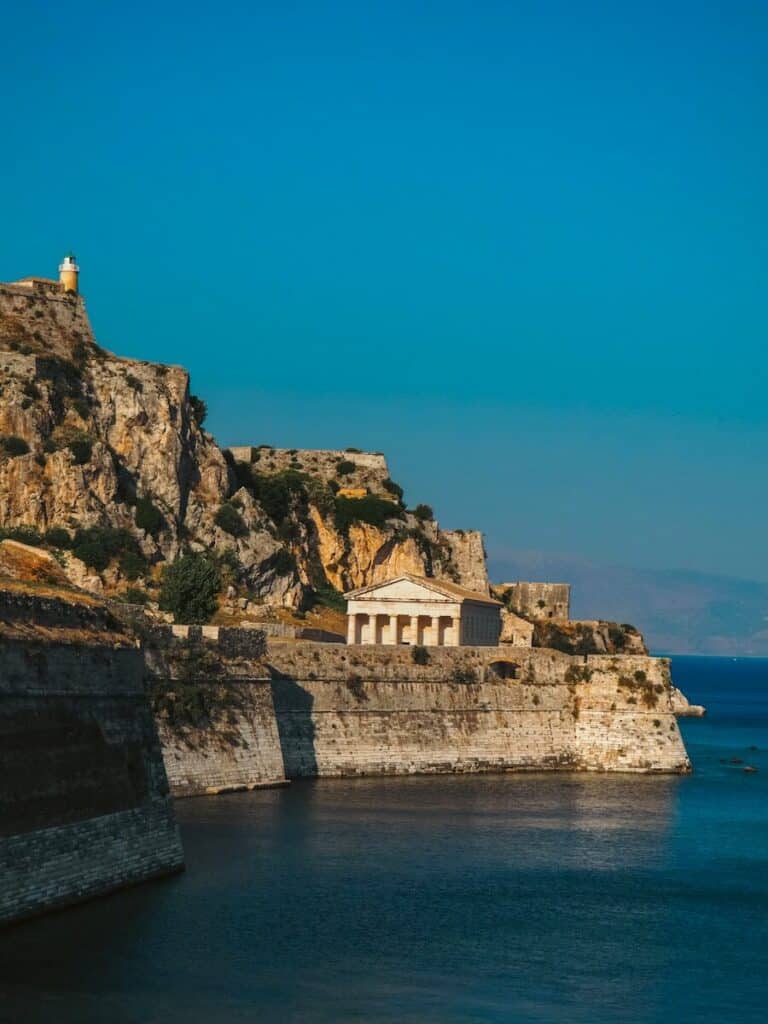
- Corfu (Corfu Town, Paleokastritsa, Benitses)
- Zakynthos (Zakynthos Town, Laganas, Navagio Beach)
- Kos (Kos Town, Tigaki, Kefalos)
- Lesvos (Mytilene, Molyvos)
- Kefalonia (Argostoli, Fiskardo, Skala)
On these islands, mobile data in Greece works similarly to any major Western European city. Signal is reliable in town centres, most beach areas, and on the main roads between them. The exception is always the interior mountain and rural areas of larger islands — these can have weaker signal on all three networks.
Islands with Limited Coverage (Cosmote Recommended)
On the following island types, Cosmote is the recommended network:
- Smaller Cyclades islands: Folegandros, Sikinos, Amorgos, Anafi, Koufonisia
- Dodecanese remote islands: Tilos, Symi (limited areas), Kassos, Kastellorizo
- Ionian smaller islands: Lefkada (interior), Ithaca (parts)
- North Aegean smaller islands: Limnos (rural), Samothraki (limited)

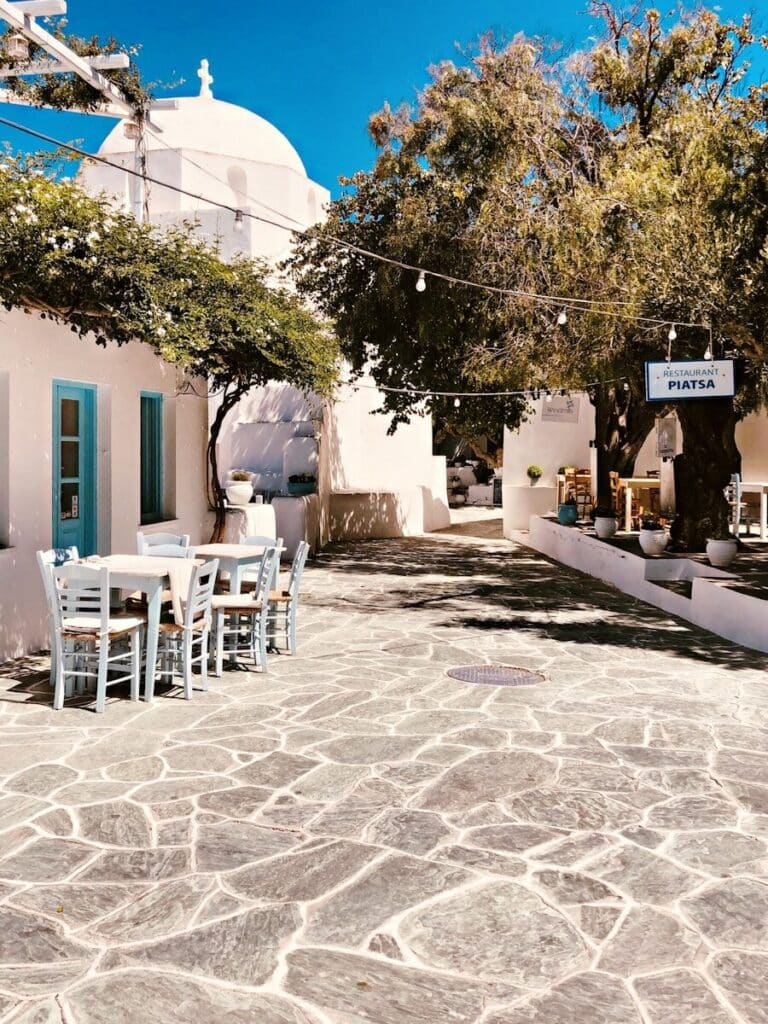
In some of these locations, Cosmote may have 4G coverage where Vodafone and Nova have only 3G or no signal. In the remotest cases — uninhabited or nearly uninhabited smaller islands — no operator provides coverage.
The practical advice: If your Greek trip includes any island beyond the main tourist hubs, use Cosmote or an eSIM that connects to Cosmote. Download offline maps for every island you're visiting before you leave your accommodation.
The Periptera Advantage
One of Greece's unique connectivity features is the periptera — small orange and blue street kiosks found on virtually every corner in cities, towns, and even on smaller islands. These kiosks sell newspapers, snacks, phone accessories, and critically, prepaid top-up vouchers and sometimes SIM cards for all three operators.
If you run out of data mid-trip on a Greek island, you don't necessarily need to find an operator store. A periptera on the harbour front will often sell you a top-up. This distribution network is more geographically spread than any operator store system and is genuinely useful for island-hopping travellers.
Buying a SIM Card in Greece
Where to Buy
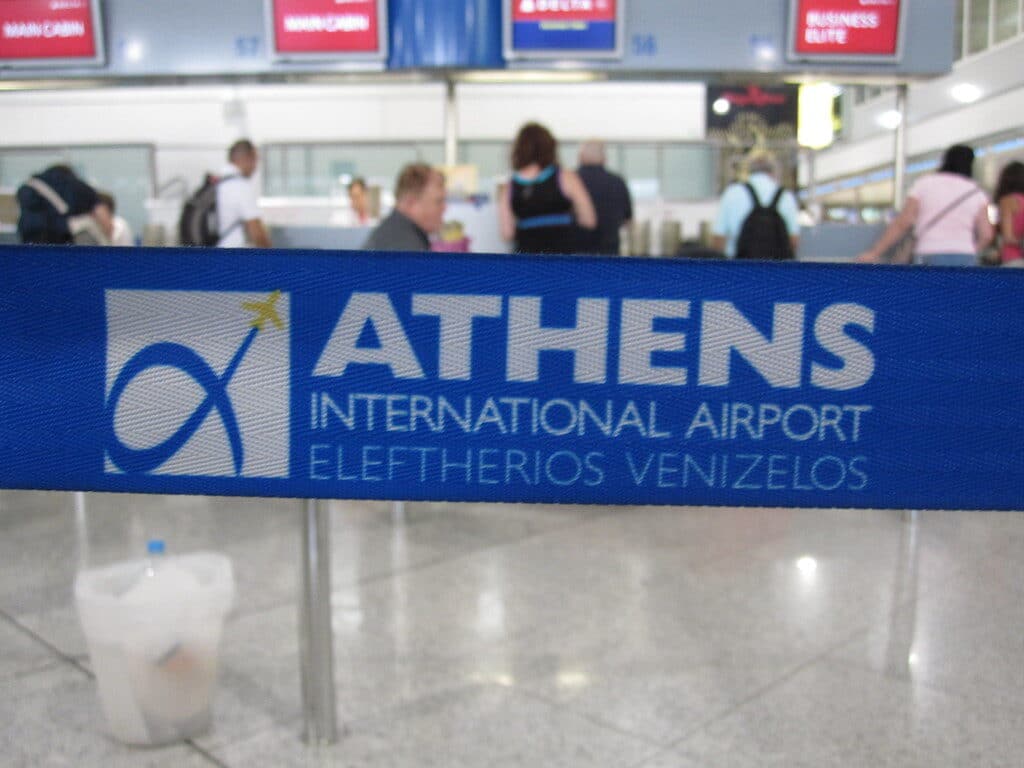
- Athens International Airport (Eleftherios Venizelos): All three operators have kiosks in the arrivals hall. This is the most immediate option for travellers who want to be connected from the airport. Cosmote and Vodafone are most prominently represented.
- Thessaloniki Airport (Makedonia): Operator kiosks available in arrivals
- Island airports: Larger island airports (Heraklion Crete, Rhodes, Corfu, Mykonos, Santorini) typically have operator kiosks; smaller airports may not
- City-centre stores: Operator branches in Athens (Syntagma, Monastiraki, Ermou Street), Thessaloniki, and in the main towns of larger islands
- Periptera: Top-up vouchers widely available; some kiosks stock prepaid SIM kits
- Supermarkets and electronics stores: Cosmote and Vodafone SIM kits available at Public (Greek electronics retailer) and some supermarkets
ID Requirements
Greek regulations require passport registration for prepaid SIM card purchases. Bring your passport — or EU national ID for EU citizens — to any operator kiosk or store. As with all other European countries in this series, eSIM purchases from international providers do not require this.
Current Tourist SIM Prices (2026)
| Operator | Plan | Data | Calls | Duration | Price |
|---|---|---|---|---|---|
| Cosmote | Tourist SIM | 10 GB | 300 mins + unlimited texts | 30 days | ~€15–20 |
| Vodafone | Tourist Plan | 7 GB | Free local + intl calls/texts | 30 days | ~€15–20 |
| Nova | F2G Prepaid | 10–15 GB | Varies by tier | 30 days | ~€15–25 |
| All operators | Higher data tiers | 10–15 GB | Various | 30 days | €20–25 |
| All operators | Unlimited/near-unlimited | ~Unlimited | Various | 30 days | €25–30 |
Best choice for most tourists: Cosmote's tourist SIM gives the broadest island coverage at competitive pricing. If your itinerary is Athens-plus-major-islands only, Vodafone's plan is equally good and often has competitive short-stay options.
eSIM for Greece: What's Available
For travellers with eSIM-compatible phones, setting up before you fly removes the airport kiosk queue and passport registration step. eSIM support for Greece is strong — Cosmote and Nova both sell eSIMs directly, and international travel eSIM providers cover Greece well.
Best eSIM Plans for Greece (2026)
| Provider | Plan | Price | Data | Network | Notes |
|---|---|---|---|---|---|
| Airalo | Greece 10 GB / 30 days | ~$16 | 10 GB | Cosmote/Vodafone | Best overall. reliable network |
| Airalo | Greece 5 GB / 30 days | ~$10 | 5 GB | Cosmote/Vodafone | Good for short/light-usage trips |
| Holafly | Unlimited / 7 days | ~$25 | Unlimited | Vodafone/Cosmote | Best for heavy users. hotspot 500MB/day |
| Holafly | Unlimited / 15 days | ~$38 | Unlimited | Vodafone/Cosmote | Two-week unlimited option |
| Nomad | 10 GB / 30 days | ~$16 | 10 GB | Varies | Good value. reliable |
| Saily | 10 GB / 30 days | ~$20 | 10 GB | Varies | Flexible top-up |
| ZetSIM | Various | ~€5–40 | Varies | Cosmote/Vodafone | Good for Greece-specific use |
Choosing the right eSIM for island travel: Before purchasing, confirm which Greek network your eSIM provider uses. If Cosmote is listed as the partner network, your island coverage will be the most comprehensive. Airalo specifies its network partner in the plan details — check before buying if smaller islands are on your itinerary.

Stay connected across Greece with instant mobile data. Activate before you fly and use your phone as soon as you land.
EU Travellers: Do You Need to Buy Anything?
If you're travelling to Greece from another EU country, the answer for most people is no. Under EU roaming regulations (“Roam Like at Home”), you use your home plan in Greece exactly as you would at home — same data, same calls, same rates.
What to check before you go:
- Your plan's roaming data allowance (some plans cap roaming at 10–20GB even if your home plan is unlimited)
- Whether your carrier requires you to activate roaming before travelling — some do; it's usually a free one-click activation in your carrier's app
- Whether your plan is genuinely EU-inclusive — some very low-cost EU plans have separate terms for roaming
For the vast majority of EU travellers on standard modern plans, Greece is covered at no extra cost. No eSIM, no SIM card purchase needed.
Non-EU Travellers: Why Roaming Is Expensive in Greece
For American, Australian, Canadian, and other non-EU travellers, roaming in Greece is significantly more expensive than staying connected locally. Typical daily roaming add-on packages from US, Australian, and Canadian carriers run:
- T-Mobile (USA): Unlimited international data included on Magenta plans, at reduced speeds (128Kbps in some markets — verify Greece specifically)
- AT&T (USA): International Day Pass ~$10/day; without it, rates can be very high
- Verizon (USA): TravelPass ~$10/day in Greece
- Telstra (Australia): Day Pass varies; Greece typically ~AUD $10/day
- Rogers/Bell/Telus (Canada): Varies; daily roaming typically CAD $12–15/day
For a 10-day trip, daily roaming fees can reach $100–150 USD before you've paid for a single night's accommodation. A Cosmote or Airalo eSIM for €15–20 is a dramatically cheaper alternative.
For UK travellers: Post-Brexit, UK carriers have varying Greece policies. O2 generally includes EU countries including Greece; EE charges a daily Roam Abroad fee; Three's roaming policy varies by plan. Check your specific contract before travelling.
How Much Mobile Data Do You Need for Greece?
Greece is a destination where data consumption varies more than most, because it depends heavily on whether you're in cities, on beaches, or island-hopping.
| Usage type | Estimated daily consumption | 7-day total | 14-day total |
|---|---|---|---|
| Light (messaging. maps. occasional browsing) | 0.5–1 GB/day | 3.5–7 GB | 7–14 GB |
| Standard (maps. social media. some video) | 1–2 GB/day | 7–14 GB | 14–28 GB |
| Heavy (streaming. uploading content. navigation) | 2–4 GB/day | 14–28 GB | 28–56 GB |
For most tourists on a typical Greek holiday: 10 GB for two weeks is sufficient if you're using your accommodation's WiFi for heavier tasks (video calls, streaming). 5 GB is workable for a week's trip to Athens or the main islands. If you're island-hopping with limited WiFi access, or if you're a content creator uploading photos and videos daily, choose an unlimited plan or a higher data tier.
One Greece-specific note: ferry journeys between islands can take several hours and are often accompanied by patchy mobile signal (especially in open sea between islands). Download maps, entertainment, and anything else you might need before boarding the ferry.
Coverage Notes Across Greece's Top Destinations
Athens
Excellent 4G/5G coverage throughout the city. The Acropolis area, Monastiraki, Syntagma, Plaka, and Piraeus port all have strong signal. Athens International Airport has full coverage and operator kiosks in arrivals. The Athens Metro has connectivity on main lines.
Thessaloniki
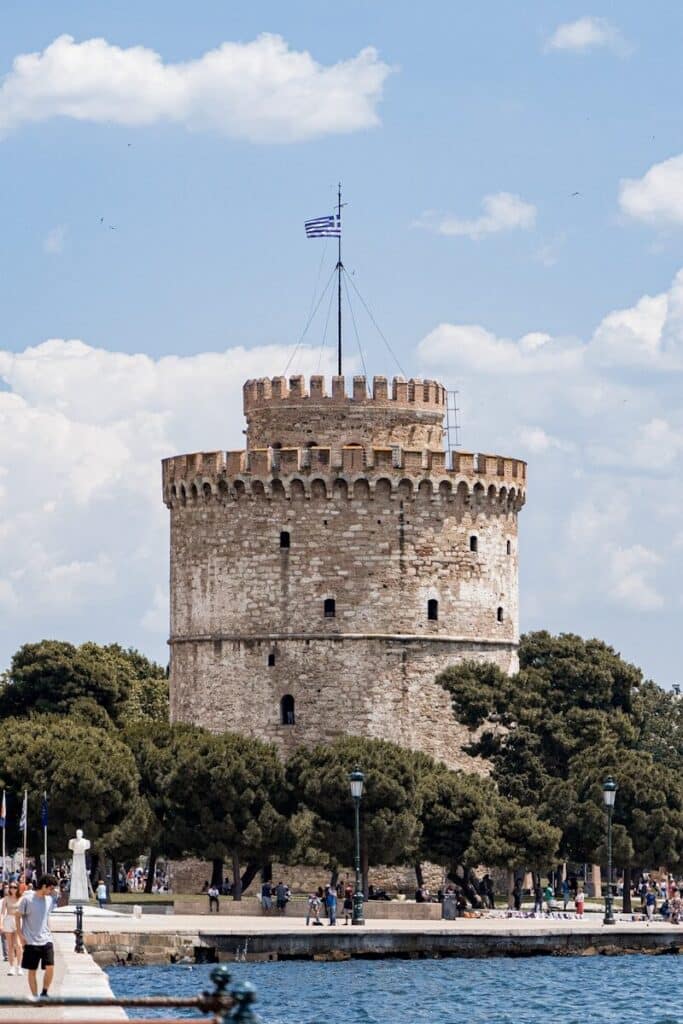
Strong 4G/5G coverage in the city centre, waterfront, and surrounding areas. Makedonia Airport has operator kiosks.

Santorini
Excellent coverage in Fira, Oia, Imerovigli, Perissa, and Akrotiri. Signal can weaken slightly in the caldera clifftop areas and on narrow internal roads, but generally reliable across all three operators.
Mykonos
Strong coverage throughout. Mykonos Town (Chora), Paradise Beach, Ornos, and Psarou are all well-covered. The island's compact size means coverage is consistent across most areas.


Crete
All three operators cover the main cities and north coast resorts well. Heraklion, Chania, and Rethymno have 4G/5G. The Samaria Gorge hiking area and remote south coast villages have weaker signal — download offline maps before heading to the gorge. Heraklion Airport has operator kiosks.
Rhodes
Strong coverage in Rhodes Town and Lindos. Resort areas (Faliraki, Ialyssos, Kallithea) are well-covered. Remote areas in the island's interior are patchier — Cosmote is the most consistent performer.


Corfu
Good coverage in Corfu Town and main resort areas. Signal is weaker in the mountainous north of the island (Peroulades, Roda) and in some rural inland areas.
Remote Cyclades (Folegandros, Amorgos, Koufonisia)
Coverage is limited to Cosmote in most of these islands. Expect 4G in main port villages, potentially 3G in rural areas, and no signal in very remote interior locations. Always have offline maps installed before arriving.

Frequently Asked Questions
Do I need a SIM card for Greece if I have an EU phone plan?
No, if you have a mobile plan from an EU country, your plan works in Greece at no extra charge under EU roaming rules (“Roam Like at Home”). You can use your phone exactly as you would at home, with the same data, calls, and texts. The only thing to check is your plan's roaming data cap — some plans limit roaming data to 10–20GB even if your home allowance is higher. If your plan has a roaming cap and you'll use data heavily, it's worth monitoring your usage or buying a top-up if needed.
Which Greek operator is best for island coverage?
Cosmote. As Greece's largest and most-established operator, Cosmote has the broadest island coverage — including on smaller and less-visited islands where Vodafone and Nova have limited or no presence. If your itinerary includes popular islands like Santorini, Mykonos, Crete, and Rhodes, all three operators perform well. If you're island-hopping to less-visited destinations or visiting the smaller Cyclades, Cosmote is the recommended choice. When choosing an eSIM provider for Greece, check which network the plan uses — Cosmote-backed eSIM plans will give the most comprehensive island coverage.
Is there WiFi on Greek island ferries?
Most large ferry lines (Blue Star Ferries, Hellenic Seaways, Minoan Lines) offer onboard WiFi on their larger vessels, though speeds are variable and can be slow on longer journeys. Smaller ferries between nearby islands typically have no WiFi. Before boarding any overnight or long-haul ferry, download offline maps, any navigation you need, and entertainment — don't assume WiFi will be available or usable.
Can I buy a SIM card on a Greek island?
Yes, on most inhabited Greek islands. Major tourist islands (Santorini, Mykonos, Crete, Rhodes, Corfu) have operator stores in the main town. Smaller islands may not have operator stores, but periptera (street kiosks) sell prepaid top-up vouchers and sometimes SIM card kits. For the most remote islands, your best option is to arrive with a SIM or eSIM already active. Don't rely on being able to buy a SIM on a very small island.
Does an eSIM work on all Greek islands?
An eSIM works wherever its partner network has coverage. eSIM plans that route through Cosmote will work on the widest range of Greek islands. eSIM plans using Vodafone will cover all major tourist islands reliably. The critical step is checking which Greek network your eSIM provider uses for their Greece plan — this is usually listed in the plan description. If it specifies Cosmote as the partner, you have the best available island coverage. If your provider doesn't specify, contact their support before purchasing.
What's the best option for a two-week island-hopping trip?
A Cosmote tourist SIM purchased at Athens Airport on arrival is the most reliable single option for island-hopping trips, particularly those that include smaller islands. It gives you the broadest coverage, a local number, and 10GB of data at around €15–20 with 30-day validity. If you prefer not to deal with the airport kiosk, an Airalo eSIM that specifies Cosmote as the Greece network partner is the equivalent digital option, set up before you fly. For two weeks with normal usage, 10GB is sufficient if you use accommodation WiFi for video streaming.
Final Thoughts
Mobile data in Greece works well for the vast majority of tourist itineraries — the mainland and the popular islands are reliably covered, prices are reasonable, and the combination of operator kiosks at Athens Airport and the country's widespread periptera network means getting connected is accessible from almost anywhere.
The one area where preparation genuinely matters is island coverage. Not every island has the same level of connectivity, and knowing which operator covers your specific destinations — and having offline maps as a backup — makes a real difference on a Greek island-hopping trip. For most visits, Cosmote gives the broadest safety margin, whether through a physical SIM or an eSIM that confirms Cosmote as the partner network.
Non-EU travellers should buy a local SIM or eSIM before or immediately on arrival — Greek roaming fees are high enough that a €15–20 SIM card pays for itself within two or three days of avoiding daily roaming charges.
Stay connected across Greece with instant mobile data. Activate before you fly and use your phone as soon as you land.
➡ How to get internet in Italy as a traveller
➡ Do you need an eSIM for Spain?
➡ Best way to stay connected in Portugal
Add your first comment to this post