


In a Rush?
Top Coastal Hotels in Portugal
- ⭐⭐⭐ Hotels in the Algarve – Check prices and availability
- ⭐⭐ Hotels in Cascais – Check prices and availability
- ⭐ Hotels in Comporta – Check prices and availability
Finding the best beaches portugal has to offer depends entirely on which coastline you're drawn to.
Portugal has one of the most diverse coastlines in Europe. The Algarve gets most of the attention, but the country's beaches stretch from the wild Atlantic coast of the Alentejo to the surf breaks of the north, the natural park coves near Lisbon, and even the volcanic black sand beaches of the Azores and Madeira.
We think the best Portuguese beach is not in the Algarve — it depends on what you want. This guide covers the best beaches by region and by type, so you can plan the right beach trip for your travel style.
At a Glance
This table breaks down the best beaches portugal has to offer before the details below.
| Region | Best For | Water Temp (Summer) | Crowds | Beach Type |
|---|---|---|---|---|
| Algarve (central) | Dramatic cliffs, caves, family | 20-23°C | High | Golden sand coves |
| Algarve (east) | Long sandbars, quiet | 21-24°C | Moderate | Barrier islands |
| Algarve (west) | Surf, wild coast, solitude | 17-20°C | Low | Windswept, rugged |
| Lisbon Coast | Easy access from city | 18-21°C | High | Sandy bays |
| Comporta & Alentejo | Remote, unspoiled | 18-21°C | Low | Endless sand dunes |
| Costa de Prata | Surf, family, camping | 16-19°C | Moderate | Long sandy beaches |
| Costa Verde | Northern beauty, fresh water | 15-18°C | Low | Rocky coves, surf |
| Azores | Volcanic landscapes, wild | 20-24°C | Very low | Black sand, natural pools |
| Madeira | Dramatic scenery, hiking | 20-22°C | Moderate | Pebble, volcanic platforms |
The Algarve: Portugal's Beach Capital
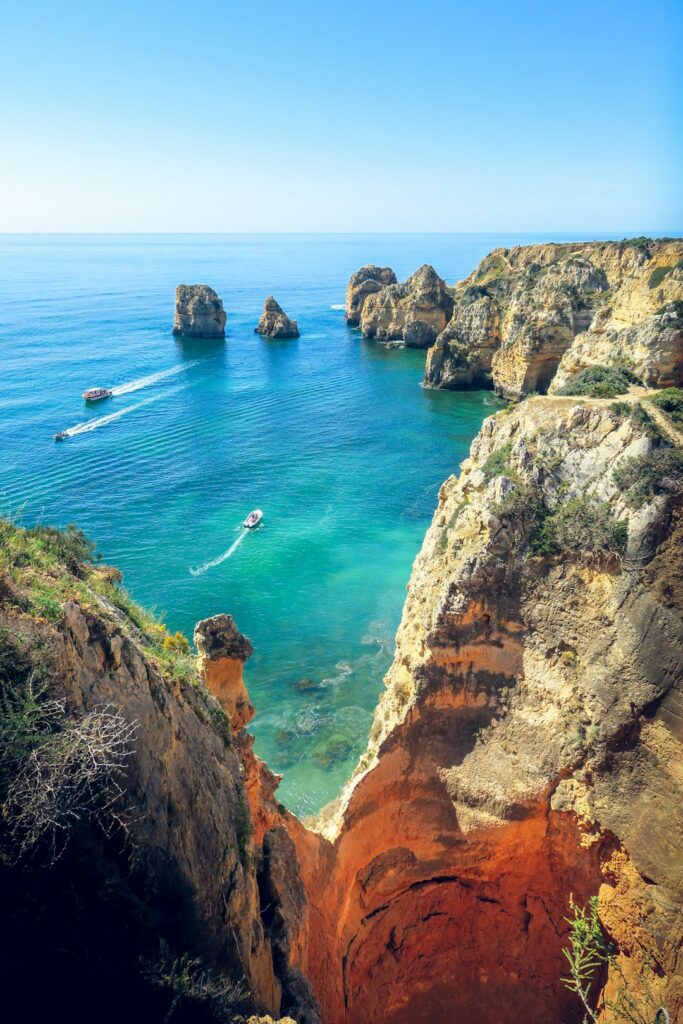
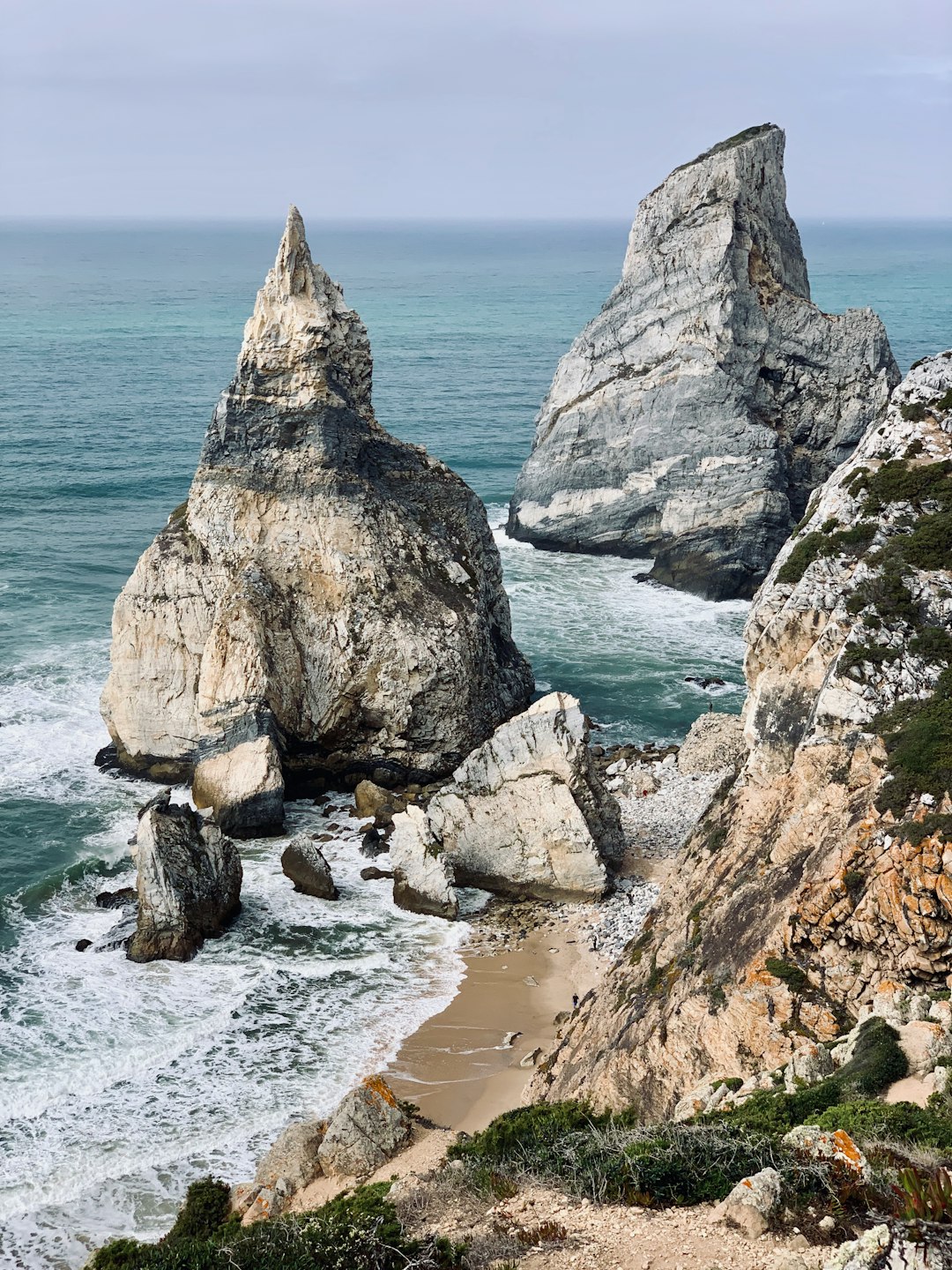
The Algarve has over 150 beaches, each with a distinct character. The most famous are in the central region around Lagos and Albufeira — golden cliffs, sea caves, and calm waters.
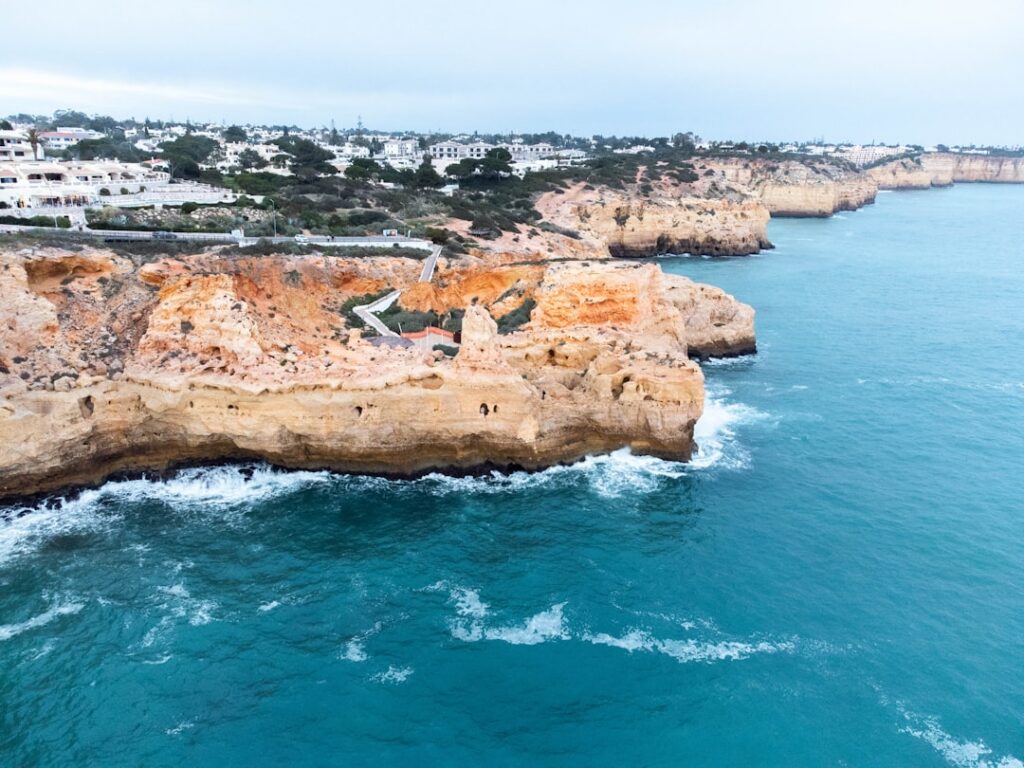
Praia da Marinha (Caramoeira)
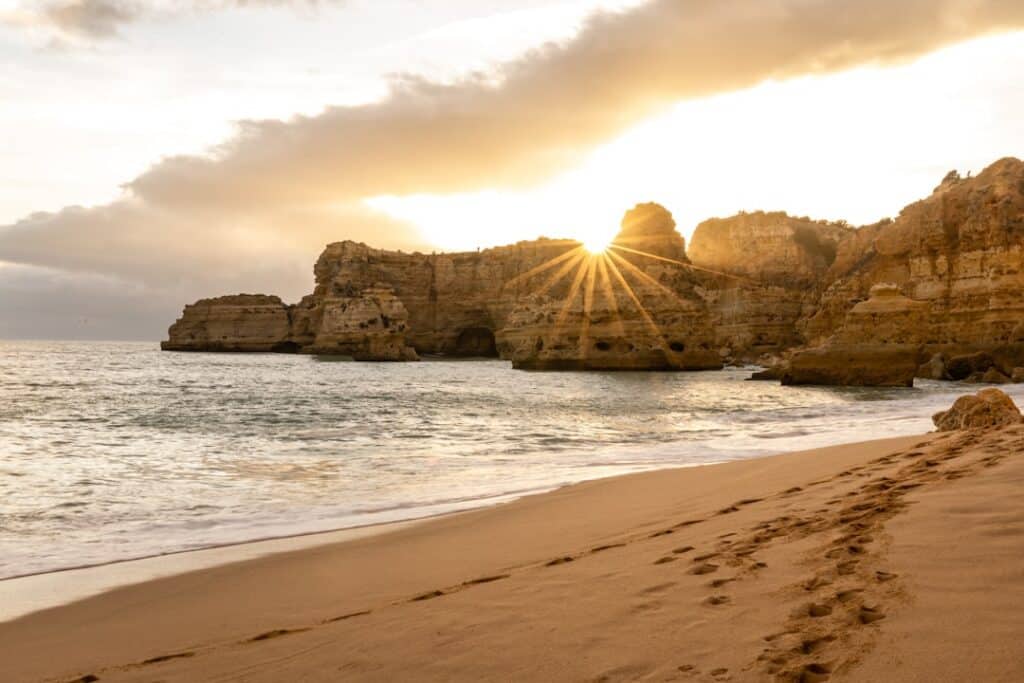
One of the most photographed beaches in Portugal and a designated natural monument. The iconic double-sea-arch rock formation, clear water, and golden cliffs make it the postcard image of the Algarve.
- Best for: Photography, families (calm water), couples
- Access: 70 steps down a cliff path. No wheelchair access.
- Facilities: Parking, small cafe, lifeguards in summer.
- Crowds: High in July-August. Arrive before 10 AM.
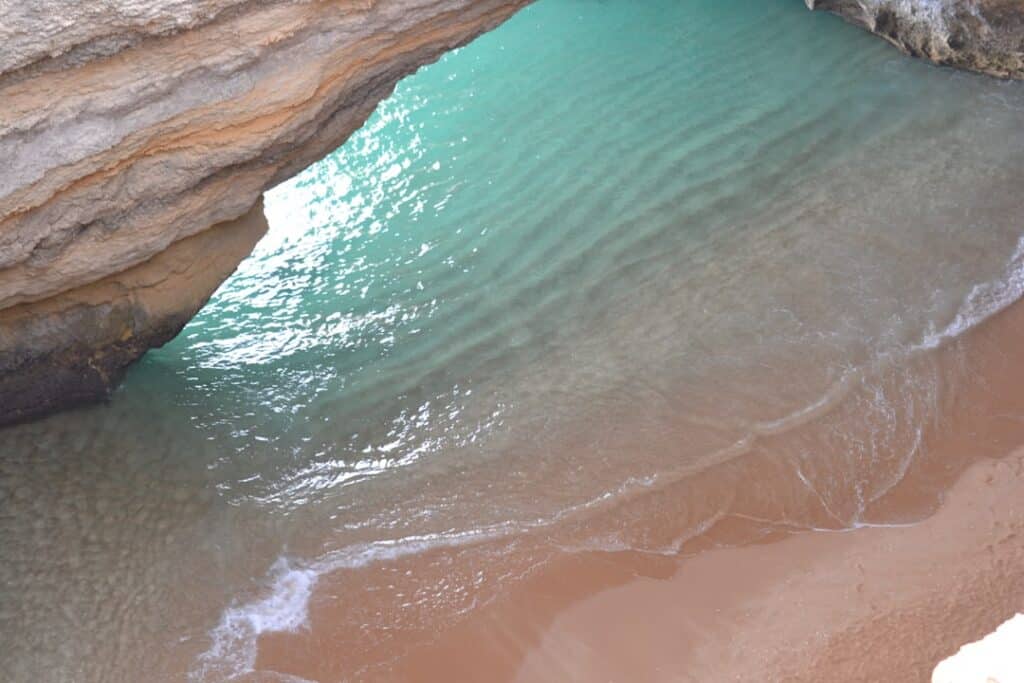
Praia do Camilo (Lagos)
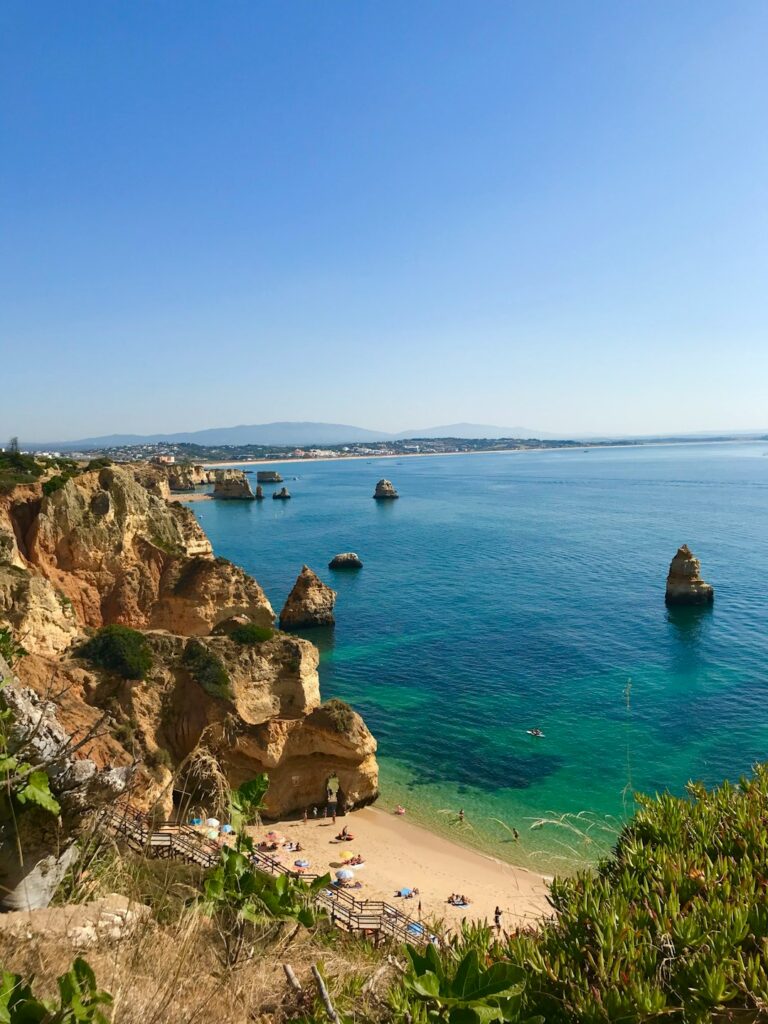
A small cove reached by 200 wooden steps. Two caves and turquoise water that rivals the Caribbean. The view from the top of the steps is one of the best in Portugal.
- Best for: Swimming, snorkelling, Instagram
- Access: 200 steps. Steep return climb.
- Facilities: Restaurant at the top, small beach bar.
- Crowds: Very high midday. Go early or late afternoon.
Praia da Falésia (Albufeira)
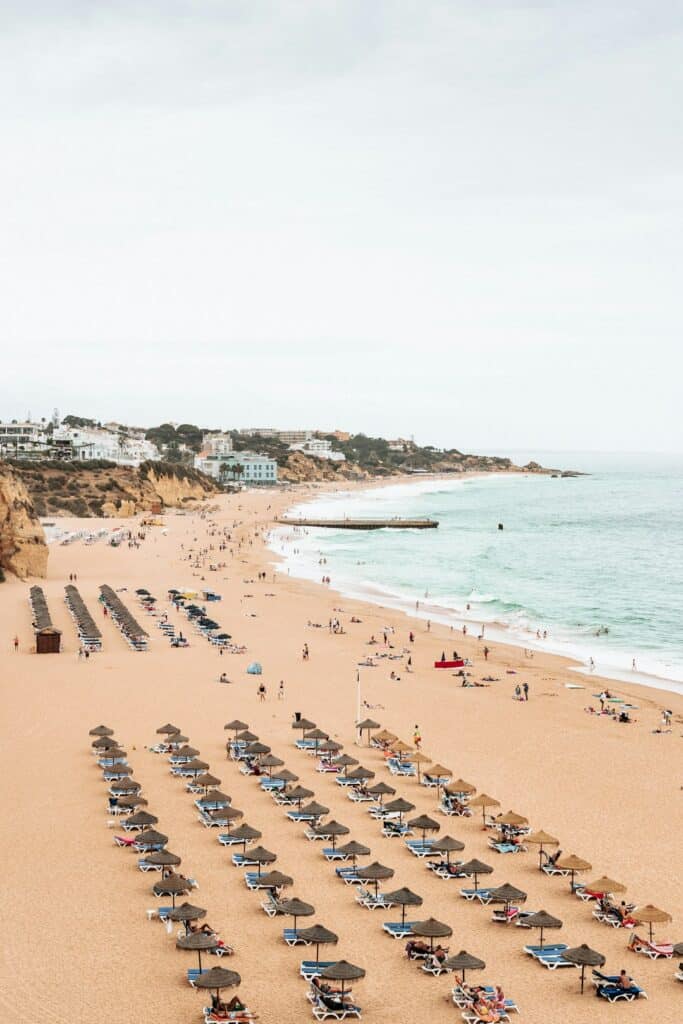
A six-kilometre stretch of red-and-gold cliffs with a wide sandy beach below. Unlike most Algarve beaches, it rarely feels crowded because the beach is long enough to spread out.
- Best for: Long walks, families, sunset
- Access: Multiple access points along the cliff top. Some have boardwalks.
- Facilities: Several beach bars (barracas), parking, lifeguards.
- Crowds: Moderate where access points meet the sand, but walk 200 metres and you'll find space.

Praia do Barril (Tavira, Eastern Algarve)
Reached by a tourist train from Tavira or a 20-minute walk. The beach is on a barrier island with an anchor cemetery — hundreds of rusted anchors left behind by tuna fishermen.
- Best for: Quiet, unique photo opportunities, families
- Access: Train from Pedras d'El-Rei or walk across the bridge.
- Facilities: Beach bar, restaurant, toilet. No umbrella rentals.
- Crowds: Low to moderate. Further from the Algarve's tourist core.
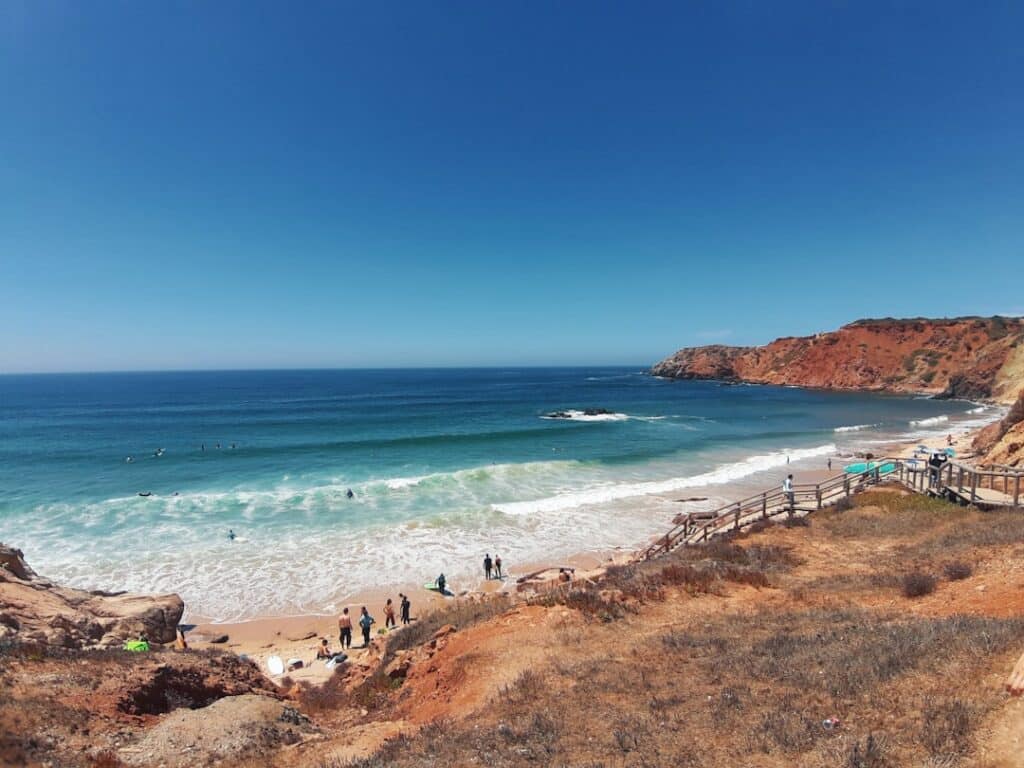
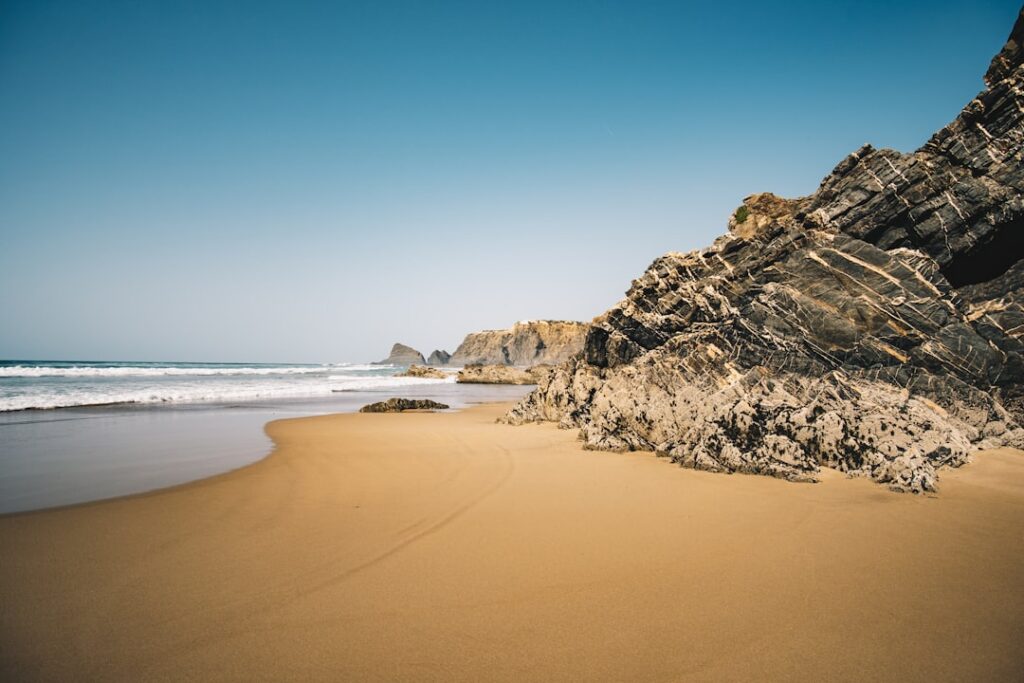
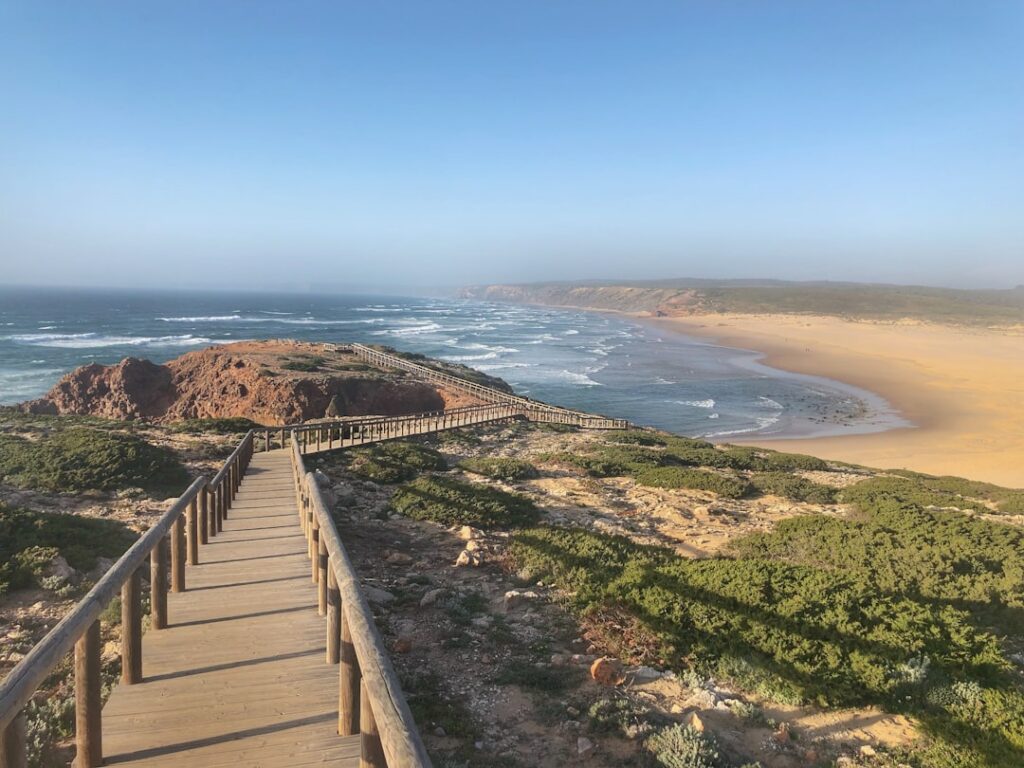
Praia da Cordoama (Sagres, Western Algarve)
This is the Algarve at its wildest. No cliffs, no caves — just a massive stretch of windswept Atlantic beach. The water is colder and the waves are bigger.
- Best for: Surfing, solitude, wind
- Access: Unpaved road. Free parking.
- Facilities: One bar. Bring everything you need.
- Crowds: Very low. Even in August you'll have space.
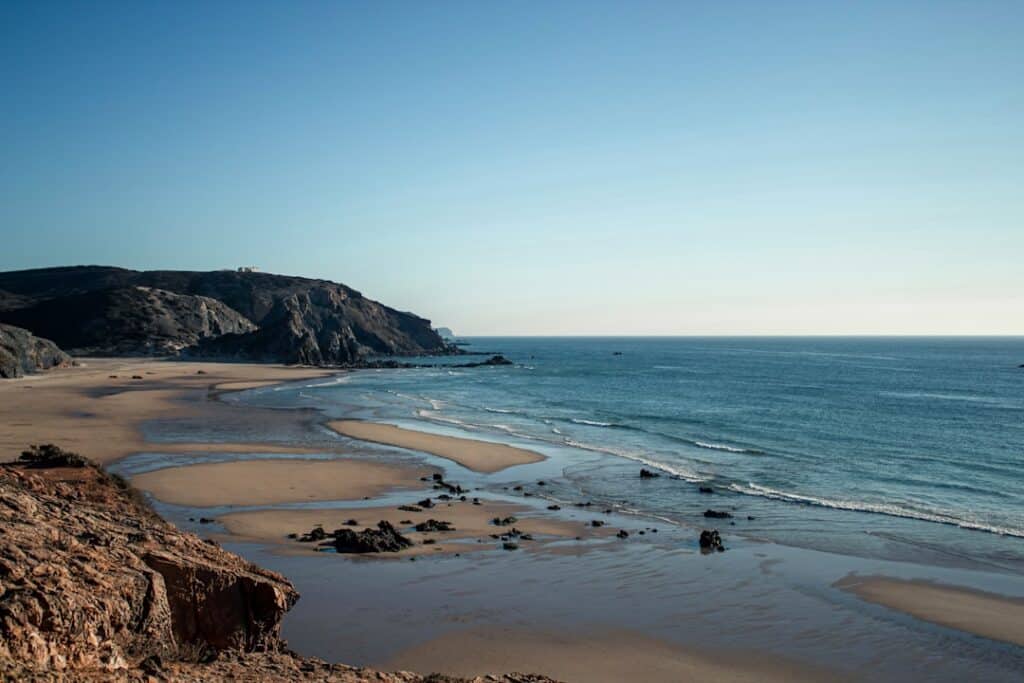

The Lisbon Coast: City Beach Access
Costa da Caparica
A 30-kilometre stretch of white sand 20 minutes from central Lisbon. The beaches closest to the city are busy, but the southern end (Fonte da Telha) is quieter and has better waves.
- Best for: Day trips from Lisbon, surf, convenience
- Access: Bus 161 from Lisbon or drive. Excellent public transport.
- Facilities: Beach bars, restaurants, toilet, showers, umbrellas.
- Crowds: Very high at the main section (Praia 1-10). Quieter south.

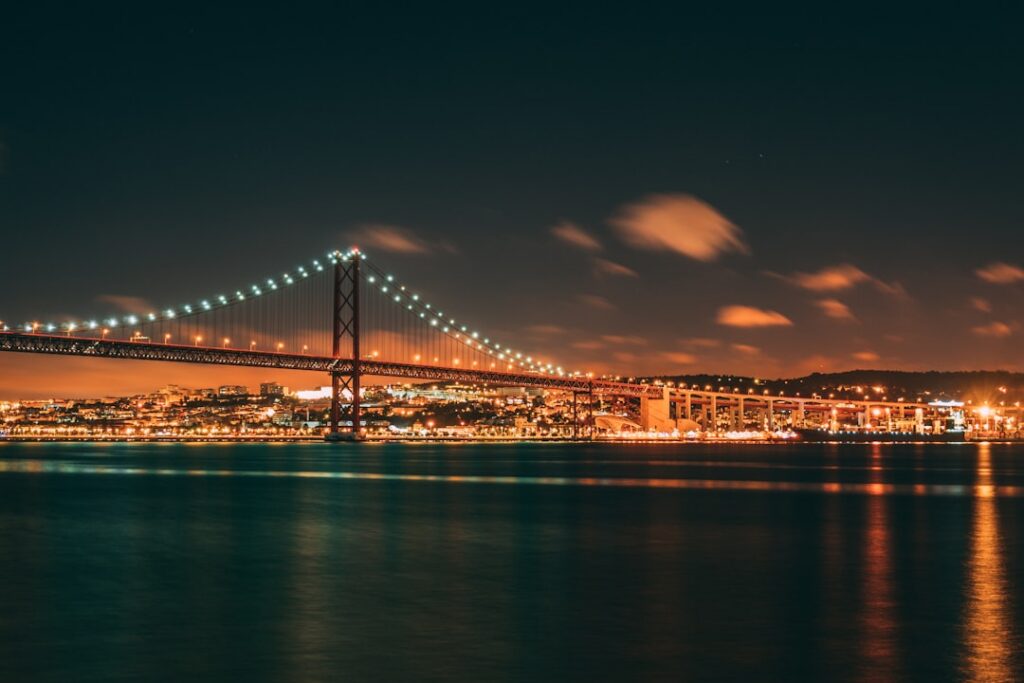
Praia dos Galapinhos (Arrábida Natural Park)
Voted the best beach in Europe in 2017. A small, sheltered cove surrounded by the green hills of the Arrábida Natural Park. The water is crystal clear.
- Best for: Snorkelling, nature, calm water
- Access: Parking is limited. Arrive early or visit on weekday.
- Facilities: Basic. No umbrella rentals. Small kiosk.
- Crowds: Gets busy in summer but manageable.
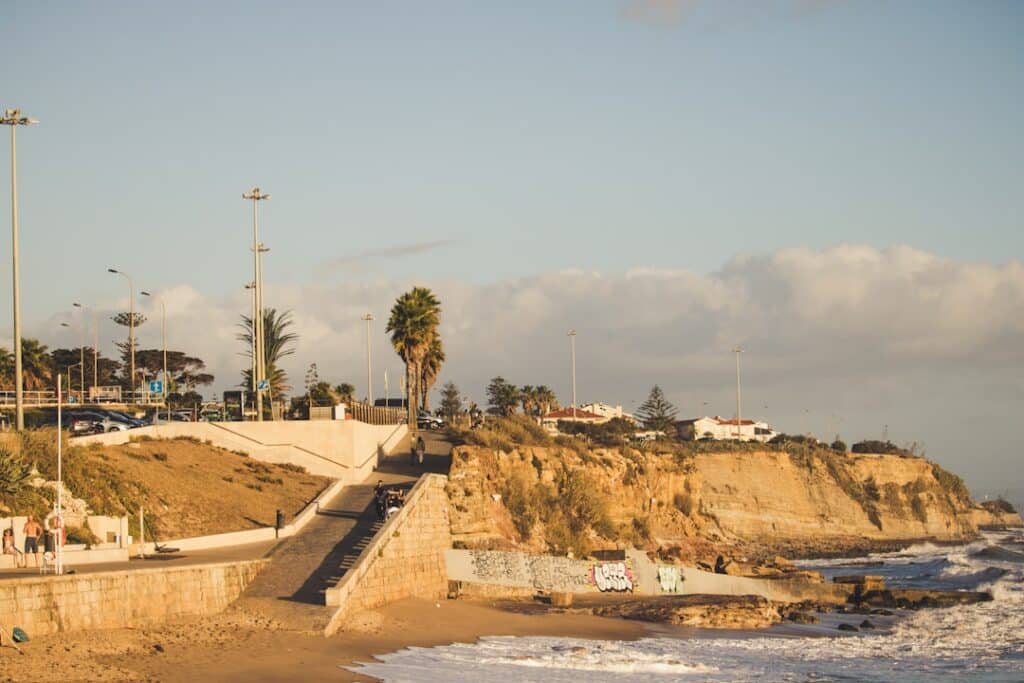

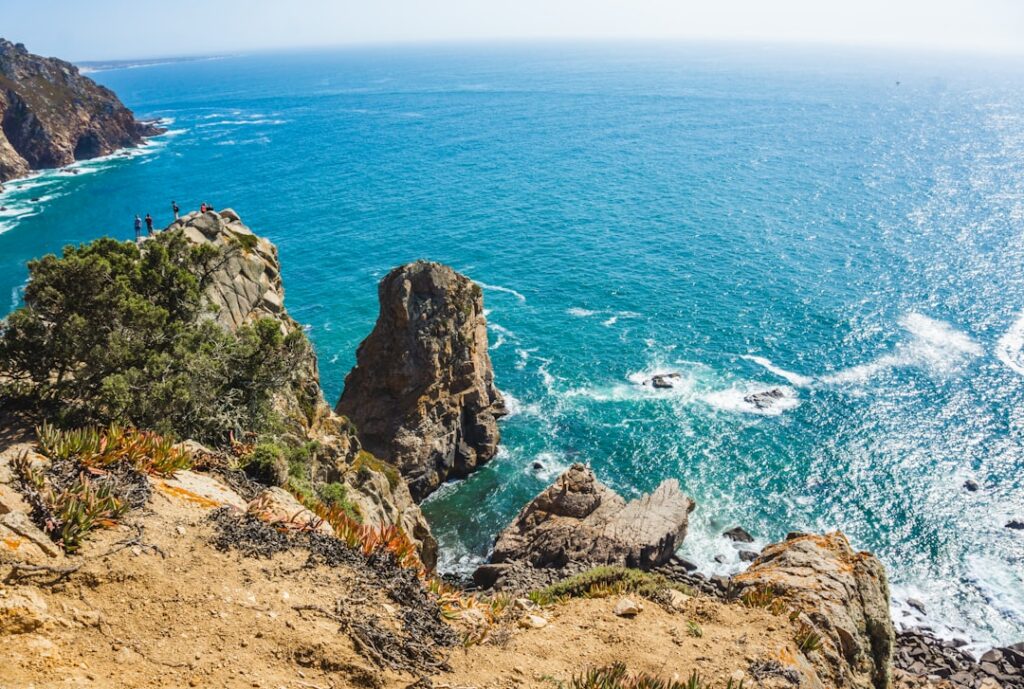
Praia da Adraga (Sintra Coast)
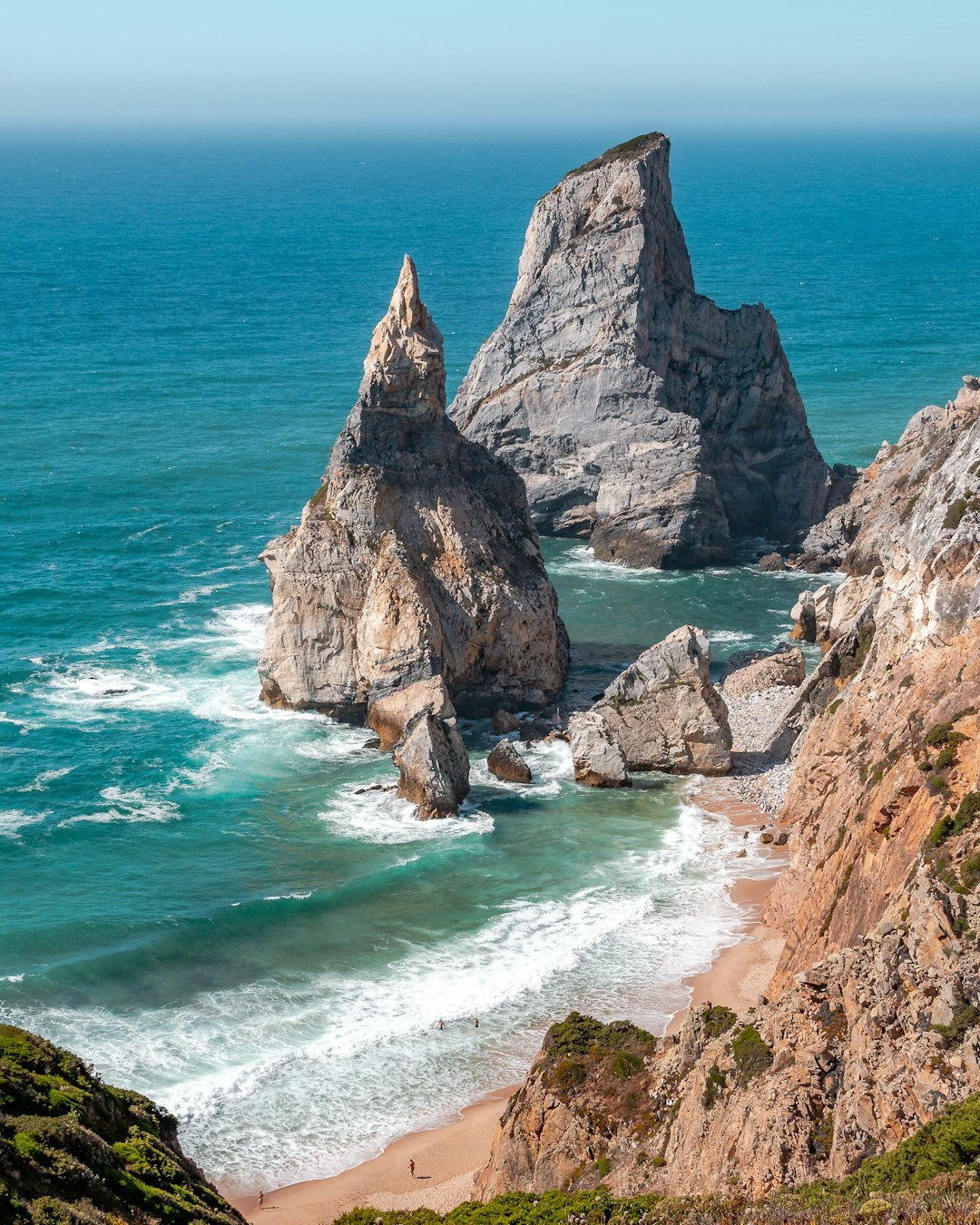
A wild, beautiful beach near Sintra with a restaurant built into the cliff. The surrounding coastline has dramatic rock formations and a natural arch.
- Best for: Scenery, seafood, cliff walks
- Access: Drive from Sintra (10 min). Limited parking.
- Facilities: Excellent seafood restaurant (Adraga).
- Crowds: Moderate. Weekdays are quiet.
Sintra itself gets busy with day-trippers heading for the palaces, so it helps to stay somewhere quiet nearby. The Hotel Nova Sintra is a well-reviewed option with views over the town, a short drive from the coast.
Comporta & Alentejo: Untouched Sand
Praia do Carvalhal (Comporta)
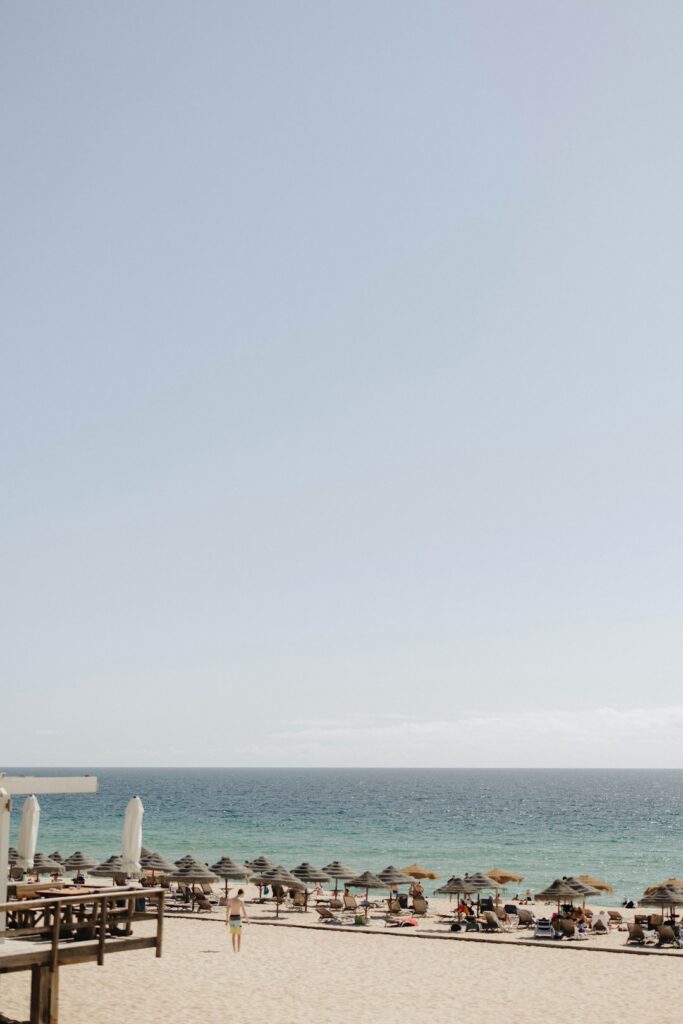
Comporta is the Hamptons of Portugal — chic, low-key, and exclusive. The beach stretches for kilometres with barely any development. Rice fields and pine forests meet the sand.
- Best for: Luxury without crowds, nature, cycling
- Access: 1 hour south of Lisbon. Dirt road from Comporta village.
- Facilities: Pop-up beach bars (Sublime, Dona Benta), toilet.
- Crowds: Very low relative to quality. Stylish crowd.

Praia da Franquia (Vila Nova de Milfontes)
The most popular beach in the Alentejo. A wide river mouth meets the ocean, creating a protected swimming area on one side and surf on the other.
- Best for: Families, sunsets, cafes
- Access: Walk from the town centre.
- Facilities: Restaurants, bars, shops.
- Crowds: Moderate (busiest in Alentejo, still quiet by Algarve standards).
Vila Nova de Milfontes has a limited number of places to stay, so it pays to book ahead in summer. The Duna Parque Beach Club is a popular pick within walking distance of the river beach.

Praia do Odeceixe (Algarve-Alentejo Border)
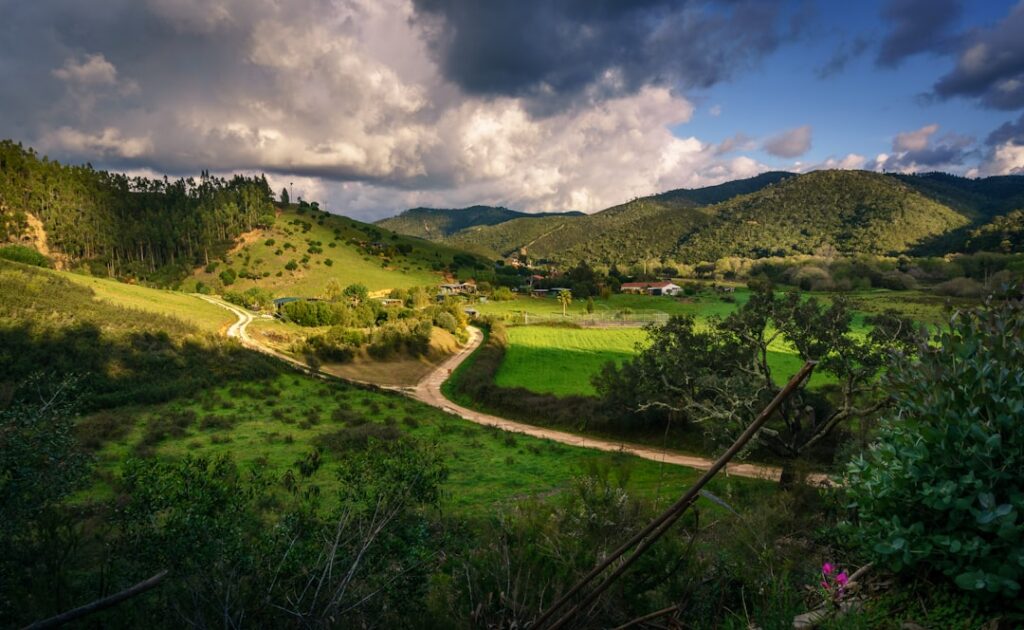
At the northern edge of the Algarve, Odeceixe is a wide river beach that meets the ocean. The river side is calm and shallow for children. The ocean side has excellent waves.
- Best for: Families with kids, surf, nature
- Access: Walk from Odeceixe village (30 min) or drive.
- Facilities: One bar, no umbrella rental.
- Crowds: Low.

Costa da Prata & Costa Verde: The Atlantic North
Praia do Cabedelo (Viana do Castelo)
A long golden sand crescent — we think this is the best beach in northern Portugal. with the Lima River on one side and Atlantic waves on the other. Consistently rated one of the best beaches in northern Portugal.
- Best for: Surf, families, river swimming
- Access: Ferry from Viana do Castelo (5 min) or drive.
- Facilities: Several bars, surf schools, toilet.
- Crowds: Moderate.
Viana do Castelo makes a comfortable base for exploring this stretch of coast. The Quinta da Bouca d'Arques is a highly rated option a short drive from the beach, popular for its quiet setting.
Nazaré (Praia do Norte)
Nazaré is famous for big wave surfing — the biggest waves in the world break here in winter. In summer, it's a family beach with a cable car up to the cliff.
- Best for: Surf watching, family, seafood
- Access: Walk from Nazaré town or cable car from Sitio.
- Facilities: Many restaurants, bars, shops, toilet.
- Crowds: High in summer — Nazaré is a popular resort.

The Azores: Volcanic Beach Paradise
Praia Formosa (Santa Maria, Azores)
A massive golden sand beach on an island of black volcanic rock. Santa Maria is the driest and sunniest of the Azores, and Praia Formosa is the best beach.
- Best for: Wilderness, space, natural pools
- Access: Drive from Vila do Porto (15 min).
- Facilities: Minimal. No umbrella rental. Bring supplies.
- Crowds: Very low.

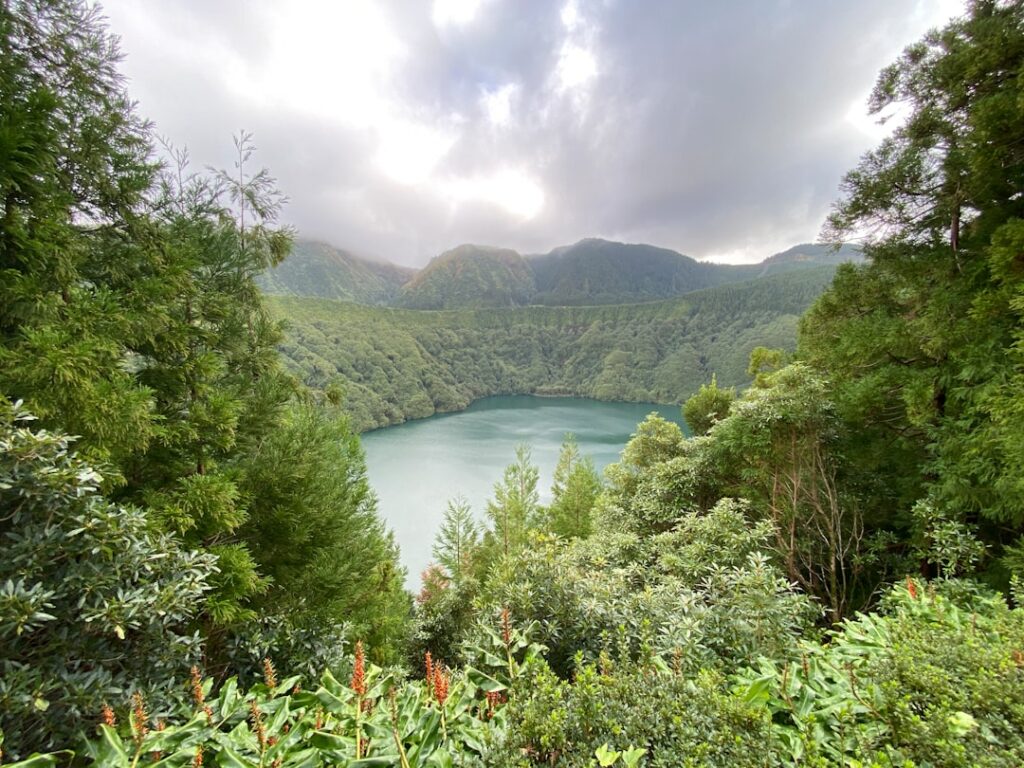
Praia dos Moinhos (São Miguel, Azores)
A black sand beach in a small cove near Ponta Delgada. The dark volcanic sand is typical of the Azores — not warm to the touch, but the water is clean and clear.
- Best for: Volcanic scenery, hot springs nearby
- Access: Walk from Ponta Delgada or drive.
- Facilities: Cafe, toilet.
- Crowds: Low.
We recommend visiting the Azores at the end of any Portugal beach trip — the contrast between the golden Algarve and the volcanic Azores is unforgettable.
Ponta Delgada is the easiest base for exploring São Miguel's beaches and crater lakes. The Nine Dots Azorean Art Boutique Hotel is a highly rated option in the town centre, close to the harbour.

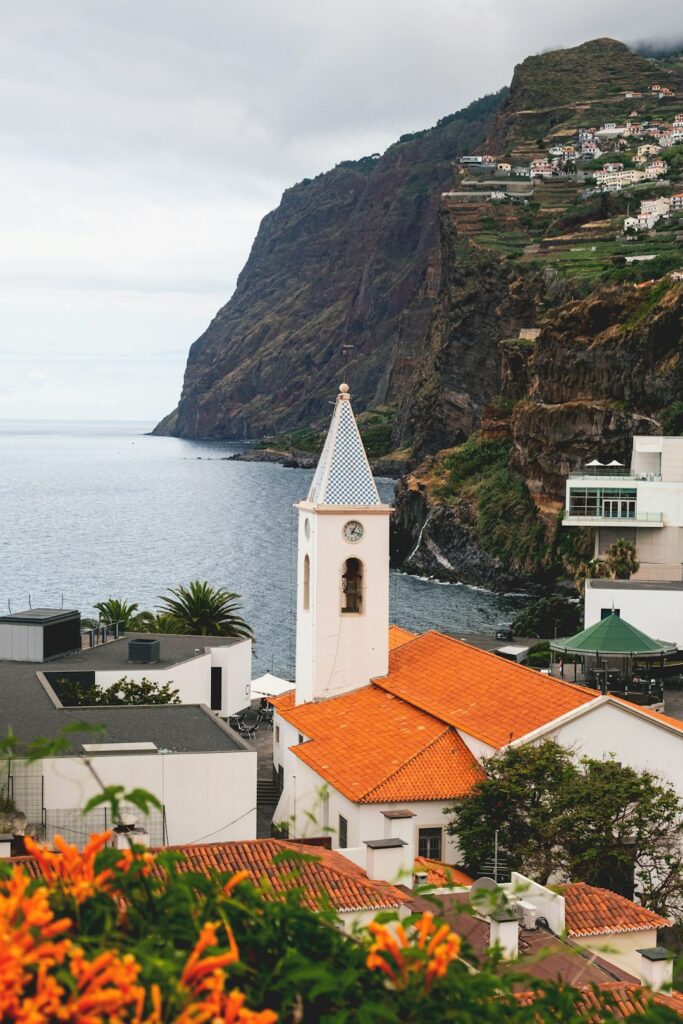
Madeira: Dramatic Coastline
Praia do Porto Santo (Porto Santo Island)
A nine-kilometre stretch of golden sand — the only proper sandy beach in the Madeira archipelago. The water is shallow and warm. The sand is said to have therapeutic properties.
- Best for: Relaxation, therapeutic sand, swimming
- Access: 2-hour ferry from Funchal.
- Facilities: Resorts, restaurants, bars.
- Crowds: Moderate.
Funchal makes the easiest base for exploring Madeira's beaches, including the ferry over to Porto Santo. The Reserve is a highly rated option in Funchal, within easy reach of the ferry terminal.
Praia do Seixal (Madeira Mainland)
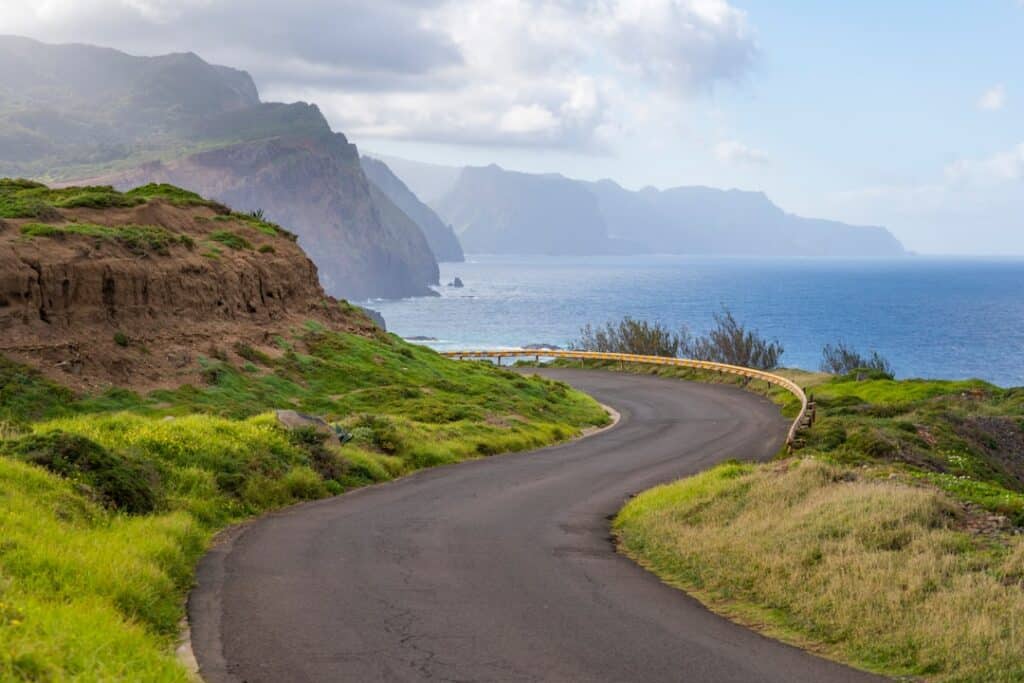
A black pebble beach surrounded by cliffs and a waterfall. The water is crystal clear. One of the few swimmable beaches on Madeira's north coast.
- Best for: Scenery, swimming in nature
- Access: Drive from Porto Moniz or São Vicente. Narrow winding roads.
- Facilities: One restaurant.
- Crowds: Low.

Beach Guide by Travel Style
| You're Looking For | Beach | Region |
|---|---|---|
| Postcard-perfect cliffs | Praia da Marinha | Central Algarve |
| Turquoise water, swimming | Praia do Camilo | Algarve (Lagos) |
| Endless walks, space | Praia da Falésia | Algarve (Albufeira) |
| Remote and wild | Praia da Cordoama | Western Algarve |
| Unique photo opportunity | Praia do Barril | Eastern Algarve |
| Best surf | Praia do Cabedelo | Costa Verde |
| Big wave watching | Praia do Norte | Nazaré |
| Day trip from Lisbon | Costa da Caparica | Lisbon Coast |
| Luxury and peace | Praia do Carvalhal | Comporta |
| Best for families | Praia do Odeceixe | Algarve/Alentejo |
| Volcanic landscape | Praia Formosa | Azores |
| Madeira's best beach | Praia do Porto Santo | Madeira |
When to Visit
| Season | Beach Conditions | Best For |
|---|---|---|
| May-June | Water 17-21°C, sunny, fewer crowds | Best balance |
| July-August | Water 20-24°C, peak crowds, hot | Guaranteed sun |
| September | Water 19-23°C, fewer crowds | Best month |
| October | Water 17-20°C, quiet | Surf, solitude |
We think September is the best month for Portuguese beaches — the water is still warm from summer, the crowds have thinned, and prices drop.
Getting Around
Many of the best beaches are not easily reached by public transport. We recommend renting a car so you can access the remote stretches. The Algarve coast road (N125 or A22) connects most major beach towns.
For the Lisbon coast and Costa da Caparica, public buses run regularly. For Comporta, you'll need a car. For the Azores and Madeira, rent a car at the airport.

Staying Connected
Portugal's mobile coverage is excellent along the coast. We recommend getting an eSIM before you leave so you have navigation for finding those less-crowded beaches, translation for menus at remote beach bars, and backup accommodation booking if your plans change.
Frequently Asked Questions
What part of Portugal has the best beaches?
The Algarve has the most famous beaches, but the Arrábida Natural Park near Lisbon and the Azores have beaches that match or exceed the Algarve for scenery.
Which is the best beach in the world in Portugal?
Praia da Marinha was voted one of the world's best beaches by several publications. Praia dos Galapinhos was voted best in Europe in 2017.
Are beaches in the Algarve swimmable?
Yes, the central and eastern Algarve beaches have calm, swimmable waters from June to September. The western Algarve (Sagres) has stronger currents and larger waves.
What are the don'ts of Portugal beaches?
Don't smoke on the beach (it's banned). Don't walk on protected dune areas. Don't take sand or shells, it's illegal. Don't expect hot water on the Atlantic side, even in August, water temperatures rarely exceed 23°C.
Which is better: Algarve or Alentejo?
The Algarve has more beaches, more facilities, and warmer water. The Alentejo has fewer people, wilder beaches, and a more relaxed atmosphere. We think both are worth visiting.
Final Thoughts
The best beaches portugal has to offer range from dramatic cliffs to wide Atlantic stretches, so pick based on the vibe you want.
Portugal's coastline is one of the most varied in Europe — from the golden cliff coves of the Algarve to the volcanic black sand of the Azores, the wild surf breaks of the west coast to the chic dunes of Comporta.
We recommend:
- First-time visitors: Base yourself in Lagos (Algarve) for easy access to Camilo, Dona Ana, and Marinha.
- Families: Head to Falésia or Odeceixe. Long, shallow beaches with facilities.
- Active travellers: Stay in Sagres for surf and coastal walks, or combine Algarve beaches with hiking on the Rota Vicentina.
- Nature lovers: Visit the Arrábida Natural Park near Lisbon or take a ferry to the Azores.
- Luxury seekers: Comporta. Don't tell everyone.
The best beach in Portugal is the one that matches your travel style. Pick your region, pack for Atlantic water temperatures, and enjoy one of Europe's finest coastlines.
Related Blog
eSIM Portugal vs Roaming: Best Way to Stay Connected as a Traveler in 2026
Other Destination Guide in Europe
How to Get Internet in Italy as a Traveller: Best eSIMs, SIM Cards & WiFi for 2026
Best eSIM for Spain: Do You Need One in 2026? (Complete Guide)
eSIM or Physical SIM in France? Pros, Cons & Best Pick for Travellers 2026
Travelling to Greece? Best eSIM Greece Options for 2026
Where to Travel in July in Europe: Best Destinations to Beat the Crowds
2-Week Itinerary for Italy: The Perfect Route from North to South
10-Day Travel Route Through Spain: The Essential Itinerary
Best Islands in Greece: How to Choose the Right One for Your Trip
Add your first comment to this post