


Table of Contents
For most international visitors to Indonesia, the answer is yes — an eSIM is worth it, more clearly so than in most countries in this series. The reasons go beyond mere convenience and touch on a few Indonesia-specific quirks that make buying a local SIM at the airport a more complicated process than it sounds on paper.
Indonesia has an IMEI registration requirement, Bali's airport SIM kiosks have a well-documented reputation for overcharging tourists, and the arrival process at Ngurah Rai (Bali) and Soekarno-Hatta (Jakarta) involves QR code scanning and digital forms that require internet access before you've had a chance to buy a SIM card. An eSIM eliminates all three friction points — you land connected, pay a fair price, and skip the kiosk queue entirely.
That said, “worth it” depends on your trip length and itinerary. For a month-long stay, longer travel, or island-hopping trips that extend to remote areas like Raja Ampat, a physical Telkomsel SIM offers better coverage and better value per gigabyte. This guide gives you the full picture — eSIM and physical SIM compared, with current prices, the best providers for Indonesia in 2026, and coverage notes for every major destination tourists visit.
At a Glance
Here is what this guide covers:
- The short answer: Why eSIM is the right default choice for most Indonesia visitors — and when a local SIM wins
- Indonesia's airport SIM problem: IMEI registration, Bali airport overcharging, and the arrival QR code situation
- Indonesia's three networks: Telkomsel, XL, and Indosat — which is best for which destinations
- Best eSIM providers for Indonesia 2026: Airalo, Jetpac, Holafly, Saily, Telkomsel BaliEasy — with full price comparison
- Physical SIM option: When it makes more sense, what it costs, and where to buy safely
- Coverage by destination: Bali, Java, Lombok, Gili Islands, Komodo, Raja Ampat, remote Sumatra


The Short Answer: Is an eSIM Worth It in Indonesia?
Yes — for most tourists visiting Indonesia, especially Bali, an eSIM is the better option. Here is why that's a clearer verdict here than in most other countries:
1. The arrival QR code situation
Indonesia requires international arrivals to complete digital immigration forms and scan QR codes before clearing customs. These systems require internet access — and airport WiFi in Indonesia (especially at Ngurah Rai in Bali) is unreliable. Travellers with an eSIM installed are connected from the moment the plane lands and can complete these processes without fighting for airport WiFi bandwidth.
2. Bali's airport SIM kiosk problem
Ngurah Rai Airport in Bali has one of the worst reputations in Southeast Asia for tourist SIM overcharging. Plans sold at airport kiosks frequently cost two to three times more than equivalent plans available in town. Some kiosk staff add unnecessary “activation fees” or push higher-tier plans tourists don't need. Travellers who've bought a Bali airport SIM and later compared the price to what the same plan costs 10 minutes away in Kuta consistently report being overcharged.
3. IMEI registration complications
Indonesia introduced an IMEI (phone ID) registration system requiring foreign devices to be registered to avoid signal blocking after 90 days. For short stays, this rarely affects tourists directly. However, the registration process at airport SIM kiosks adds time and paperwork to what should be a simple transaction, and some travellers report confusion over what exactly they're signing. eSIM purchases from international providers don't involve IMEI registration and are a cleaner experience.
When a physical SIM is the better choice:
- You're staying for a month or more — local SIM plans offer much better price per gigabyte
- Your itinerary includes remote areas (Raja Ampat, Komodo, Flores, remote Sumatra) where Telkomsel's physical SIM gives the strongest coverage
- You need a local Indonesian +62 number for local calls, WhatsApp verification, or booking transport
Indonesia's Three Main Networks
Telkomsel
Telkomsel is Indonesia's largest and most important operator for tourists. It operates the country's widest network — covering major cities and tourist destinations at 4G/5G, and reaching rural and remote areas where no other operator has presence. For the Gili Islands, Komodo, Flores, Raja Ampat, remote Sumatra, and any destination off the main tourist trail, Telkomsel is the operator that matters.
Telkomsel's tourist-oriented plans are available at their airport kiosks (more trustworthy than the independent kiosks at Bali airport), operator stores in major cities, and through the BaliEasy platform as an eSIM.
Best for: Any trip that goes beyond Bali and Java; remote island destinations; the safest single-network choice for a mixed Indonesia itinerary.
XL Axiata
XL has strong coverage in Bali, Java, and major tourist areas. In Bali specifically, XL is well-regarded — coverage at beaches, in Seminyak, Canggu, Ubud, and across the south of the island is reliable. XL's tourist SIM plans are competitively priced and widely available at convenience stores (Indomaret, Alfamart) and city-centre stores.
Best for: Bali and Java-focused trips where Telkomsel's premium network isn't necessary.
Indosat Ooredoo (IM3)
Indosat is Indonesia's third-largest operator and offers competitive prepaid pricing. Coverage in major cities and tourist areas is good, though rural and remote area coverage is weaker than Telkomsel. Indosat is the network used by Jetpac's Indonesia eSIM plans (alongside Telkomsel and 3 Indonesia).
Best for: Budget-focused travellers staying in cities and major tourist destinations.
Best eSIM Plans for Indonesia in 2026
Full Provider Comparison
| Provider | Plan | Price | Data | Network | Best for |
|---|---|---|---|---|---|
| Jetpac | 20 GB / 30 days | $21.00 | 20 GB | Indosat / 3 / Telkomsel | Best value per GB ($1/GB). 5G ready |
| Jetpac | 5 GB / 30 days | $7.00 | 5 GB | Indosat / 3 / Telkomsel | Budget short-trip pick |
| Airalo | 5 GB / 30 days | $16.50 | 5 GB | Telkomsel/XL | Reliable. popular. easy top-up |
| Airalo | 10 GB / 30 days | $24.75 | 10 GB | Telkomsel/XL | Standard trip mid-range option |
| Holafly | Unlimited / 10 days | $37 | Unlimited | Telkomsel | Best for heavy users. short stays |
| Saily | 5 GB / 30 days | ~$14 | 5 GB | Varies | Flexible plans. top-up available |
| Saily | Unlimited / 30 days | ~$35 | Unlimited | Varies | Best unlimited for long stays |
| Telkomsel BaliEasy | 21 GB / 30 days | € 15.00 | 21 GB (18GB Bali/Lombok + 3GB other) | Telkomsel 4G/5G | Best for Bali-focused trip. includes +62 number + 25 mins calls |
Which eSIM Should You Choose?
For a Bali holiday (7–14 days): Telkomsel BaliEasy's 21GB plan at $15 is the standout option. It runs directly on Telkomsel's network (the strongest in Indonesia), includes a local +62 number, allows hotspot use, and is priced competitively with regular eSIM plans. The split between 18GB for Bali/Lombok and 3GB for elsewhere covers most holiday itineraries.
For the best price per gigabyte: Jetpac's 20GB at 21(1/GB) is the lowest cost-per-gigabyte eSIM option for Indonesia in 2026, connecting to Indosat, 3, and Telkomsel networks.
For heavy users or content creators: Holafly's unlimited 10-day plan (36.90)orSaily′sunlimited30−dayplan( 35) are the most stress-free options for daily uploading and video calling.
For a multi-country Southeast Asia trip: An Asia regional eSIM plan covering Indonesia, Thailand, Vietnam, Malaysia, and Singapore in one plan (~$30–40 for 10GB) is more convenient than buying separate plans per country.

Stay connected across Indonesia with instant mobile data. Activate before you fly and use your phone as soon as you land.
When a Physical SIM Is the Better Choice
For certain trips, a physical SIM — specifically a Telkomsel SIM — makes more sense than any eSIM:
If You're Staying a Month or More
Physical Telkomsel plans in Indonesian stores (not airport kiosks) offer better price-per-gigabyte than any international travel eSIM. A Telkomsel prepaid plan with 10–30GB from an Indomaret or Alfamart convenience store, or a Telkomsel store, typically costs IDR 50,000–100,000 (~$3–6) — significantly cheaper than equivalent eSIM plans.
If You're Going to Remote Destinations
For Raja Ampat (West Papua), Komodo Island, Flores, Tana Toraja (Sulawesi), and other genuinely remote Indonesian destinations, Telkomsel is often the only operator with any network presence. An eSIM that connects to XL or Indosat may have no signal at all in these areas. A physical Telkomsel SIM is the safest choice for remote island and rural Indonesia travel.
The practical solution for remote destinations: Use an eSIM for Bali and Java portions of your trip, then purchase a physical Telkomsel SIM before or during travel to remote areas. Dual-SIM phones make this straightforward.


Where to Buy a Physical SIM Safely
- Telkomsel, XL, or Indosat stores in major cities — the safest, most transparent buying experience
- Indomaret and Alfamart — Indonesia's ubiquitous convenience store chains, found in every neighbourhood; sell SIM kits and top-ups for all operators
- Avoid independent airport kiosks at Ngurah Rai (Bali) — known for overcharging; use the official Telkomsel or XL operator counters instead, which are signed and staffed by operator employees
- Jakarta Soekarno-Hatta airport — official operator counters available in arrivals; more straightforward than Bali
You will need your passport for SIM registration. Indonesian regulations require ID for all prepaid SIM purchases.
Coverage Across Indonesia's Key Destinations
Indonesia is the world's largest archipelago — over 17,000 islands. Coverage varies enormously between urban and remote areas.
Bali
Excellent coverage on all three operators throughout the island. Seminyak, Canggu, Kuta, Ubud, Uluwatu, Sanur, and Nusa Dua all have strong 4G signal. Ngurah Rai Airport has full coverage. 5G is available in central Denpasar and main tourist areas. Even the quieter areas of east and north Bali (Amed, Lovina, Sidemen) have good 4G coverage on Telkomsel. Coverage at beach clubs, temples, and rice terraces is generally reliable — Bali is one of the best-covered destinations in all of Southeast Asia.
Nusa Penida, Nusa Lembongan, Nusa Ceningan
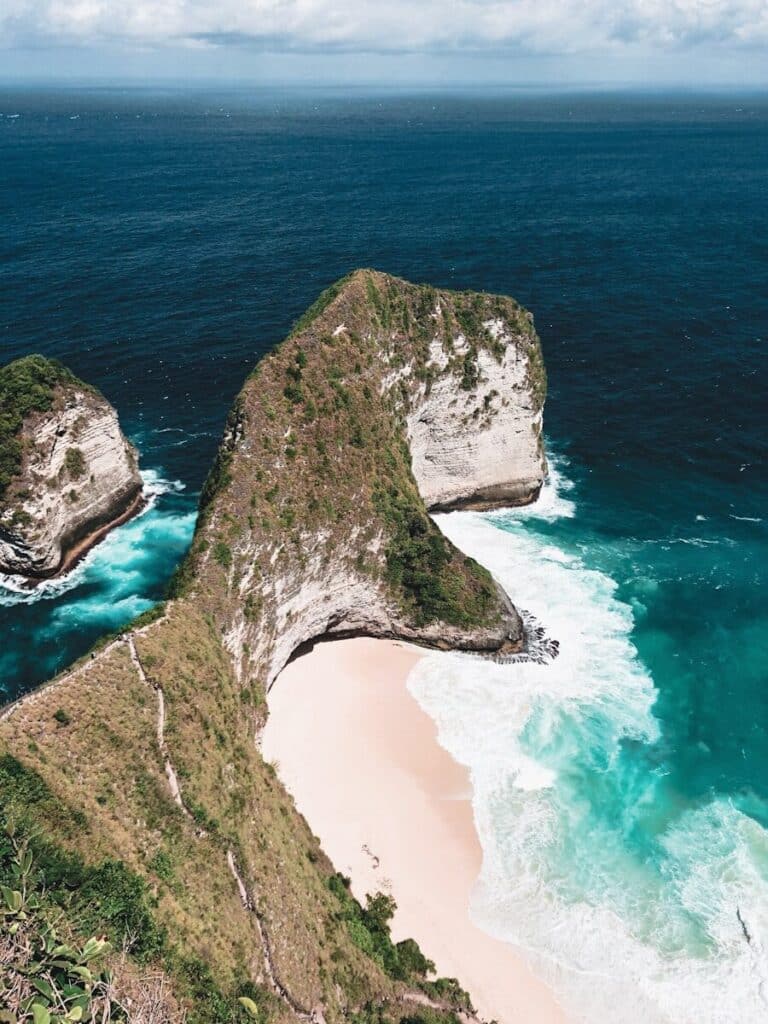
Good coverage on Telkomsel; variable on XL and Indosat. Nusa Penida's clifftop viewpoints (Kelingking, Angel's Billabong) are covered. Some interior rural roads have weaker signal. Boat journeys between Bali and the Nusa islands (30–45 minutes) often have no signal.

Lombok
Strong coverage in Mataram, Senggigi, Kuta Lombok, and the Gili access port of Bangsal. The south coast beaches (Mawun, Selong Belanak) are well-covered. The Mount Rinjani trekking route has coverage at lower elevations; higher altitudes lose signal.
Gili Islands (Gili Trawangan, Gili Air, Gili Meno)
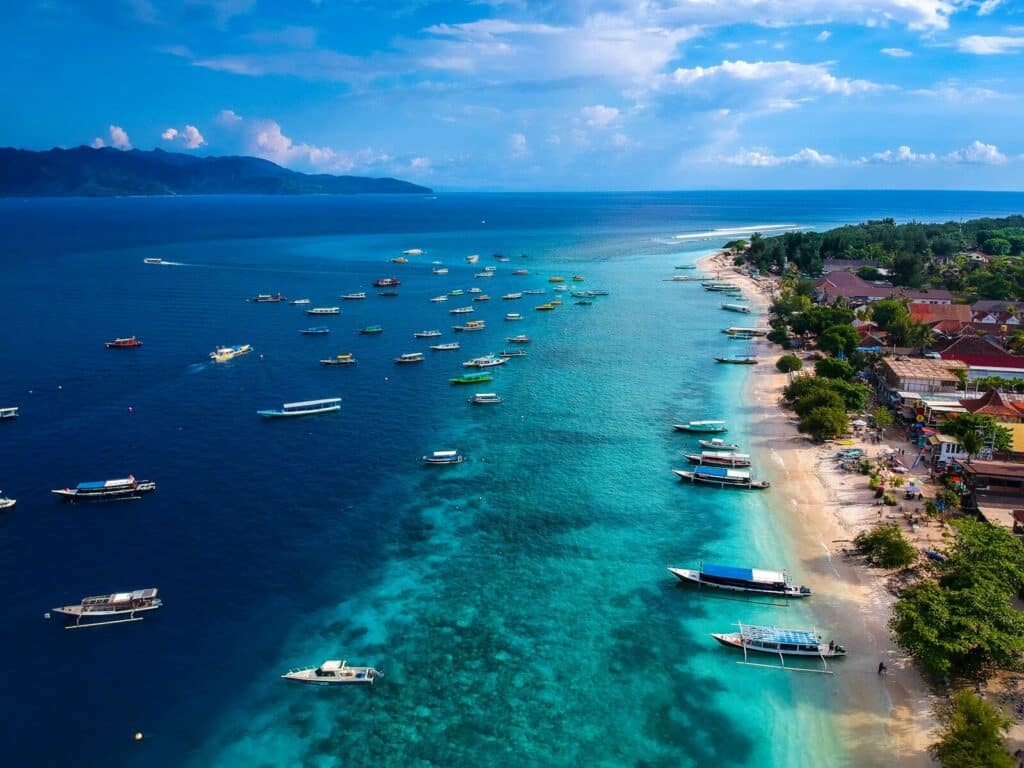
Coverage is available but variable. Gili Trawangan has better coverage than Meno and Air. Telkomsel is the most reliable network on the Gilis. Signal quality depends on how busy the towers are — during peak tourist season (July–August, December), congestion can reduce speeds. Download maps and anything important before crossing from Lombok.
Java (Jakarta, Yogyakarta, Surabaya, Bandung)
Excellent coverage throughout Java on all operators. Jakarta has strong 5G coverage in business districts. Yogyakarta, Surabaya, and Bandung are all well-served. The Trans-Java highway has consistent 4G coverage. Borobudur and Prambanan temple areas are covered.
Komodo Island and Flores
Telkomsel has the only reliable coverage in the Komodo National Park area. The Labuan Bajo gateway town (gateway to Komodo) has decent 4G Telkomsel signal; the islands of Komodo and Rinca themselves have limited or no coverage. Download offline maps before any Komodo boat tour.

Raja Ampat (West Papua)
Raja Ampat is one of Indonesia's most remote tourist destinations. Telkomsel has the only mobile presence here, and coverage is limited to the main town of Waisai and some resort areas. Remote dive sites, outer islands, and live-aboard trips will have no signal. Telkomsel is non-negotiable for anyone visiting Raja Ampat.
Sumatra (Medan, Lake Toba, Bukittinggi)
Telkomsel and XL both cover Medan and major Sumatran cities. Lake Toba has coverage in Parapat and on Samosir Island's main areas. More remote Sumatran interior regions (Kerinci Seblat National Park, Mentawai Islands) have patchy or no coverage. Telkomsel is the most consistent operator across Sumatra.


How to Set Up Your Indonesia eSIM
- Check compatibility: Settings > Cellular (iPhone) or Settings > Network (Android) — look for “Add eSIM”
- Buy before you fly: Purchase from your chosen provider and receive a QR code by email or in-app
- Install at home on WiFi: Open Settings > Add eSIM > Scan QR code. The profile downloads in seconds
- Keep it off until landing: Set the eSIM to disabled until your plane touches down in Indonesia
- Enable on arrival: Activate the eSIM as the plane lands — you'll have connectivity before leaving the aircraft, useful for Indonesia's arrival QR code requirements
- Set as default data line: Go to Settings > Cellular and confirm the eSIM is set as your data line. Your home SIM remains active for calls.
Frequently Asked Questions
Is eSIM better than buying a SIM card at Bali airport?
For most travellers, yes. Bali's Ngurah Rai Airport has a well-documented problem with independent SIM kiosks charging tourists significantly more than the standard price — sometimes two to three times the normal rate. While official Telkomsel and XL operator counters at the airport are more fairly priced, the queues can be long on busy arrival days. An eSIM installed before you fly means you avoid the queue, avoid the risk of overcharging, and arrive with data already active — which matters at Bali's airport where you need internet for digital immigration forms before clearing customs.
What network does Airalo use in Indonesia?
Airalo's Indonesia plans typically route through Telkomsel or XL Axiata depending on the specific plan. Check the plan description in the Airalo app — it specifies the network partner. For trips that include remote islands or areas outside Bali and Java, confirm the plan uses Telkomsel for the best coverage.
Can I use an eSIM in Raja Ampat?
Only if the eSIM connects to the Telkomsel network — Telkomsel is the only operator with any presence in Raja Ampat. Before purchasing, check which Indonesian network your eSIM provider uses. If it doesn't specify Telkomsel, contact the provider before buying. Even with a Telkomsel eSIM, coverage in Raja Ampat is limited to Waisai town and some resort areas. Remote islands and open water have no signal from any operator.
Do I need to register my phone's IMEI in Indonesia?
Indonesia requires foreign phones to be registered via IMEI within 90 days of arrival to continue receiving signal. For short tourist stays (less than 90 days), this rarely affects visitors directly. The IMEI registration process is more relevant for long-stay travellers and expats. However, the process adds complexity to buying a local SIM at the airport, which is part of why eSIM purchases — which bypass this process — are recommended for tourists.
Does Telkomsel BaliEasy's eSIM work outside Bali?
Yes, but with reduced data. The 21GB plan splits as 18GB for Bali and Lombok, and 3GB for the rest of Indonesia. If your trip combines Bali with Java or other islands, the 3GB allocation for non-Bali use covers light navigation and messaging but not heavy usage. For trips where Java is a significant part of your itinerary, consider Airalo's or Jetpac's Indonesia plans, which don't have geographic data splits.
What's the best eSIM for a Bali trip specifically?
For a standard Bali holiday of 7–14 days, Telkomsel BaliEasy's 21GB eSIM at $15 is the best single option. It runs on Telkomsel's network (strongest in Bali), includes a +62 local number (useful for transport and tour bookings), allows hotspot use, and is priced well for what it includes. For heavier users who need unlimited data, Holafly's 10-day unlimited plan at $36.90 is the most popular choice.
Final Thoughts
An eSIM is worth it in Indonesia for the majority of visitors — and more clearly so than in most other countries, because the alternatives (airport kiosks with overcharging issues, IMEI registration complications, unreliable arrival WiFi) have genuine downsides that eSIM sidesteps entirely. For a Bali holiday or a Java and Bali combination, the eSIM advantage is straightforward: faster, fairer, and functional from the moment you land.
For remote and adventurous itineraries — Raja Ampat, Komodo, Flores, the Mentawai Islands — a physical Telkomsel SIM is the right call, either alone or combined with an eSIM for the urban portions of the trip. Telkomsel's network reach into Indonesia's remote archipelago is unmatched, and no eSIM provider currently replicates that coverage depth.
Indonesia's connectivity has improved substantially in recent years. For Bali, Java, and the main tourist trail, you'll be well-connected. Plan the remote segments with offline maps and Telkomsel, and the connectivity piece of your Indonesian trip is handled.
Stay connected across Indonesia with instant mobile data. Activate before you fly and use your phone as soon as you land.
➡ How to get internet in Thailand
➡ How to avoid roaming charges in Vietnam
➡ Best way to get mobile data in Japan
Add your first comment to this post