


Table of Contents
The 2026 FIFA World Cup opens on June 11. If you are reading this in April or May 2026, you have not missed your chance — but you are in a different planning position than someone who started 18 months ago, and the strategy needs to reflect that.
“Last-minute” at a World Cup does not mean what it means for a regular trip. It does not mean prices will drop. It does not mean options are running out uniformly. It means that the ideal choices for accommodation, flights, and match scheduling are narrower than they were, but that workable options still exist across every trip style and every budget tier — if you work through the decisions in the right order.
This guide gives you an 8-week planning sequence starting now and running to opening match day. Each step is prioritised by what constrains everything else if left undone. Follow the sequence, not your instincts — the natural urge is to search for hotels before deciding where to go, or to look for tickets before confirming your travel window. That order produces worse outcomes than the one below.
At a Glance
Here is what this guide covers:
- The three decisions that shape everything else: Make these first before booking anything
- Documents: What to apply for now and why delay is dangerous
- Flights: What's still available, best platforms, budget carrier options
- Accommodation: Strategies for the current availability picture with links to the full guides
- Your match schedule: Building a realistic programme around tickets and fan zones
- Inter-city travel: The matrix of distances and connections between host cities
- Budget frameworks: Realistic cost ranges for three trip styles
- Week-by-week countdown: What to do each week from now to June 11
Step 1 — Make the Three Decisions That Shape Everything Else
Before you open a flight search, a hotel app, or a ticket resale platform, make three decisions. These determine every subsequent choice. Reversing them mid-plan creates wasted money and needless complexity.
Decision 1: Ticket or No Ticket?
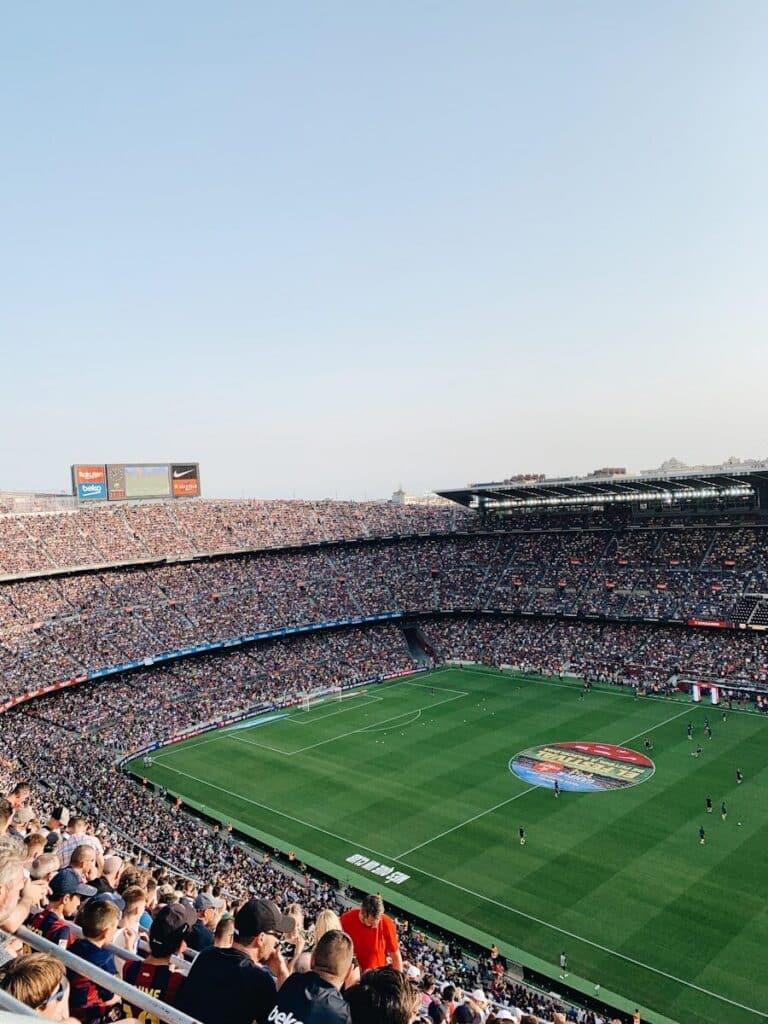
Do you need to attend a match inside the stadium, or are you comfortable experiencing the World Cup primarily through fan zones, soccer bars, and the city atmosphere?
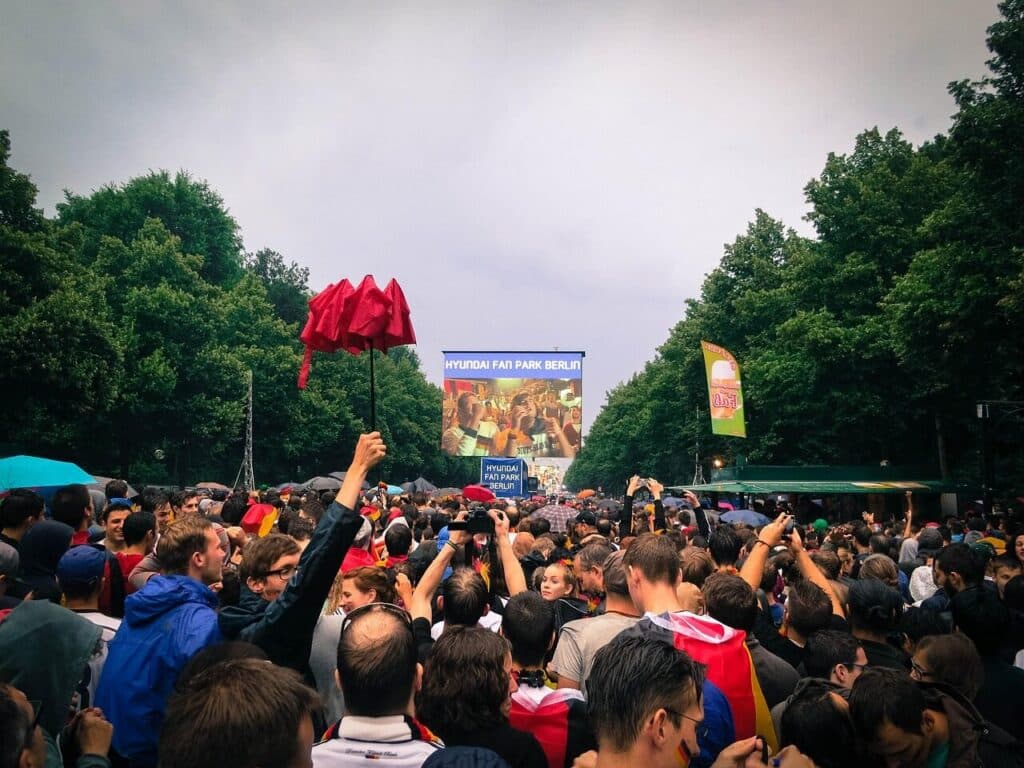
This is not a second-class question. Hundreds of thousands of fans attend World Cups each tournament with no match ticket and describe it as one of the best experiences of their lives. The fan zone experience — particularly at Mexico City's Zócalo and Vancouver's Hastings Park — is genuinely extraordinary in its own right.
If you need a match ticket:
- FIFA's Last-Minute Sales Phase releases returned and unallocated tickets close to match dates — typically 48–72 hours before each match. Check FIFA.com/tickets daily from one week before your target match.
- Crewfare.com holds hospitality packages that include match access at prices above face value but below secondary market extremes.
- Official authorised hospitality packages from On Location (FIFA's official hospitality partner) are still available for some fixtures — check onlocationexp.com.
If fan zones are your primary plan:
Your accommodation and city choice becomes more flexible — you are not anchored to a specific stadium location on a specific date. This opens the most affordable trip structures.

Decision 2: One City or Multi-City?
One city: Stay for 5–10 days, watch multiple group stage matches (each host city has 3–6 group stage fixtures), attend fan zones daily, explore the city between match days. Simpler logistics, no re-packing, lower total transport cost. Best first World Cup experience.
Multi-city: Attend matches or fan zones in 2–4 cities, travel between them by domestic flight, train, or road. Higher cost and complexity, but broader range of experiences. Suitable for fans who have arranged tickets in multiple cities or who want to combine North American travel.
The multi-city clusters to know:
- Texas cluster: Dallas ↔ Houston (4 hours by road; domestic flight ~1hr; both cities have multiple group stage fixtures)
- West Coast cluster: LA ↔ San Francisco ↔ Seattle (LA to SF = 1hr flight / 6hrs road; SF to Seattle = 2hr flight / 13hrs road — fly this leg)
- East Coast cluster: New York/NJ ↔ Boston (4hr Amtrak; daily services; very manageable)
- Mexico triangle: Mexico City ↔ Guadalajara ↔ Monterrey (2–4hrs road or 1hr flight between each; all three hosting multiple matches)
- Cross-border: Vancouver (Canada) ↔ Seattle (USA) (3hr drive; works as one combined trip base)
The verdict for late planners: One-city trips are significantly easier to plan in 8 weeks than multi-city. Unless you already have accommodation confirmed in multiple cities, start with one.
Decision 3: Follow Your National Team or Go Neutral?
Following your national team: You need to know your team's group, their scheduled group stage dates and cities, and have a plan — with refundable bookings — for every possible knockout round venue. This is the most logistically demanding approach and the most emotionally rewarding.
Neutral fan: You choose cities based on availability, affordability, and atmosphere rather than fixture. This is the most practical approach for late planners and produces the widest range of experiences — neutral fans end up in unexpected matches that become the tournament's defining memories.
Step 2 — Sort Your Documents Now
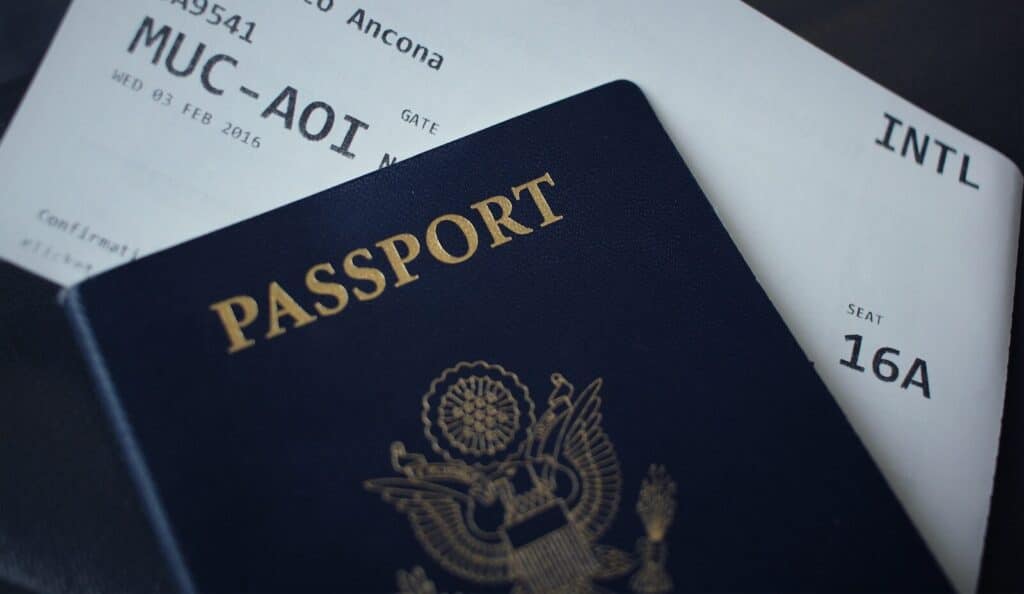
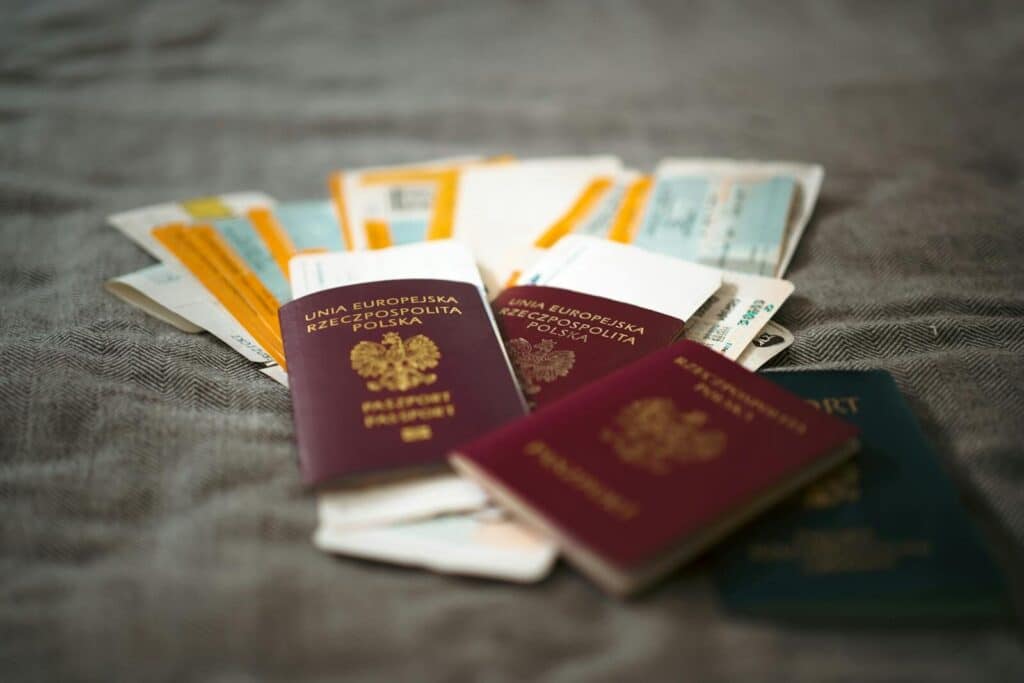
This is not optional and not quick. Travel document processing times for popular categories are running long in 2026 given the volume of World Cup applicants.
US passport (for US citizens travelling to Mexico or Canada):
If your US passport expires before April 2027, renew it now. Standard renewal processing: 6–8 weeks. Expedited service: 2–3 weeks plus $60 fee. Walk-in passport agencies (for travel within 14 days) are appointment-only. Check passport.travel.state.gov for current processing times.
ESTA (for Visa Waiver Programme nationals entering the USA):
An Electronic System for Travel Authorization is required before travel to the US for nationals of 42 eligible countries including the UK, Germany, Japan, Australia, France, and South Korea. Apply at esta.cbp.dhs.gov. Cost: $21. Most approvals come within minutes to 72 hours, but apply now — do not assume the quick turnaround will hold during peak season.
eTA (for entering Canada):
Electronic Travel Authorization required for Visa Waiver–equivalent nationals entering Canada by air (not required for land crossing with a valid passport). Apply at canada.ca/en/immigration-refugees-citizenship/services/visit-canada/eta. Cost: CAD $7. Processing: usually minutes, occasionally days.
Mexico FMM (Forma Migratoria Múltiple):
The tourist card required for most international visitors to Mexico. Obtainable on arrival at a Mexican port of entry or in advance online at inami.gob.mx. Cost: included in airline ticket for most international arrivals; a small fee applies if obtained independently.
Visas for non-VWP nationals:
Citizens of countries not in the US Visa Waiver Programme must apply for a B-1/B-2 visitor visa through a US consulate or embassy. Processing times vary enormously by country and consulate — check travel.state.gov for current times. Some consulates are running 6–12 month waits for interview appointments. If this applies to you, the document question supersedes all other planning decisions.
Step 3 — Book Your Flights
With 8 weeks to opening match, flight availability for the World Cup period is reduced but not gone. Here is the realistic picture by trip type.
International arrivals (flying to North America from Europe, South America, Asia, Africa):
Direct flights to the major international gateways — New York JFK, Los Angeles LAX, Miami MIA, Toronto Pearson, Mexico City AICM — are increasingly limited for the peak June–July window. Prices have risen significantly from their 2025 lows. Options that remain:
- Connecting flights via hub airports (Chicago O'Hare, Dallas/Fort Worth, Atlanta Hartsfield) often have more availability than direct routes
- Flying to a secondary gateway city (Washington Dulles, Philadelphia, Fort Lauderdale) with a domestic connection costs less and has more seat availability
- Flexible-date searches (Google Flights) can surface significant savings by shifting arrival by 1–2 days
Domestic US travel between host cities:
Budget carriers including Southwest Airlines (strong on Dallas–Houston, LA–SF), Spirit and Frontier (for cost-sensitive east and central routes), and Alaska Airlines (West Coast and Pacific Northwest) have seat availability on most routes. Book at least 3–4 weeks in advance for the best prices — same-week booking during the tournament window will be expensive.
Mexico domestic flights:
Viva Aerobus and VolarisBus are the primary budget carriers for Mexico City–Guadalajara, Mexico City–Monterrey, and Guadalajara–Monterrey. Prices are dramatically lower than US equivalents for comparable distances. Book via Viva.com.mx and Volaris.com directly.
Canada:
Flair Airlines is the primary budget carrier for domestic Canadian routes. WestJet covers Vancouver–Toronto efficiently with multiple daily services.
Practical tool: Google Flights with the “Explore” view (select “Everywhere” from your origin) shows the cheapest available destinations on your date range — useful for flexible planners. Set price tracking alerts immediately for your confirmed routes.
Step 4 — Secure Accommodation
With 8 weeks to go, the full guide to what is still available is in our companion articles. The short version by priority:
In this order:
- Crewfare.com — holds World Cup-specific room blocks at hotels that appear sold out everywhere else; check this first for your target city
- Extended-stay hotels (Residence Inn, Homewood Suites, TownePlace Suites, Element) — lagged booking pressure; larger rooms with kitchen; book directly via marriott.com or hilton.com
- Satellite city hotels — book a hotel 20–40 minutes from the stadium in a connected suburb; see full city-by-city lists in our companion guide
- Hostel private rooms — genuine availability in most host cities; 40–60% cheaper than comparable hotels; book at hostelworld.com
- Airbnb/VRBO — entire-home listings in residential areas; Superhosts only; look for hosts with 50+ reviews
- Mexico and Canada host cities — if genuinely stuck for US accommodation, booking around Guadalajara or Toronto solves the problem at a fraction of US pricing
The non-negotiable rule: Book with free cancellation wherever possible. You are 8 weeks out from the tournament and 2+ months from knockout stage fixtures. Circumstances will change. Pay the small premium for refundable rates.
➡ Last-Minute Accommodation During the World Cup — What Still Works
➡ Where to Stay if Everything Is Fully Booked

Find hotels, apartments, and last-minute stays across all 2026 World Cup host cities in North America.
Step 5 — Build Your Match Schedule
Once accommodation and flights are confirmed, build your day-by-day match schedule.
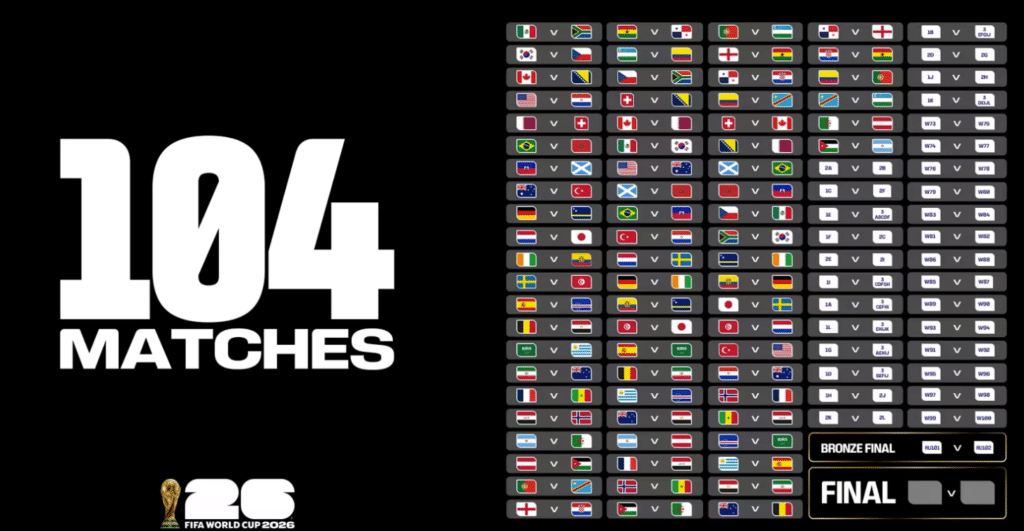
The match schedule source: FIFA.com/en/fifaworldcup/canadamexicousa2026/matches has the full group stage fixture list with dates, venues, and kick-off times. Build a spreadsheet or use a calendar app to map out which matches are available at your host city during your stay.
The realistic schedule for a 7-day one-city trip:
- Group stage matches per host city: 3–6 fixtures depending on the city
- With 3 daily match slots on many group stage days, your fan zone can cover matches from other host cities simultaneously
- A 7-day stay in Dallas covers approximately 4–5 AT&T Stadium group stage fixtures plus daily fan zone viewing of all other matches
How to decide which matches to prioritise:
- National team fixtures (if following a specific team) — these are non-negotiable
- Fixtures with large, vocal travelling support bases — Brazil, Argentina, England, Mexico, South Korea, Japan all bring thousands of travelling fans whose energy raises the stadium/fan zone atmosphere
- Inter-group matches from the same geographical region (CONMEBOL, UEFA, CONCACAF) tend to be the most atmospherically charged neutral fixtures
Fan zone vs ticket for each match: For group stage matches involving teams with small travelling supporter bases, the fan zone atmosphere may exceed the stadium atmosphere because the stadium has large neutral sections. For knockouts and matches involving massive fan bases, the stadium is irreplaceable — but the fan zone is still extraordinary.
Step 6 — Plan Inter-City Travel (Multi-City Trips Only)
If your plan involves two or more host cities, build the travel connections now. The planning matrix below covers the most common city-pair journeys.
Inter-City Connection Guide
| Route | Best Option | Journey Time | Notes |
|---|---|---|---|
| Dallas ↔ Houston | Road (I-10) or domestic flight | 4hr road / 1hr flight | Fly for knockout stages when time is tight. drive for group stage road trip |
| LA ↔ San Francisco | Domestic flight | 1.5hr | Fly. road is 6hr with LA–SF traffic |
| LA ↔ Seattle | Domestic flight | 2.5hr | Road is 20hr — do not drive |
| SF ↔ Seattle | Domestic flight | 2hr | Amtrak Coast Starlight train is 23hr — scenic but not practical for match schedule |
| NY/NJ ↔ Boston | Amtrak Acela or Regional | 3.5–4hr | Amtrak from Penn Station to South Station. excellent option. book now |
| NY/NJ ↔ Philadelphia | Amtrak or NJ Transit | 1.5hr | Easiest inter-city connection in the tournament |
| Vancouver ↔ Seattle | Road + border crossing | 3–4hr including border | Peace Arch crossing. allow for wait time |
| Mexico City ↔ Guadalajara | ADO bus or Viva Aerobus | 5hr bus / 1hr flight | Bus is comfortable and extremely affordable |
| Mexico City ↔ Monterrey | Viva Aerobus | 1.5hr flight | Road (850km) is impractical. fly |
| Guadalajara ↔ Monterrey | Viva Aerobus | 1.5hr flight | Road is 8hr — fly for match turnarounds |
The key rule for multi-city trips: Allow a buffer day between cities. Not a transit day — a buffer day. When a flight is delayed, when a stadium exit takes 90 minutes, when you want to see one more thing in the city you are leaving, the buffer absorbs it without cascading into a missed match.
Step 7 — Buy Travel Insurance (With the Right Coverage)
Standard travel insurance will not cover everything you need for a World Cup trip. The specific coverage items to confirm:
- Trip cancellation for specific reasons: Check whether cancellation due to your national team's early elimination (if the trip was structured around their matches) is covered — it usually is not under standard policies.
- Missed event coverage: If your flight is delayed and you miss a match you have a ticket for, standard “trip interruption” coverage may pay for additional transport but not for the face value of the missed ticket. Look for “ticketed event” or “missed connection for sporting event” coverage.
- Medical emergency in Mexico: Confirm your policy explicitly covers Mexico, not just USA/Canada. Many travel policies from non-North American insurers default to USA/Canada coverage but have exclusions for Mexico.
- Baggage delay: For fans flying with checked luggage that includes match kits or equipment, baggage delay coverage that pays within 4–8 hours is important — you need your clear bag on match day.
Recommended platforms for comparison: InsureMyTrip.com (US), Battleface.com (international, good for multi-country trips), World Nomads (broad international coverage).
Budget Framework — Three Trip Styles
Use these as reality-check anchors, not guarantees. Prices are per person, covering a 7-day single-city trip.
Budget Trip (Fan Zone Focused, No Match Ticket)
| Item | Estimated Cost |
|---|---|
| Return flight (US domestic or international economy) | $300–800 |
| 7 nights accommodation (hostel private room or satellite suburb hotel) | $420–700 |
| Food and drink (mix of fan zone. local restaurants. self-catering) | $350–500 |
| Local transport (transit passes. occasional rideshare) | $100–150 |
| eSIM / data | $20–30 |
| Fan zone entry | Free |
| Merchandise / souvenirs | $50–150 |
| Total estimate | $1.240–2.330 |
Mid-Range Trip (1–2 Match Tickets + Hotel)
| Item | Estimated Cost |
|---|---|
| Return flight | $400–1.200 |
| 7 nights mid-range hotel (satellite city) | $700–1.400 |
| 1–2 match tickets (official face value or Crewfare) | $150–500 per ticket |
| Food. drink. fan zone visits | $500–700 |
| Local transport | $150–200 |
| Travel insurance | $80–150 |
| Total estimate | $2.130–4.350 |
Premium Trip (Multiple Matches + Host City Hotel)
| Item | Estimated Cost |
|---|---|
| Return flight (business class or premium economy) | $1.500–4.000 |
| 7 nights in host city hotel (standard room. moderate location) | $2.100–4.500 |
| 2–3 match tickets (official or hospitality) | $600–2.500 |
| Restaurants. entertainment | $800–1.500 |
| Private transfers. premium transport | $300–600 |
| Travel insurance | $200–400 |
| Total estimate | $5.500–13.500 |
Week-by-Week Countdown to June 11
April 2026
- Make the three decisions: ticket/no-ticket, one city/multi-city, team/neutral
- Check passport expiry and renew if needed — do this today
- Apply for ESTA (US), eTA (Canada), or visa as required
- Book flights — set fare alerts on Google Flights and Hopper
- Book accommodation with free cancellation on Crewfare, Booking.com, or direct hotel site
- Book travel insurance
May 2026
- Confirm accommodation and flight bookings — switch to lower prices if fare alerts fire
- Build your day-by-day match and fan zone schedule from the FIFA fixtures page
- Book inter-city travel if multi-city (Amtrak, domestic flights, bus)
- Make restaurant reservations in host city for match day evenings (OpenTable, Resy)
- Pre-book luggage storage near the stadium for match days (Stasher, Bounce)
- Pre-book stadium area parking if driving to AT&T Stadium or any US venue (SpotHero)
- Purchase/activate your eSIM for North America
Two Weeks Before Departure
- Download Google Maps offline for your host city
- Download PDF backup of match ticket(s) to phone and email
- Save hotel address, stadium address, and emergency numbers in an offline note
- Prepare your FIFA-compliant clear bag — test all items fit
- Charge and pack portable power bank
- Confirm fan zone location and plan your backup bar/venue
Match Week
- Check FIFA.com/tickets daily for last-minute ticket releases (48–72hr before each match)
- Check fan zone entry status for high-demand matches — arrive 90–120 minutes before kick-off
- Know your post-match transit route — avoid rideshare surge by planning transit in advance
- Keep one match day completely unscheduled — the best World Cup moments are often unplanned
Frequently Asked Questions
Is 8 weeks enough time to plan a World Cup 2026 trip?
Yes, with caveats. Eight weeks is enough time to secure flights, accommodation, and build a realistic match schedule in most host cities. The constraint is that the ideal options (most central hotels, direct routes, best accommodation locations) have narrowed compared to 18 months ago. The range of workable options is still wide, particularly for fans willing to use satellite city accommodation, fan zone–centred schedules, and flexible routing. Follow the sequence above, prioritise documents first, and book flights and accommodation in parallel rather than sequentially.
Do I need a match ticket to have a great World Cup experience?
No. Fan zones, soccer bar communities, and the general atmosphere of a host city during the tournament are genuinely excellent experiences that do not require a ticket. The fan zone at Mexico City's Zócalo for a Mexico match may be more emotionally intense than a seat in the upper tier of a stadium. Many fans who attended previous World Cups with no tickets describe them as their favourite sporting experiences. The honest assessment: a match ticket gets you inside the stadium. The fan zone gets you inside the tournament.
What is the cheapest host city for a last-minute World Cup trip?
Guadalajara, Mexico is consistently the most affordable host city across flights, accommodation, and daily costs. Mid-range hotel rooms in Guadalajara's city centre are available at $70–150/night even during match weeks; food and transport costs are a fraction of US equivalents. The city has a strong football culture, multiple group stage matches, and excellent city atmosphere. For budget-focused late planners, booking around Guadalajara and using one domestic Mexico flight to attend a Mexico City match creates the most cost-effective full World Cup experience.
Should I book flights before or after accommodation?
For a last-minute World Cup trip, book flights and accommodation on the same day — in parallel, not sequentially. Confirm your city decision first (Step 1), then open flight search and accommodation search simultaneously in separate browser tabs. The reason: accommodation availability in specific satellite cities affects which area you want to stay in, which affects which airport/arrival time makes sense. If you book the flight first and find the most affordable satellite city hotel is sold out, you may have bought a flight to the wrong arrival airport.
What if my national team gets eliminated before the knockout round?
Decide before you travel what you will do in this scenario — do not leave it as an in-tournament crisis. Options: (a) you have fan zone–based itinerary booked and continue with the tournament as a neutral; (b) you have refundable flights and accommodation and can cancel the knock-on trip; (c) you have pre-identified a team you are happy to support as a neutral and switch your allegiance for the knockouts. Option (b) is only possible if you followed the refundable booking guidance throughout. Option (a) is the most common outcome and the one most fans are happy with when it arrives.
Final Thoughts
Eight weeks is a short planning window by World Cup standards, and a completely workable one by real-world travel standards. The tournament is 39 days long and spread across 16 cities — the idea that it is a single event that can “sell out” is a misunderstanding. What sells out is specific accommodation close to specific stadiums on specific dates. Everything around that radius is still available and, in many cases, better.
Plan in the sequence above. Make decisions before you make bookings. Keep as much refundable as possible for as long as possible. And build one unscheduled day into the middle of your trip — it will become the story you tell when you get home.
➡ Last-Minute Accommodation During the World Cup: What Still Works
➡ World Cup 2026 Travel Tips Nobody Tells You
➡ Best Places to Watch World Cup 2026 Without Tickets
Add your first comment to this post