


Barcelona is not one city. It is a patchwork of neighbourhoods, each with its own personality, noise level, price point, and relationship to the tourist centre. Staying in the Gothic Quarter feels nothing like staying in Gràcia. A hotel in Barceloneta puts you on the beach but far from the metro. A flat in Eixample gives you space and quiet, but you will walk more.
We have spent enough time in Barcelona to know that where you stay shapes your entire trip. The right neighbourhood saves you money, cuts your transport time, and puts you near the restaurants and bars you actually want. The wrong neighbourhood leaves you in a tourist trap, surrounded by pickpockets, or walking 30 minutes to dinner every night.
This guide breaks down where to stay in Barcelona based on what kind of traveller you are, what you want to do, and how much chaos you can tolerate. We cover eight neighbourhoods, compare them honestly, and explain how your choice affects day trips, airport access, and your overall budget.
In a Rush?
Top Hotels in Barcelona
- ⭐⭐⭐ Mandarin Oriental Barcelona – Check prices and availability
- ⭐⭐ Hotel Arts Barcelona – Check prices and availability
- ⭐ Hotel 1898, Barcelona – Check prices and availability
Figuring out where to stay barcelona is the first big decision you'll make for your trip.
At a Glance: Which Area Is Right for You
| Neighbourhood | Best For | Vibe | Typical Nightly Rate | Noise Level |
|---|---|---|---|---|
| Eixample | First-timers, architecture lovers, families | Wide boulevards, modernist buildings, calm | $120–$250 | Low–Moderate |
| Gothic Quarter | History buffs, nightlife seekers | Medieval streets, tourist-heavy, lively | $100–$220 | High |
| El Born | Foodies, couples, art lovers | Trendy, compact, excellent restaurants | $110–$230 | Moderate–High |
| Gràcia | Locals experience, budget travellers | Village feel, independent shops, quiet | $80–$160 | Low |
| Barceloneta | Beach lovers, short stays | Coastal, touristy, seafood restaurants | $90–$180 | Moderate |
| El Raval | Budget travellers, alternative culture | Gritty, diverse, emerging food scene | $70–$140 | Moderate |
| Poble Sec | Food scene, local nightlife, hill access | Working-class roots, excellent tapas bars | $85–$150 | Moderate |
| Montjuïc / Poble Espanyol | Quiet seekers, Olympic Park visitors | Green, spacious, removed from centre | $90–$160 | Very Low |
What to Consider Before You Choose
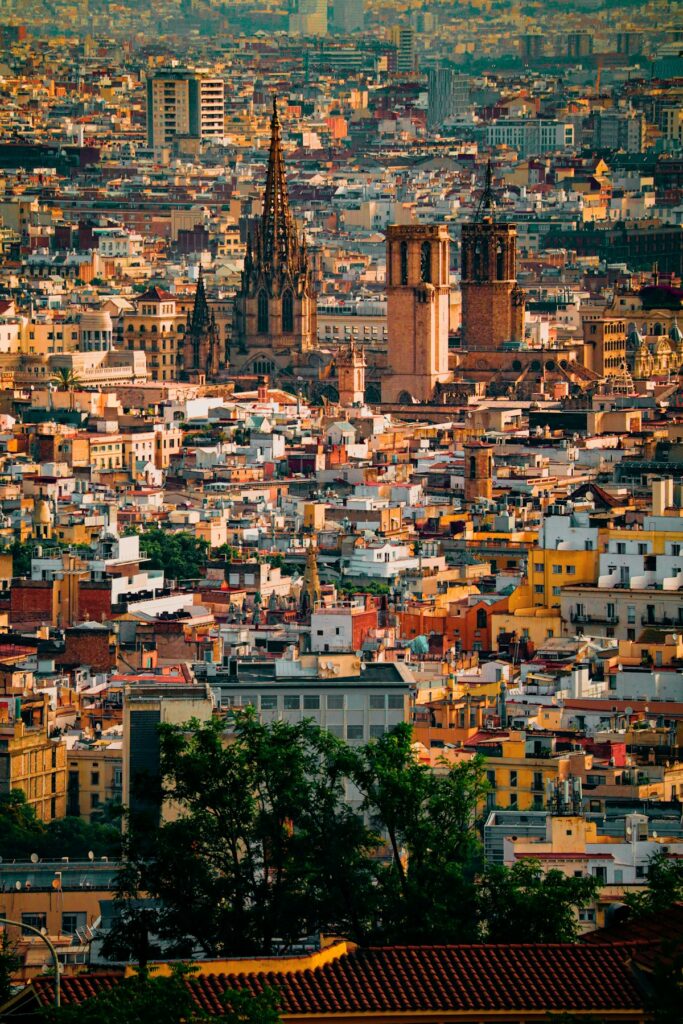
Before we dive into individual neighbourhoods, there are three factors that matter more in Barcelona than in most European cities.
Pickpocketing and Tourist Crime
Barcelona has one of the highest rates of tourist-targeted pickpocketing in Europe. It is concentrated in the Gothic Quarter, La Rambla, and the metro lines connecting the airport to the city centre. This is not a reason to avoid those areas entirely — the Gothic Quarter is genuinely beautiful — but it is a reason to be alert, avoid back pockets, and not leave phones on café tables.
Noise
Barcelona is a loud city at night. The Gothic Quarter, El Born, and parts of Barceloneta have bars that stay open until 03:00 or later. If you are a light sleeper or travelling with children, check whether your hotel faces an interior courtyard rather than the street. Eixample, Gràcia, and Montjuïc are significantly quieter after midnight.
Day-Trip Access
If you plan to take day trips to Montserrat, the Costa Brava, Girona, or Tarragona, staying near a main train station helps. Plaça de Catalunya and Passeig de Gràcia are the best-connected metro and train hubs. Sants Estació, in western Eixample, is the main station for high-speed and regional trains.
Eixample: The Safest Bet for First-Timers
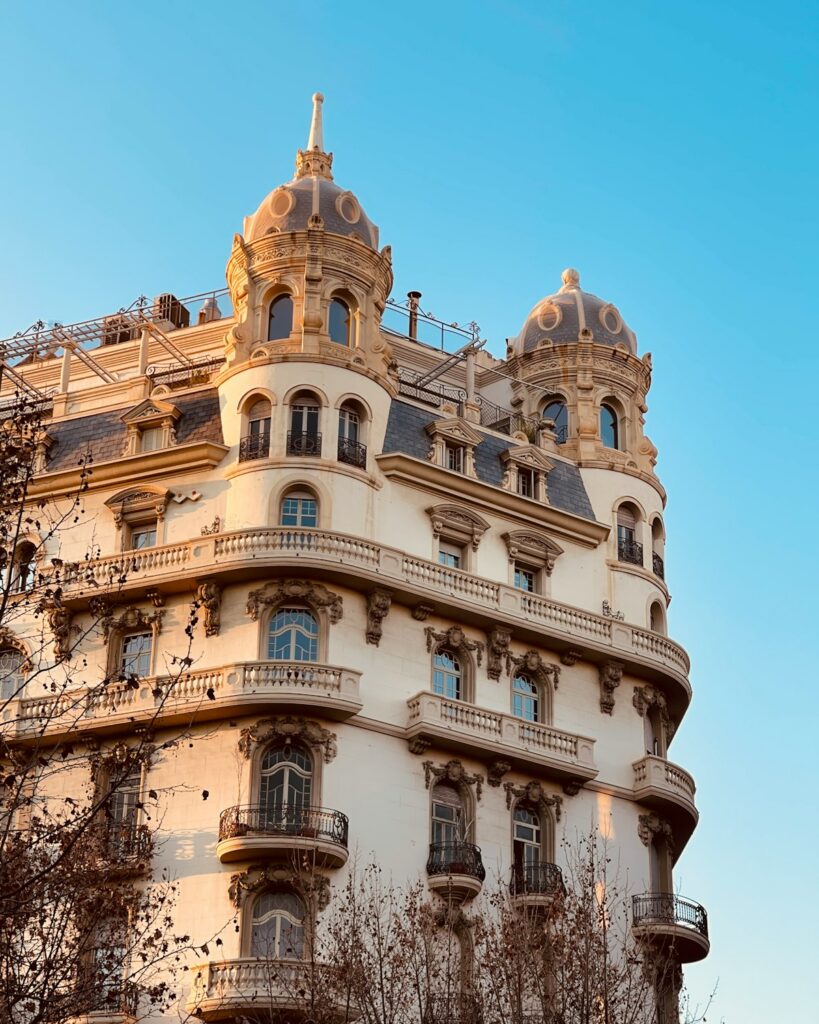
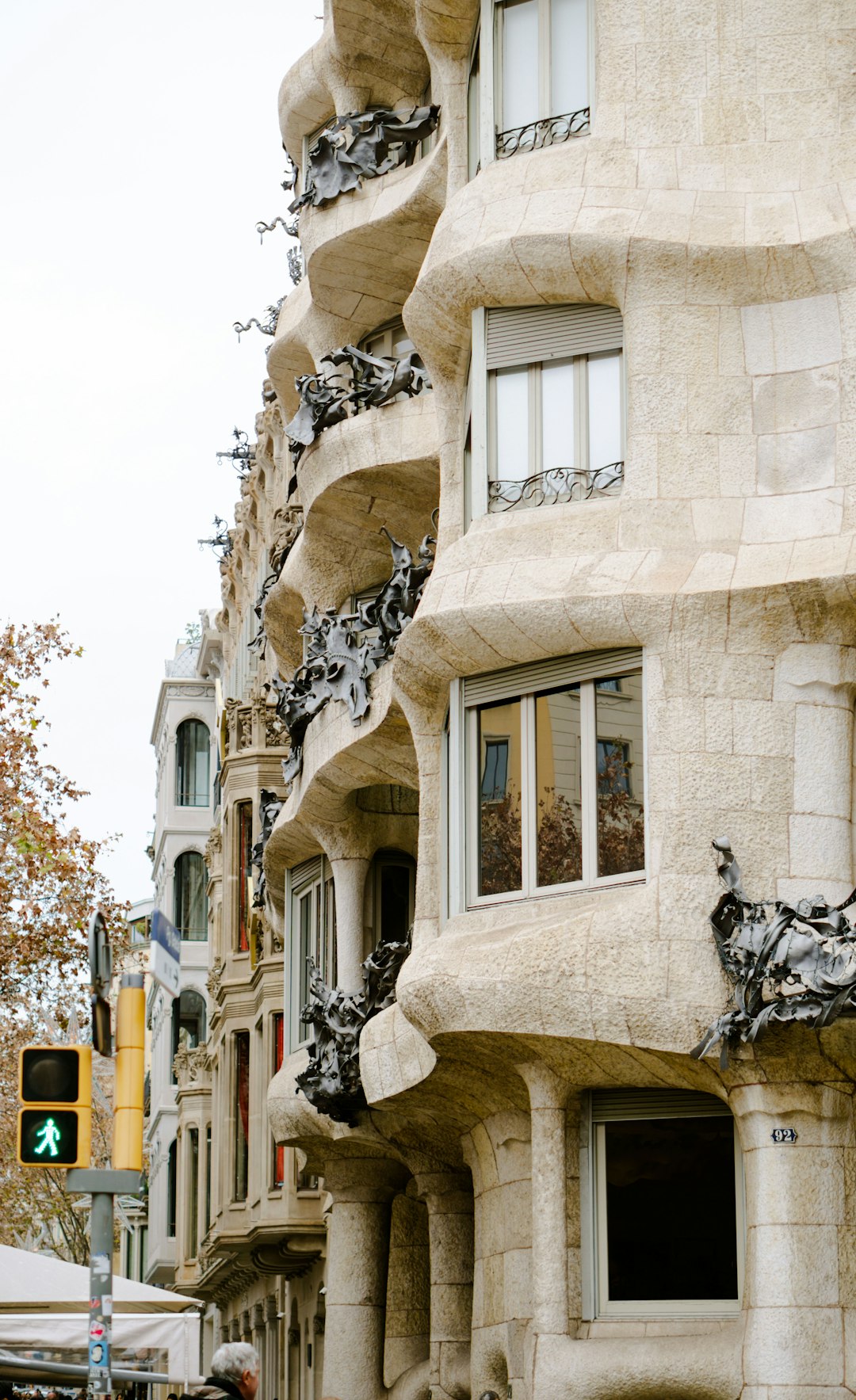
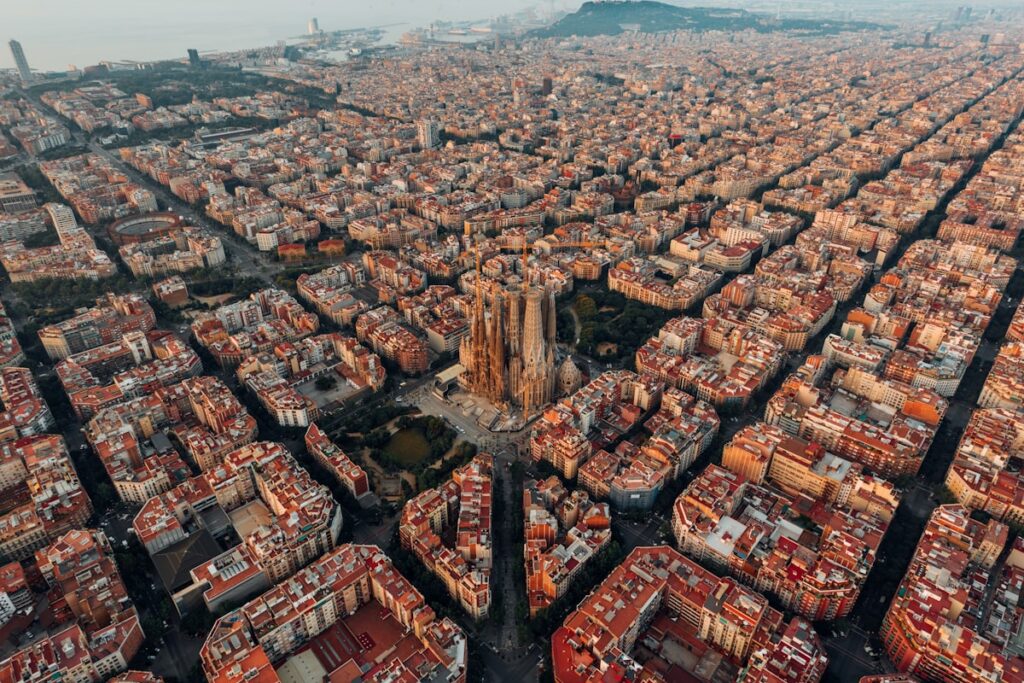
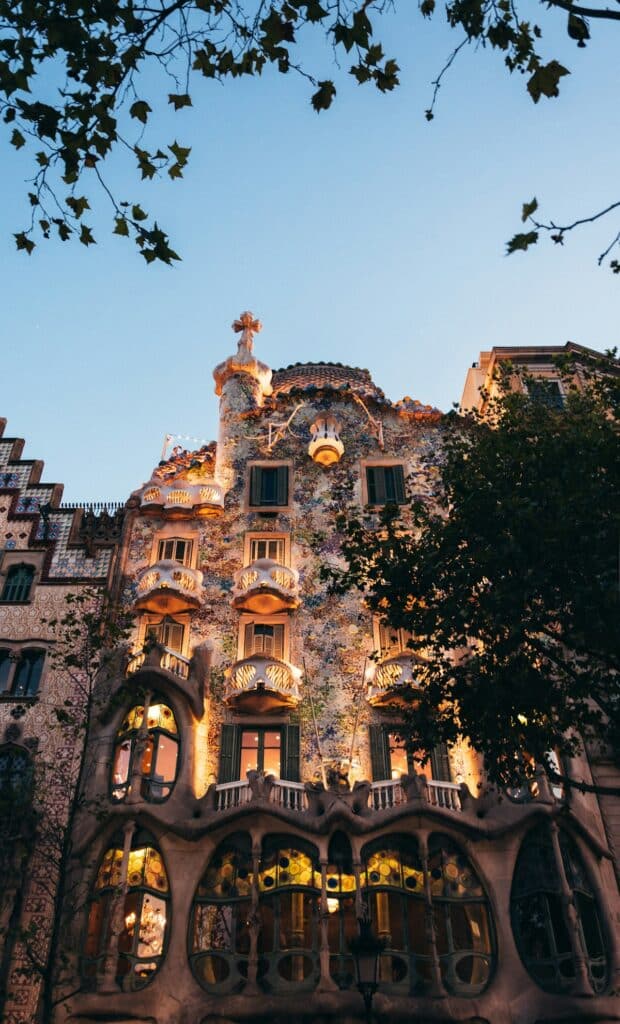
Eixample is the grid-planned district north of Plaça de Catalunya, built in the late 19th century during Barcelona's modernist boom. It is home to the Sagrada Família, Casa Batlló, Casa Milà, and the bulk of Antoni Gaudí's architecture.
Why Stay Here
- You are within walking distance of most major sights, or a short metro ride away.
- The wide avenues and regular grid make it easy to navigate.
- It is quieter at night than the Gothic Quarter or El Born.
- Hotels range from mid-range chains to luxury properties.
- Excellent metro connections: lines L2, L3, L4, and L5 all pass through.
Why You Might Skip It
- It lacks the intimate, medieval charm of the old city.
- Restaurants in the eastern part of Eixample can be tourist-oriented and mediocre.
- It is not the cheapest option.
Who Should Stay Here
First-time visitors, families, architecture enthusiasts, and anyone who values sleep. We think Eixample is the best all-round choice if you do not have a specific reason to stay elsewhere.
Gothic Quarter: Atmospheric but Intense
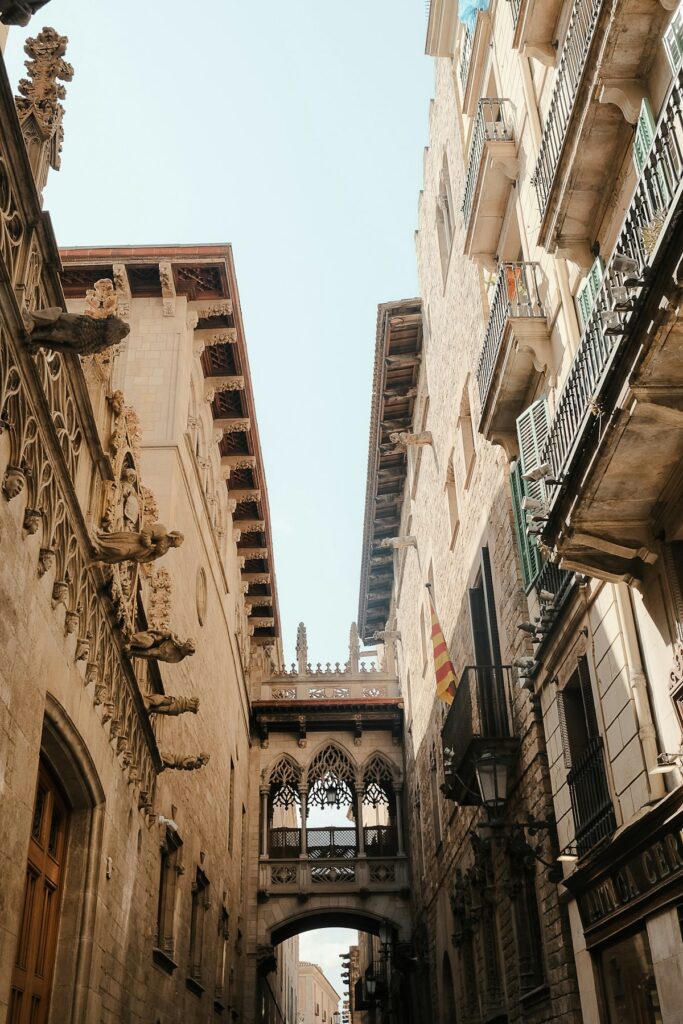
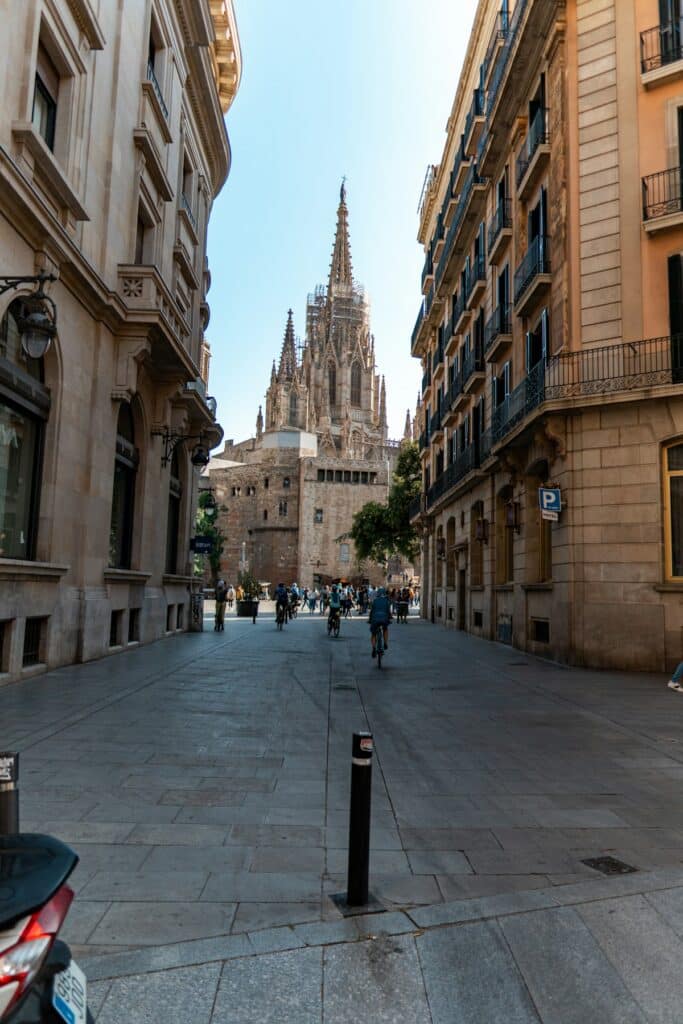
The Barri Gòtic is the oldest part of Barcelona, with Roman walls, medieval alleyways, and the Cathedral. It is undeniably beautiful, and it puts you at the literal centre of the city.
Why Stay Here
- You cannot beat the location. Most sights are within a 10-minute walk.
- The atmosphere is unique — narrow streets, hidden squares, centuries of history.
- Nightlife is abundant. Bars, cocktail spots, and clubs are everywhere.
Why You Might Skip It
- It is the epicentre of tourist crime. Pickpockets operate on La Rambla, in the metro, and in the squares after dark.
- Noise is relentless on weekends. Street-level hotel rooms can be unusable after midnight.
- Many restaurants are overpriced and low-quality, aimed at tourists who will not return.
- The narrow streets mean limited natural light in ground-floor apartments.
Who Should Stay Here
Nightlife seekers, history enthusiasts, and travellers who do not mind crowds. We suggest it for short stays of two nights or fewer, or for travellers who plan to be out late anyway.
If you do want to stay in the Gothic Quarter, look for a hotel on its quieter edge rather than deep in the alleyways. Serras Barcelona sits on Passeig de Colom, right where the old city meets the harbour, with a rooftop pool and rooms that stay calmer than most in the medieval core. It gives you the location without quite as much of the late-night noise.

El Born: Food, Art, and Cobblestones
El Born is part of the old city, adjacent to the Gothic Quarter but with a younger, more creative energy. It sits between the Picasso Museum, Santa Maria del Mar, and the Parc de la Ciutadella.
Why Stay Here
- The restaurant scene is the best in the city. Calle Princesa, Passeig del Born, and the side streets have exceptional tapas bars, wine bars, and Catalan bistros.
- It is more residential than the Gothic Quarter, which means better restaurants and fewer tourist traps.
- The Picasso Museum and the Born Cultural Centre are on your doorstep.
Why You Might Skip It
- Like the Gothic Quarter, it gets noisy at night, especially on weekends.
- Apartments in old buildings often lack elevators and air conditioning.
- Prices have risen sharply in recent years.
Who Should Stay Here
Food-focused travellers, couples, and art lovers. We think El Born is the best compromise between atmosphere and quality if you want to stay in the old city but avoid the worst of the tourist chaos.

Gràcia: Barcelona's Village Within a City
Gràcia was an independent town until 1897, and it still feels like one. It is north of Eixample, about a 15-minute walk from the top of Passeig de Gràcia, and it is where many Barcelona locals actually live.
Why Stay Here
- It is noticeably cheaper than the old city and Eixample.
- The neighbourhood is full of independent cafés, bookshops, and plazas where locals gather.
- It is quiet at night compared to the centre.
- Park Güell is within walking distance.
- It feels like the “real” Barcelona, not the tourist version.
Why You Might Skip It
- You are farther from the main sights. Expect a 20–30 minute walk or a metro ride to the Gothic Quarter.
- The metro connections are good but not as frequent as in the centre.
- Some travellers find it too sedate if they want to be in the middle of the action.
Who Should Stay Here
Budget travellers, long-term visitors, repeat visitors, and anyone who wants a local experience. We recommend Gràcia strongly for stays of five days or more.

Barceloneta: Beach on Your Doorstep
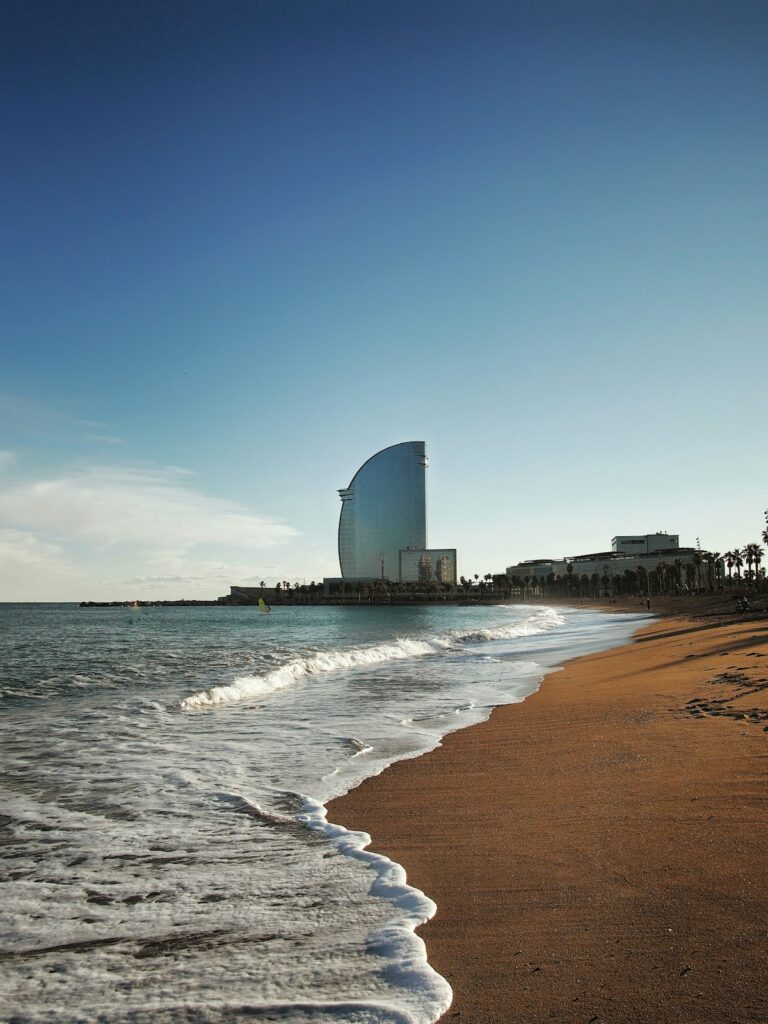
Barceloneta is the triangular neighbourhood between Port Vell and the beach, originally built for fishermen in the 18th century.
Why Stay Here
- You are 5 minutes from the sand. For beach-focused trips, nothing else compares.
- Seafood restaurants line the promenade, and many are genuinely good.
- The W Barcelona and other waterfront hotels have exceptional views.
Why You Might Skip It
- It is a tourist zone. You will not find much authentic local culture.
- The beach itself is crowded and not particularly clean by Mediterranean standards.
- It is poorly connected to the metro. The Barceloneta metro station is at the edge of the neighbourhood, and most hotels are a 10–15 minute walk from it.
- Noise from beach bars and night-time crowds can be an issue in summer.
Who Should Stay Here
Beach lovers and short-stay visitors who want a resort-style experience within the city. We suggest Barceloneta for one or two nights at the end of a longer trip, not for your entire stay.

El Raval: Gritty, Cheap, and Changing Fast
El Raval sits west of La Rambla and south of the university. It has a reputation for being rough, and parts of it still are. But it is also one of the most interesting and rapidly evolving neighbourhoods in the city.
Why Stay Here
- It is the cheapest central neighbourhood by a significant margin.
- It has the best concentration of ethnic restaurants — Pakistani, Bengali, Chinese, and Middle Eastern — in Barcelona.
- The MACBA contemporary art museum and the Filmoteca de Catalunya are here.
- Carrer de Joaquín Costa and Carrer del Carme have emerging cocktail bars and independent venues.
Why You Might Skip It
- Petty crime is higher here than in Eixample or Gràcia. Walking alone at night in the western parts requires caution.
- Some streets are poorly maintained and can feel unwelcoming after dark.
- It is not a traditional “holiday” atmosphere.
Who Should Stay Here
Budget travellers, solo travellers comfortable with city awareness, and anyone interested in multicultural urban life. We think El Raval is underrated for experienced travellers who know how to navigate cities.
For a comfortable base right on the edge of El Raval, The One Barcelona is a well-reviewed option on Ronda Universitat. It puts you close to La Rambla and the MACBA without placing you deep in the grittier back streets. A rooftop pool makes it a good spot to unwind after a day of walking.

Poble Sec: The Local Food Hub
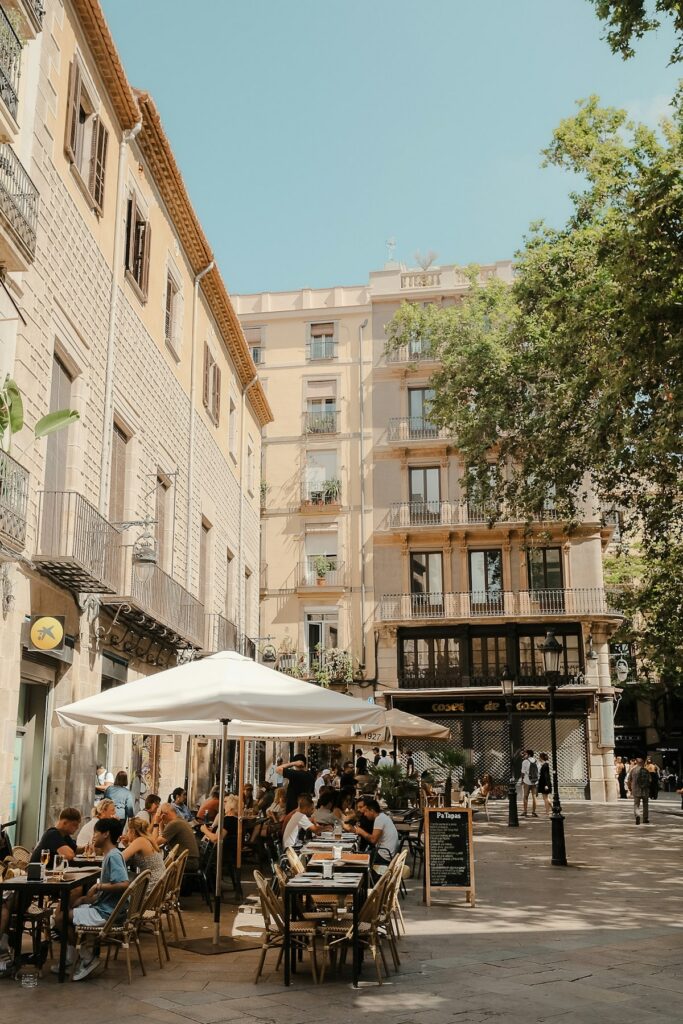
Poble Sec is at the foot of Montjuïc, between the old city and the hill. It was historically working-class and industrial, but Carrer de Blai — a pedestrian street lined with pintxo bars — has made it a food destination.
Why Stay Here
- Carrer de Blai has dozens of pintxo bars where you can eat and drink for €2–4 per item.
- It is a 10-minute walk to La Rambla but far cheaper and less touristy.
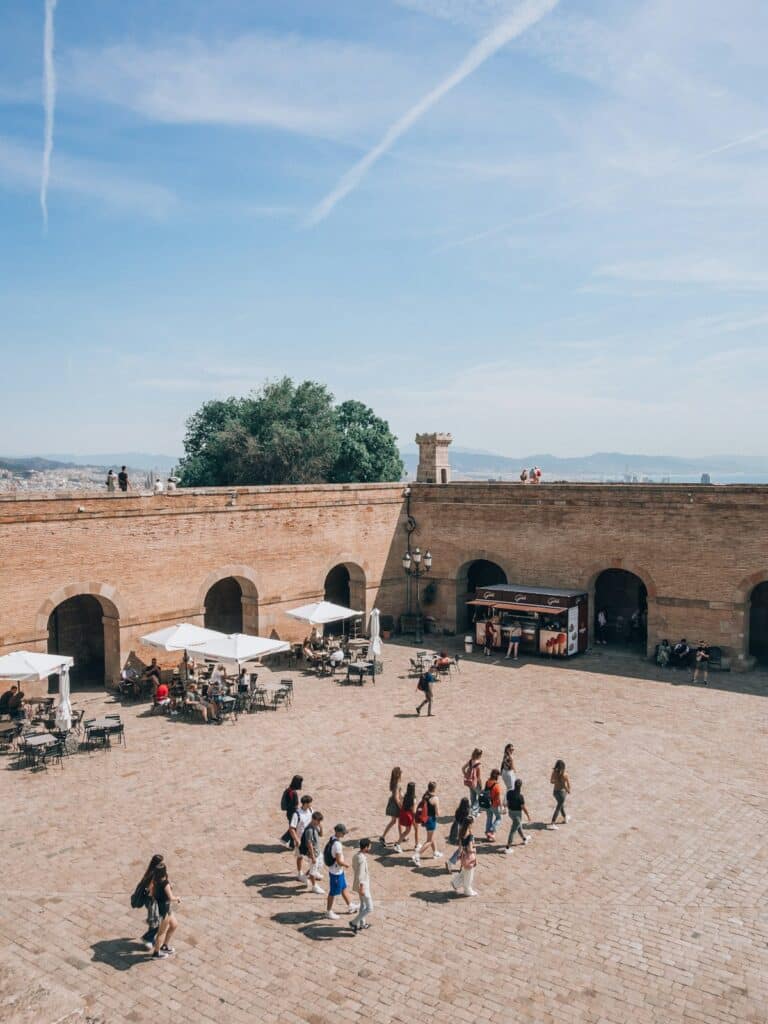
- Montjuïc is on your doorstep: the Magic Fountain, MNAC museum, Olympic Park, and the castle.
- The metro (L3) connects directly to Plaça Espanya, Sants Estació, and the airport.
Why You Might Skip It
- It lacks the architectural beauty of Eixample or the old city.
- Some areas still feel industrial and have limited green space.
- Hotel options are fewer than in the centre.
Who Should Stay Here
Food-focused travellers, budget visitors, and anyone who wants easy access to Montjuïc. We think Poble Sec is one of the best-value neighbourhoods in Barcelona.
Montjuïc and Poble Espanyol: The Quiet Escape
Staying near Montjuïc means trading proximity for peace. The area around the Olympic Stadium, the botanic gardens, and the MNAC museum is green, spacious, and almost entirely free of tourist crowds.
Why Stay Here
- It is the quietest area within the city limits.
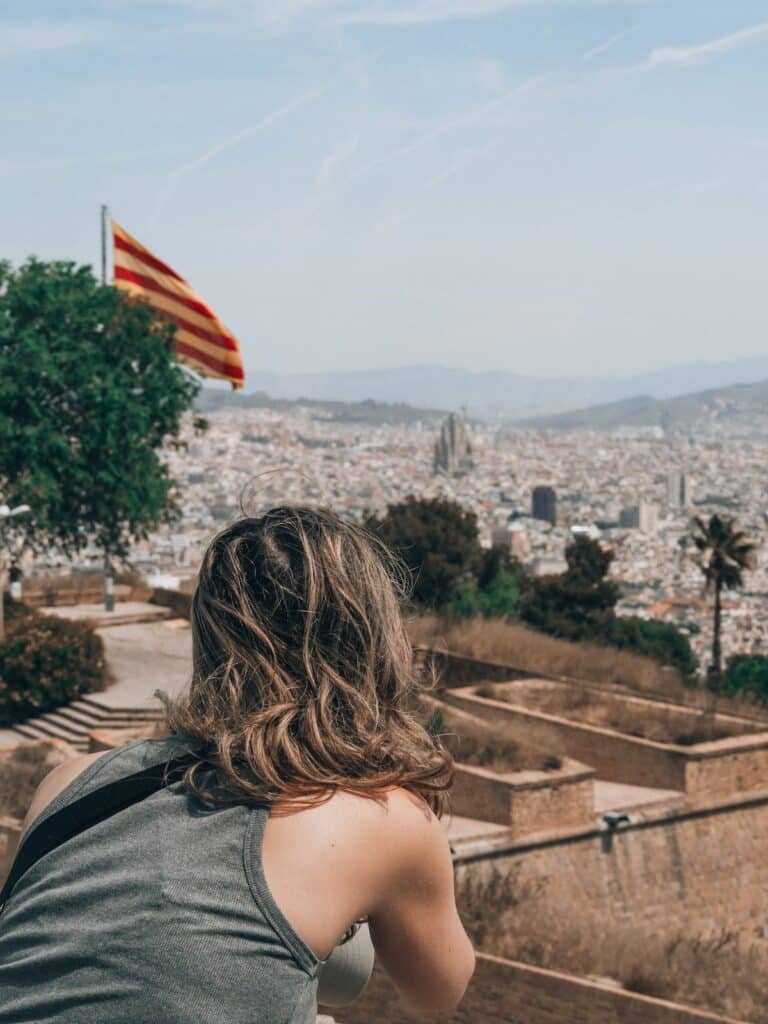
- The views from the hill are exceptional.
- You have direct access to Montjuïc Castle, the Joan Miró Foundation, and the Olympic sites.
Why You Might Skip It
- You are far from everything else. A taxi or bus is required for most trips.
- Dining options are limited compared to the rest of the city.
- Not recommended for first-time visitors who want to explore on foot.
Who Should Stay Here
Travellers who prioritise peace over convenience, and anyone visiting specifically for the Olympic Park or the museums. We suggest it only if you have a car or do not mind relying on taxis.
How Your Choice Affects Your Budget
Barcelona is not an expensive city by Western European standards, but accommodation costs vary significantly by neighbourhood and season.
- Low season (January–February, November): Expect 30–40% lower rates across all areas.
- High season (June–August, Easter, Christmas): Rates peak, especially in Barceloneta and the Gothic Quarter.
- Shoulder season (March–May, September–October): The best balance of weather and price.
If budget is your primary concern, we suggest Gràcia or El Raval for the lowest nightly rates, Poble Sec for the best food value, and Eixample if you want comfort at a moderate price. Avoid Barceloneta and the Gothic Quarter if you are trying to keep costs down.
Day-Trip Connections by Neighbourhood
| Day Trip | Best Departure Point | Nearest Metro/Station |
|---|---|---|
| Montserrat | Plaça Espanya (R5 train) | Espanya (L1, L3) |
| Girona | Sants Estació (AVE high-speed) | Sants Estació (L3, L5) |
| Costa Brava (Tossa de Mar) | Estació del Nord (bus) | Arc de Triomf (L1) |
| Tarragona | Sants Estació (regional train) | Sants Estació (L3, L5) |
| Sitges | Sants Estació (R2 Sud train) | Sants Estacio (L3, L5) |
| Figueres (Dalí Museum) | Sants Estació (AVE) | Sants Estacio (L3, L5) |
Eixample and Poble Sec have the best overall access to transport hubs. Gràcia requires a metro connection to reach Sants or Plaça de Catalunya. The Gothic Quarter and El Born are walkable to Estació del Nord and Arc de Triomf but farther from Sants.
Staying Connected in Barcelona
Barcelona is a city where your phone is essential: metro timetables, restaurant reservations, museum tickets, and navigation through the old city's maze-like streets. Free Wi-Fi exists in many cafés and public spaces, but it is unreliable and often insecure.
We recommend [checking our eSIM options for Spain] for affordable, pre-activated mobile data that works the moment you arrive at Barcelona-El Prat Airport. You can set it up before you leave home and avoid the hassle of finding a local SIM card shop.
Frequently Asked Questions
Is the Gothic Quarter safe at night?
Yes, but with caveats. The main streets and squares are well-lit and busy, but the narrow alleyways can feel isolated. We recommend staying on main streets after midnight and avoiding empty shortcuts.
Which area is closest to the airport?
Barceloneta and El Raval are closest geographically, but the metro from El Prat connects directly to Sants Estació and then to most neighbourhoods. Eixample and Poble Sec have the fastest metro connections overall.
Is it better to stay in a hotel or an apartment in Barcelona?
Apartments offer more space, kitchens, and often better value for groups or families. Hotels offer concierge services, daily cleaning, and sometimes better locations. We suggest apartments for stays of four nights or more, and hotels for shorter visits.
Which area has the best nightlife?
El Born and the Gothic Quarter have the highest concentration of bars and clubs. Gràcia has a more relaxed, local bar scene. Eixample has cocktail bars and rooftop terraces but fewer late-night venues.
Can I walk everywhere from the Gothic Quarter?
Mostly, yes. The Sagrada Família is a 30-minute walk or a short metro ride. Park Gu00fcell is too far to walk comfortably and take the metro or a taxi.
Is El Raval really that bad?
No, but it requires awareness. The area around La Rambla and the MACBA is safe and increasingly trendy. The western streets, closer to the port, are rougher. If you have never travelled in large cities before, Eixample or Gràcia are safer choices.
Final Thoughts
There is no single “best” area to stay in Barcelona. The right neighbourhood depends on who you are travelling with, what you want to do, and how you handle noise and crowds.
We think Eixample is the safest choice for most first-time visitors. It is central, well-connected, and quiet enough to sleep. El Born is our pick for food lovers who want atmosphere. Gràcia is ideal for longer stays and budget travellers. Barceloneta works for beach-focused trips of a night or two. Poble Sec offers the best value for money. And El Raval, for all its grit, is the most interesting neighbourhood in the city for experienced travellers.
The key is matching the area to your priorities, not just booking the cheapest room in the most touristy zone. Barcelona rewards the traveller who thinks about where they sleep.
Related Blog
Best eSIM for Spain: Do You Need One in 2026? (Complete Guide)
10-Day Travel Route Through Spain: The Essential Itinerary
Other Destination Guide in Europe
How to Get Internet in Italy as a Traveller: Best eSIMs, SIM Cards & WiFi for 2026
eSIM or Physical SIM in France? Pros, Cons & Best Pick for Travellers 2026
eSIM Portugal vs Roaming: Best Way to Stay Connected as a Traveler in 2026
Travelling to Greece? Best eSIM Greece Options for 2026
Where to Travel in July in Europe: Best Destinations to Beat the Crowds
2-Week Itinerary for Italy: The Perfect Route from North to South
Best Islands in Greece: How to Choose the Right One for Your Trip
Places to Avoid in Europe in Summer (And Where to Go Instead)
Add your first comment to this post