


Table of Contents
Los Angeles is hosting the FIFA World Cup 2026 opener for the US Men's National Team — and the city has been preparing for it for years. Eight matches at SoFi Stadium, a five-day FIFA Fan Festival at the iconic Memorial Coliseum, ten fan zones spread across one of the world's largest metropolitan areas, and 39 days of events covering the full tournament. This is one of the biggest host-city programmes in the entire World Cup.
The challenge with Los Angeles is the same one that greets every first-time visitor: it is not a city built for walking between attractions, and the distances are genuinely significant. Knowing where things are relative to SoFi Stadium, how to move between them, and which experiences are worth your limited time is what separates a good trip from a frustrating one.
We've put this guide together to answer all of that. It covers the matchday experience at SoFi, every confirmed fan zone, the best beaches, culture, food, and neighbourhoods — plus practical advice on transport, weather, and data. Whether you're in LA for three days or three weeks, here is how to make the most of them.
At a Glance
| # | Thing to Do | Key Takeaway |
|---|---|---|
| 1 | Attend a match at SoFi Stadium | 8 matches including 2 USMNT games and a quarterfinal — best-in-class stadium experience |
| 2 | FIFA Fan Festival at the Memorial Coliseum | Free. 5-day opening festival June 11–15 — the biggest official fan event on the West Coast |
| 3 | World Cup Fan Zones across LA | 10 official zones citywide — Farmers Market. Union Station. Venice Beach. Hansen Dam. and more |
| 4 | Experience Cosm — the immersive viewing dome | A cutting-edge 87-foot LED dome near SoFi for premium live match viewing |
| 5 | Walk Hollywood and the Walk of Fame | TCL Chinese Theatre. the Sign. studios — the city's most iconic neighbourhood for first-timers |
| 6 | Spend a day at the beach | Santa Monica. Venice. and Malibu are all within 30 minutes — World Cup in sunshine |
| 7 | Griffith Observatory and the Hollywood Hills | Best free view in Los Angeles — city. coastline. and the Hollywood Sign from one spot |
| 8 | Visit the Getty Center and new museums | Getty has free admission. Lucas Museum of Narrative Art opens in time for the World Cup |
| 9 | Eat across the city's extraordinary food culture | LA has the most diverse restaurant scene in the USA — and most of it is affordable |
| 10 | Explore the neighbourhoods beyond Hollywood | Silver Lake. Arts District. Koreatown. Little Tokyo — the real LA is not on the tourist map |
1. Attend a Match at SoFi Stadium
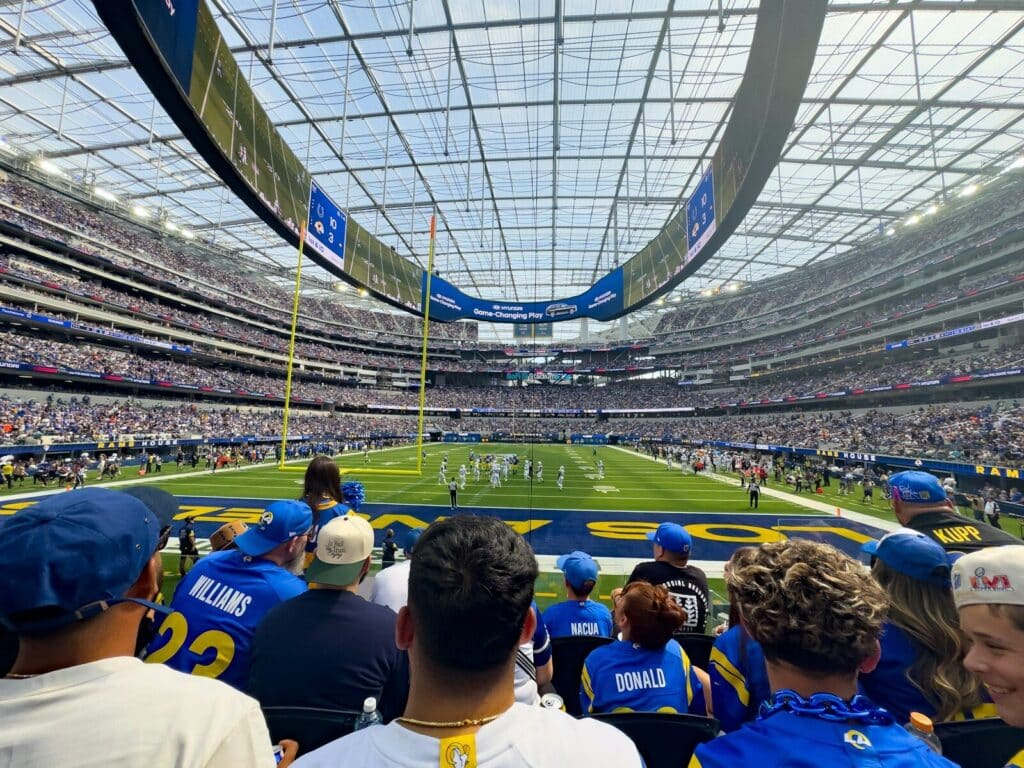
SoFi Stadium in Inglewood is one of the most advanced sports venues in the world — opened in 2020 at a cost of $5.5 billion, it has a retractable roof that keeps air circulating while blocking direct sun, making the June/July heat more manageable than you might expect. It is the home stadium of both the Los Angeles Rams and Los Angeles Chargers, and it is the most technologically sophisticated World Cup venue in North America.
Los Angeles is hosting eight matches in total, with SoFi Stadium at the centre of all of them. The confirmed match schedule:
| Date | Match | Phase | Kick-off (PT) |
|---|---|---|---|
| 12-Jun | USA vs Paraguay | Group D | 6:00 PM |
| 15-Jun | Iran vs New Zealand | Group G | 6:00 PM |
| 18-Jun | Switzerland vs UEFA Play-Off A winner | Group B | 12:00 PM |
| 21-Jun | Belgium vs Iran | Group G | 12:00 PM |
| 25-Jun | USA vs UEFA Play-Off C winner | Group D | 7:00 PM |
| 28-Jun | TBD vs TBD | Round of 32 | TBD |
| 2-Jul | TBD vs TBD | Round of 32 | TBD |
| 10-Jul | TBD vs TBD | Quarterfinal | TBD |
The USA's opening match on June 12 against Paraguay is the most anticipated domestic match of the entire tournament — expect full stadium capacity of 70,000 fans and extraordinary atmosphere. Tickets for this match sold out almost immediately after release; if you don't already have one, secondary market prices are high. The June 21 Belgium vs Iran and the quarterfinal on July 10 are the other headline matches.
Getting to SoFi Stadium from Central Los Angeles
SoFi Stadium is in Inglewood, approximately 5km from Los Angeles International Airport (LAX) and around 27km from downtown LA. The driving time is entirely unpredictable due to LA traffic.
The reliable option is the Metro K Line (Crenshaw/LAX Line), which runs directly to a station adjacent to the stadium. From downtown LA, connect at the Metro E Line (Expo Line) at Expo/Crenshaw. The full journey from downtown takes around 35–45 minutes. The Automated People Mover (APM) connecting LAX directly to the Metro system is operational in 2026, making an airport-to-stadium connection practical by train for the first time.
Rideshare pick-up and drop-off on match days is managed in designated zones well outside the stadium — budget an extra 20–30 minutes of walking if using Uber or Lyft.
Getting Match Tickets for Los Angeles
If you don't have tickets yet, there are still legitimate options:
- Official FIFA sales: Check FIFA.com/tickets for any remaining availability. FIFA periodically releases returned or unsold tickets — worth checking regularly.
- FIFA official resale: The fan-to-fan resale platform on FIFA.com allows ticket holders to resell at face value. This is the safest secondary option.
- Verified resellers: Platforms such as StubHub and SeatGeek list tickets from private sellers. Prices on secondary markets are typically well above face value, particularly for knockout rounds. Always use a verified platform with buyer protection.
- Hospitality packages: Premium packages including tickets are available through On Location, the official FIFA hospitality provider. These include stadium access, dining, and dedicated entry — at a significant premium over standard ticket prices.
For price expectations: group stage tickets on the secondary market typically start from several hundred dollars. Knockout rounds — and especially semi-finals and the Final — are significantly more expensive. We recommend budgeting conservatively and using only verified platforms.
Stadium Bag Policy & Entry Rules
SoFi Stadium follows FIFA's standard clear bag policy for all World Cup matches. Here is what you need to know before you arrive:
- Bags: Only transparent bags are permitted — maximum size 12″ x 6″ x 12″. No backpacks. No opaque bags, regardless of size.
- Outside food and drink: Not permitted inside the stadium. Sealed, empty water bottles may be allowed — check the latest FIFA guidelines closer to your match date.
- Prohibited items: Selfie sticks, umbrellas, large cameras with detachable lenses, and banners exceeding FIFA's size limits are not allowed. Review the official FIFA stadium guide before you travel.
- Arrive early: SoFi recommends arriving at least 90 minutes before kick-off for international matches. Security processing for World Cup fixtures is more thorough than standard NFL games.
If your bag does not meet the clear bag policy, you will need to leave it somewhere before entering the stadium. Several luggage storage services operate near SoFi and at transit hubs in Inglewood. It is worth booking a spot in advance on match days — storage fills up quickly near the stadium.
2. FIFA Fan Festival at the Los Angeles Memorial Coliseum
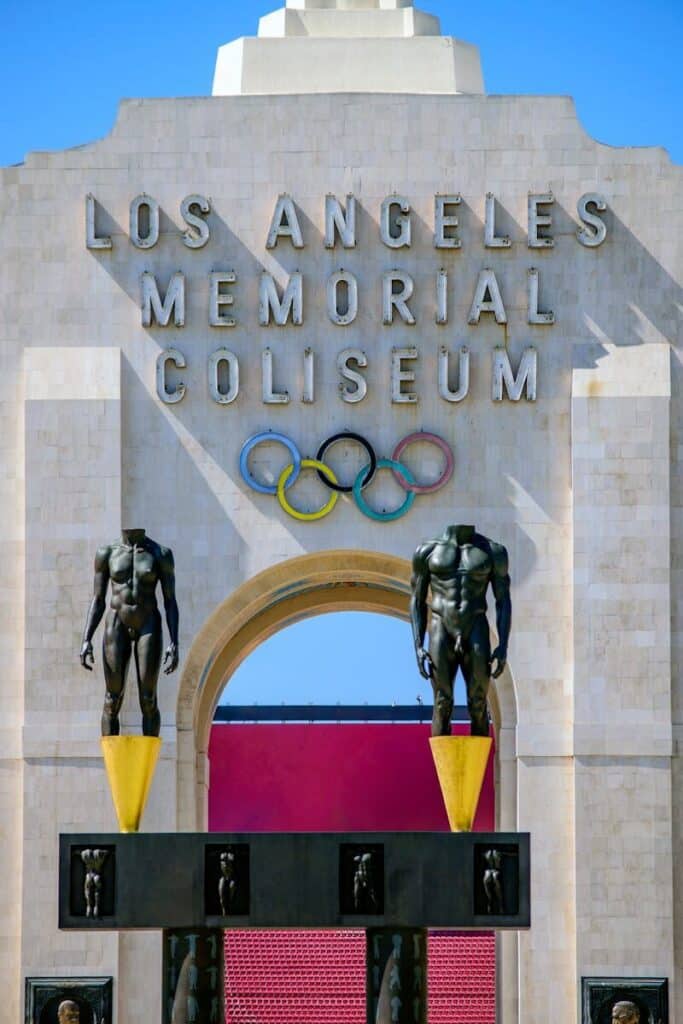
The FIFA Fan Festival for Los Angeles takes place at the historic Los Angeles Memorial Coliseum in Exposition Park — running from June 11 to June 15, 2026, as a five-day opening celebration coinciding with the first wave of LA matches. Entry is free and no match ticket is required.
The Memorial Coliseum itself is a National Historic Landmark — it hosted the 1932 and 1984 Olympic Games, two Super Bowls, and the 1994 World Cup. Its transformation into the World Cup's West Coast fan festival venue connects the 2026 tournament to LA's long sporting history in a way that few other cities in this World Cup can match.
The programme includes live match broadcasts on large screens, live music and cultural performances, interactive football activities, and a food offering that reflects LA's international communities. The five-day format is more concentrated than the fan festivals in cities hosting matches across a longer tournament window — which makes June 11–15 an exceptionally dense week for World Cup fans in LA.
Getting to the Memorial Coliseum
The Memorial Coliseum is in Exposition Park, south of the University of Southern California campus. It is accessible by Metro E Line (Expo Line) — get off at Expo Park/USC station, a short walk from the main entrance. Alternatively, Expo/Vermont station is approximately a 12-minute walk. The location is central relative to both downtown LA and West LA, making it one of the easier fan venues in the city to reach without driving.
3. World Cup Fan Zones Across LA County
Beyond the FIFA Fan Festival, Los Angeles is running ten official fan zones spread across the city and surrounding areas throughout the full tournament window. This is a significantly larger and more geographically distributed fan programme than any other World Cup host city.
The confirmed fan zone schedule:
| Fan Zone Location | Dates |
|---|---|
| FIFA Fan Festival – Memorial Coliseum | June 11–15 |
| The Original Farmers Market (W 3rd St and Fairfax) | June 18–21 |
| City of Downey | 20-Jun |
| Heart of the City: Union Station and LA Plaza de Cultura y Artes | June 25–28 |
| Hansen Dam Lake (Sun Valley) | July 2–5 |
| Venice Beach | TBC (1-day event) |
| Downtown Burbank | TBC |
| + 3 additional zones | TBC – check LAWC26 official site |
The Original Farmers Market fan zone (June 18–21) is particularly well-positioned — The Farmers Market at 3rd and Fairfax is one of the best open-air food destinations in the city, and the surrounding Grove shopping and entertainment area makes it easy to spend a full day in that part of West LA.
The Union Station fan zone (June 25–28) is in the heart of downtown, adjacent to LA Plaza de Cultura y Artes — a museum dedicated to the Mexican-American experience that is highly relevant during a World Cup with Mexico as a co-host nation.
➡ World Cup 2026 Fan Zones Guide
4. Experience Cosm — LA's Immersive Viewing Dome
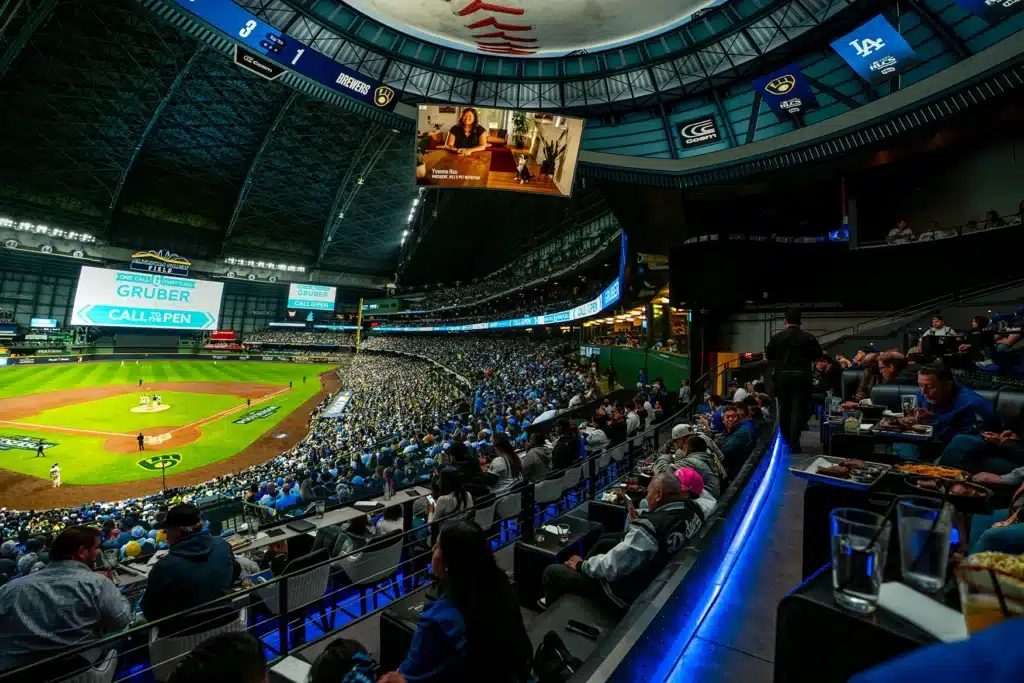
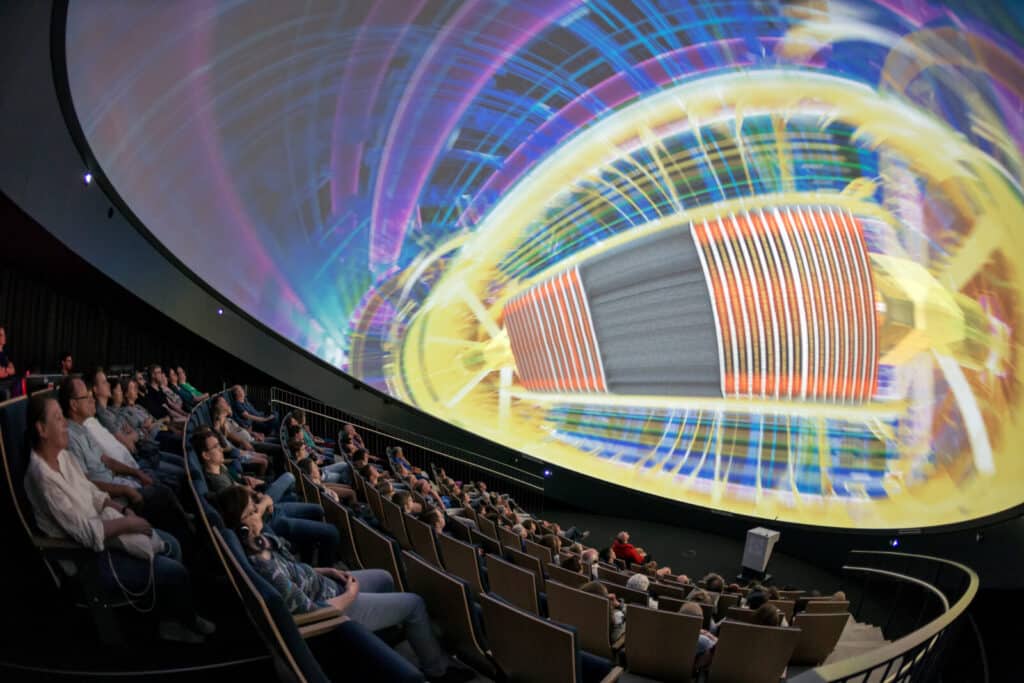
One of the genuinely new and unique World Cup viewing options in Los Angeles is Cosm — an immersive venue located in Inglewood, a short distance from SoFi Stadium. The centrepiece is an 87-foot diameter dome-shaped 12K LED screen, with footage captured by pitch-side cameras during matches. The effect is designed to make viewers feel as if they are sitting at field level during the game.
Cosm is a premium experience with ticketed entry. It is not a standard sports bar — it is closer to a cinema crossed with a stadium, operating in an entirely new category of sports viewing. For fans who want the most technologically immersive match experience outside the stadium itself, this is the most extraordinary option available anywhere in the World Cup host cities.
Cosm is accessible from the same Metro K Line connection as SoFi Stadium, making it natural to combine with pre-match or post-match plans around Inglewood.
5. Walk Hollywood and the Walk of Fame
Hollywood is where most first-time visitors to Los Angeles begin — and while it is more tourist-facing than the rest of the city, it contains a concentration of genuinely significant locations worth at least a half-day.
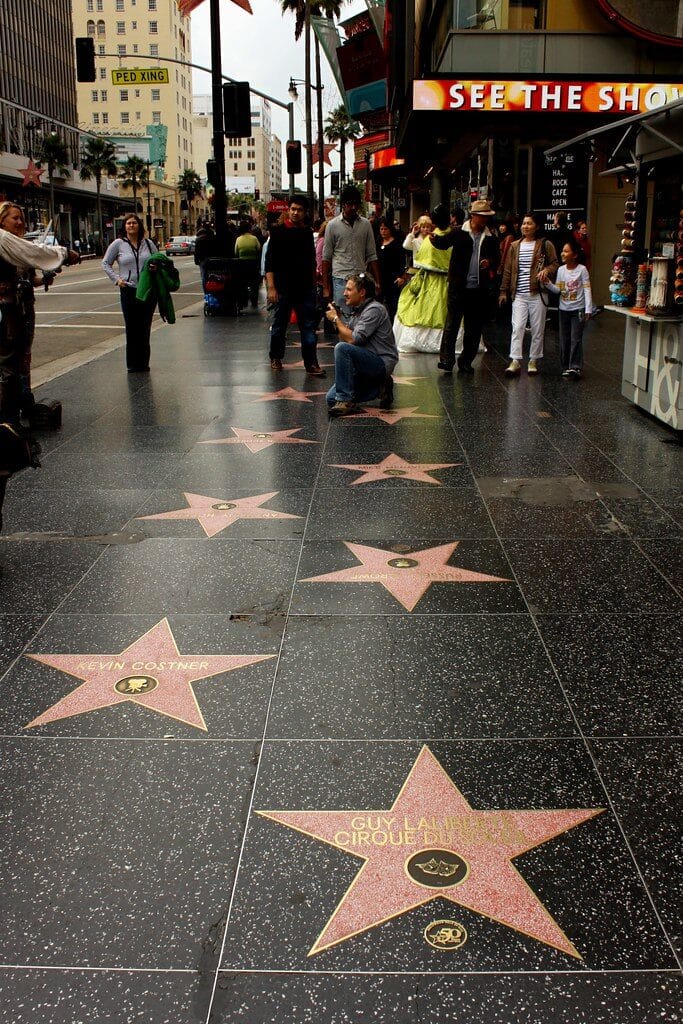
The Hollywood Walk of Fame runs along Hollywood Boulevard and Vine Street, with over 2,700 stars embedded in the pavement honouring figures from film, television, music, and radio. The walk itself is free and accessible on foot. The practical approach: park or get off the Metro at Hollywood/Highland station and walk east along Hollywood Boulevard.
Key stops on and around Hollywood Boulevard:
- TCL Chinese Theatre (6925 Hollywood Blvd): The original Hollywood movie palace, opened in 1927, famous for its cement court where film stars have left handprints and footprints since the early studio era. Now an IMAX theatre. Worth a look even if you're not seeing a film.
- Dolby Theatre (6801 Hollywood Blvd): Home of the Academy Awards ceremony. Tours run daily and take approximately 30 minutes.
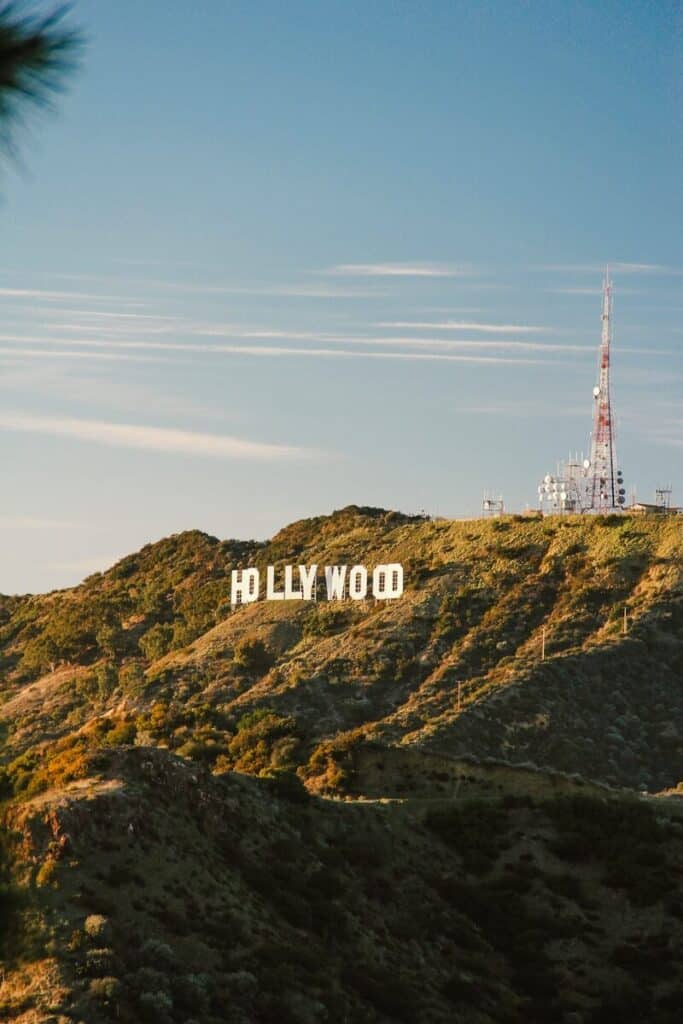
- Hollywood sign viewpoint: The best easily accessible view of the sign from the streets below is from the intersection of Beachwood Drive and Westshire Drive, a 15-minute drive or Uber from Hollywood Boulevard.
- Griffith Observatory: See Section 7 for the superior view of the Hollywood Sign from above.
A practical note on Hollywood: The boulevard itself is busy, touristy, and can feel overwhelming. The best approach is to arrive early in the morning or in the early evening — the light for photos is better, the crowds are thinner, and the neighbourhood has more character at those hours.
6. Spend a Day at the Beach
Los Angeles has around 75 miles of coastline within its metropolitan area, and the World Cup falls across June and July — the best beach months of the year. Average temperatures at the coast in June and July are 22–27°C (72–80°F), typically sunny, with morning marine layer that burns off by 10am. This is the ideal setting for a World Cup beach day.
The main options:
Santa Monica (most accessible from central LA)
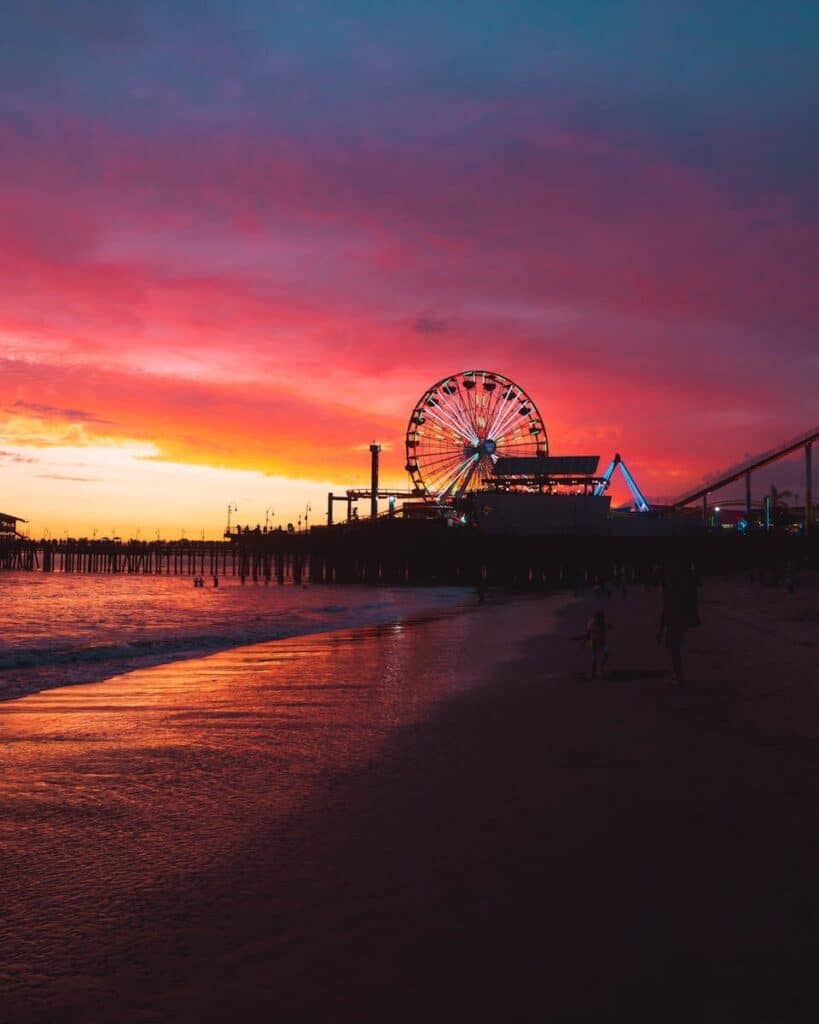
Santa Monica is the most accessible beach from central Los Angeles — around 30 minutes by Metro E Line from downtown, or 20 minutes by car when traffic permits. Santa Monica Pier is the visual centrepiece: a wooden pier extending 300 metres into the Pacific, with a small amusement park at its end. The beach itself runs several kilometres north and south of the pier. The Third Street Promenade, a pedestrianised shopping and restaurant street three blocks from the beach, is the best place in the area for an evening meal.
Venice Beach (character, street culture)
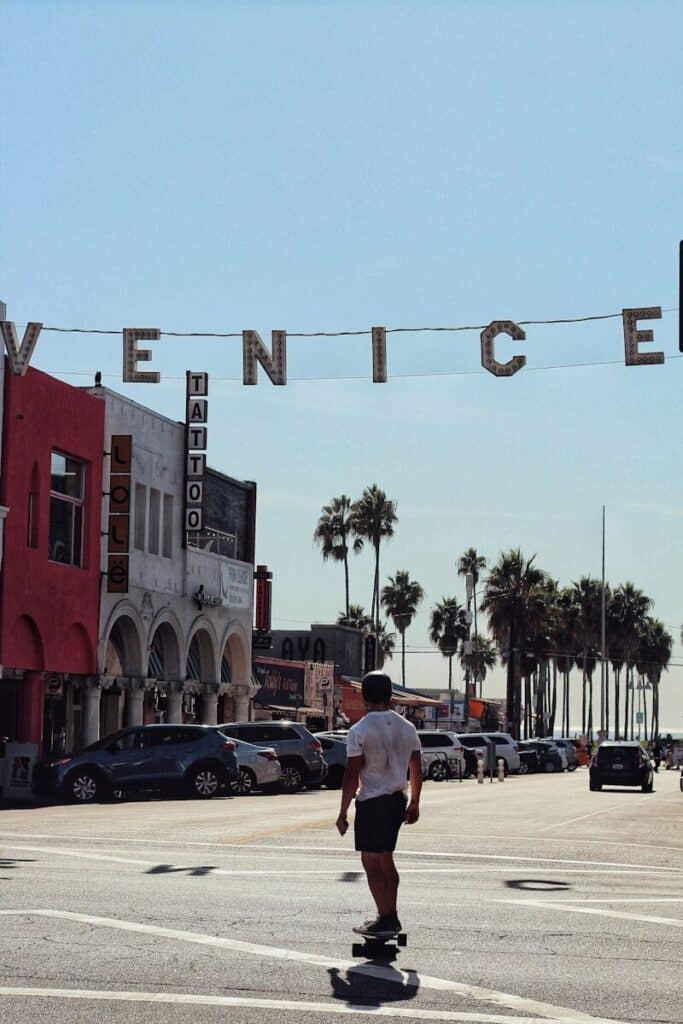
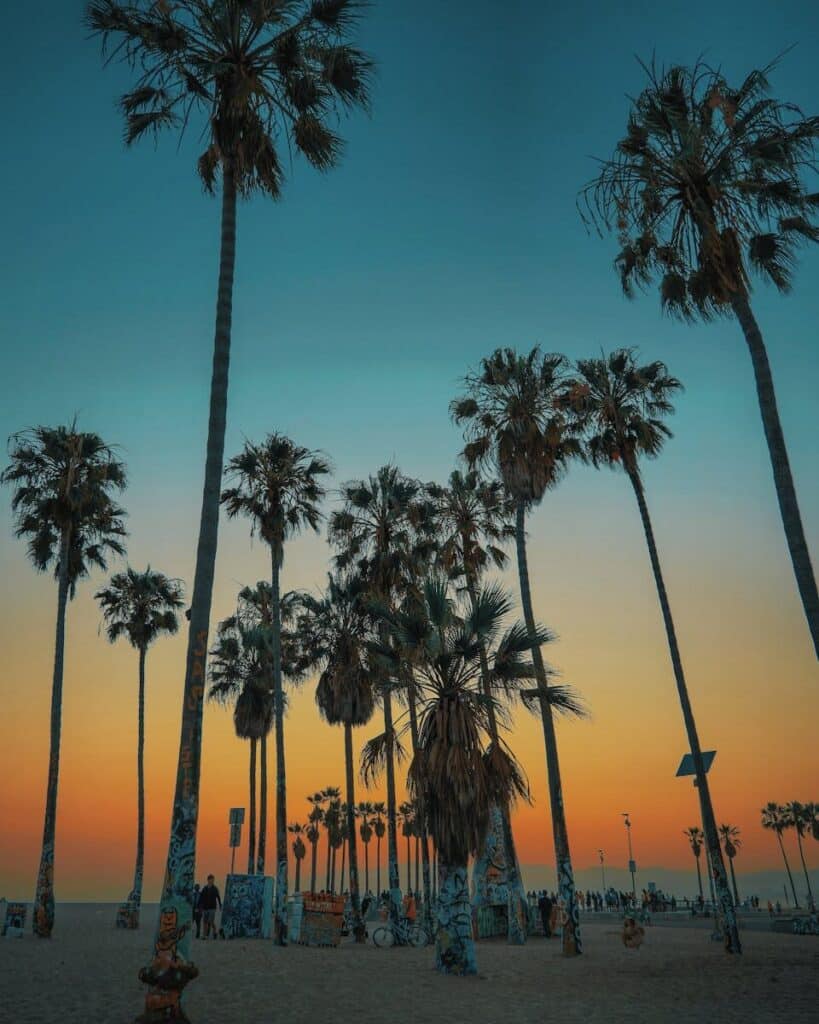
Venice is immediately south of Santa Monica, accessible by walking or cycling along the beach boardwalk. The Venice Beach Boardwalk is one of the most distinctive streets in American urban culture — street performers, bodybuilders at Muscle Beach, skaters at the Venice Beach Skate Park, and art installations along the waterfront. The food options are good but pricey; the street scene is worth the visit regardless. Abbott Kinney Boulevard, one block inland from the boardwalk, is one of the best independent restaurant and shop streets in the city.
Malibu (30 miles north — worth it for the scenery)
Malibu is not easy to reach without a car, but it is a different experience from Santa Monica and Venice — wilder, less crowded, with some of the most beautiful coastline in Southern California. Zuma Beach is the main swimming beach; Point Dume is a natural headland with hiking trails. If you have a rest day mid-tournament and access to a car or a comfortable rideshare budget, Malibu rewards the trip.
7. Griffith Observatory and the Hollywood Hills
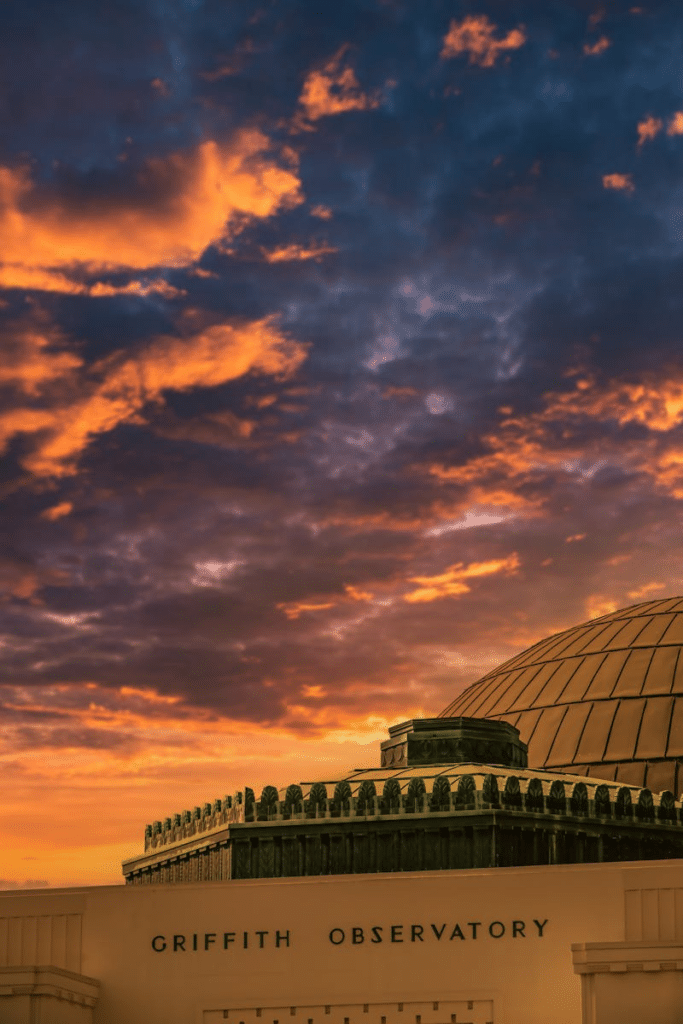
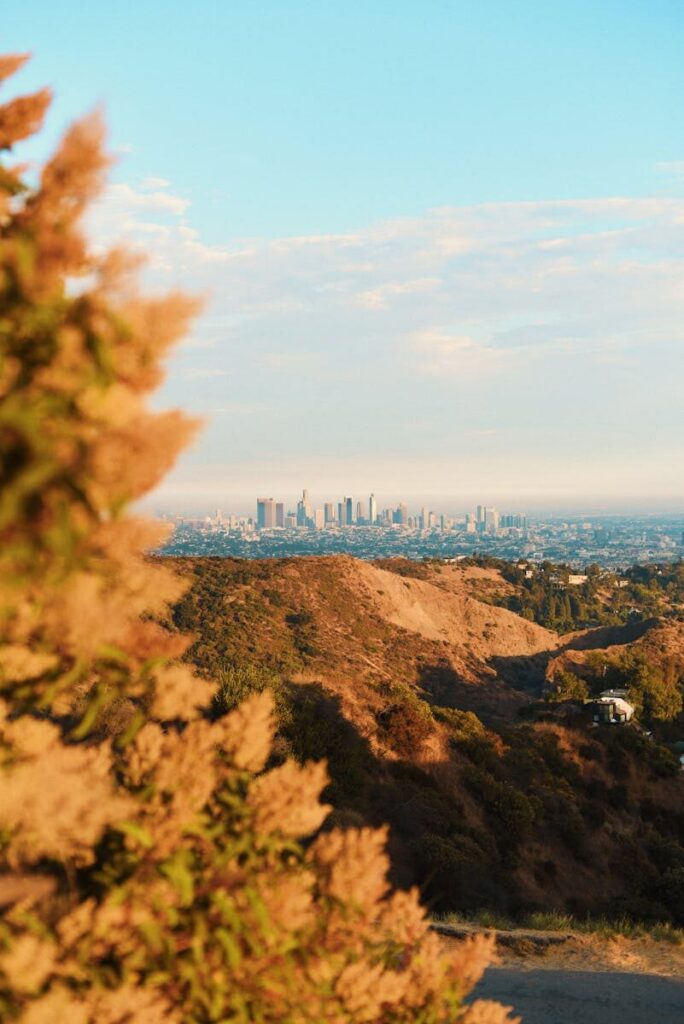
Griffith Observatory sits on the south-facing slope of Mount Hollywood in Griffith Park, at 1,134 feet above sea level. It is free to enter, open to the public, and has one of the best unobstructed views of Los Angeles available anywhere in the city — stretching from the downtown skyline and the Hollywood Sign to the Pacific Ocean on a clear day.
Griffith Park itself is the largest urban park in the United States — over 4,000 acres of chaparral-covered hills, hiking trails, and open space in the middle of Los Angeles. For World Cup visitors who want to understand the city's geography — how big it actually is, how the coastal and inland areas relate to each other — the view from Griffith Observatory makes it immediately legible in a way that walking the streets never quite does.
Getting to Griffith Observatory
- By car or rideshare: The most common approach. Parking around the Observatory fills up by mid-morning on weekends. Arriving before 9am or using a rideshare are both more reliable options.
- On foot from Los Feliz: The Observatory is accessible by hiking trails from the Los Feliz neighbourhood at the base of the hills — a 2.5km climb through the park, roughly 45 minutes each way.
- Shuttle: A DASH bus shuttle runs from the Los Feliz Metro stop to the Observatory on weekends and holidays.
What Else to Do in Griffith Park
Beyond the Observatory, Griffith Park has several other destinations worth combining into a half-day:
- The Autry Museum of the American West: Covers the cultural history of the American West, with a good permanent collection
- LA Zoo: Well-regarded urban zoo adjacent to the park's north end
- The Trails Café: A small outdoor café at the trailhead — one of the best coffee stops in the hills
8. Visit the Getty Center and New Museums Opening for 2026
Los Angeles's museum scene reaches a significant new level in 2026 with the opening of the Lucas Museum of Narrative Art — the long-awaited museum from Star Wars creator George Lucas, dedicated to storytelling art from paintings to film. The museum is located in Exposition Park, immediately adjacent to the Memorial Coliseum where the FIFA Fan Festival is held — making it a natural pairing during the June 11–15 Festival period.
The expanded Los Angeles County Museum of Art (LACMA) is also completing a major renovation by 2026, restoring it to its position as the largest art museum in the western United States. LACMA is on Wilshire Boulevard in Hancock Park, accessible from the Fairfax district.
The Getty Center (always worth the visit)
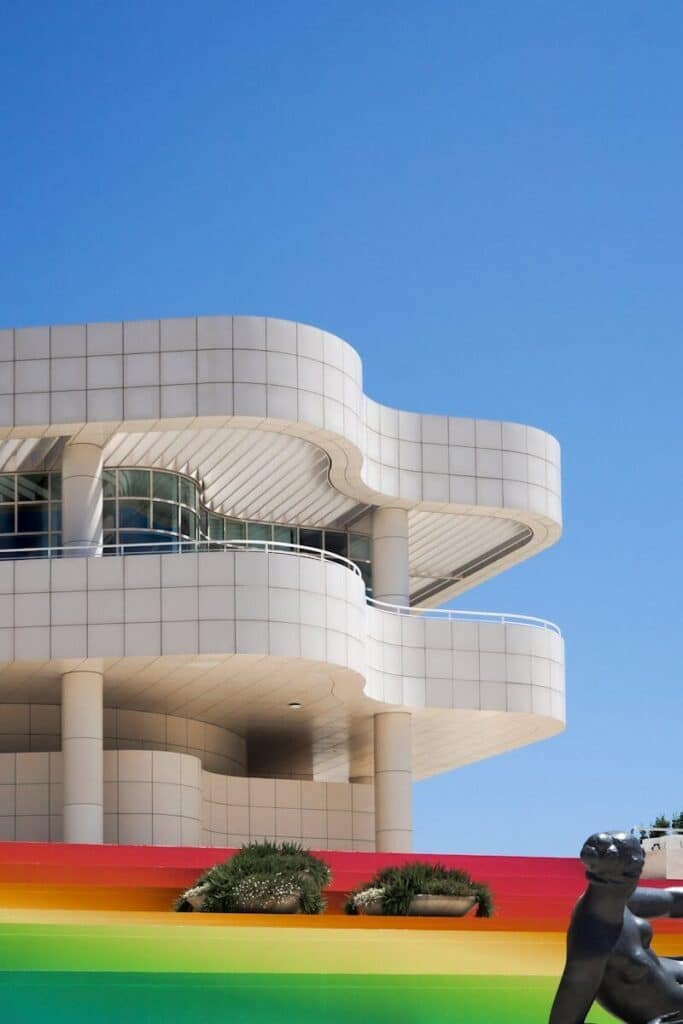
The Getty Center is the most consistent cultural recommendation in Los Angeles — a world-class art museum in a Richard Meier-designed campus on a hilltop above the 405 freeway, with a free tram ride from the street-level car park to the entrance. General admission to the Getty is free (parking costs $20; coming by Metro bus is the free alternative). The permanent collection covers European paintings, drawings, manuscripts, sculptures, and decorative arts. The building and gardens are as much a reason to visit as the art.
The Getty is most pleasant on a weekday morning — weekends in summer are crowded from mid-morning. If you go on a weekend, arrive as close to the 10am opening time as possible.

9. Eat Your Way Through the World's Most Diverse Restaurant City
Los Angeles has a stronger case than any other American city for the title of most culinarily diverse place in the world. It is the US city with the largest Korean, Japanese, Armenian, Persian, Thai, and Salvadoran populations, among others — and each of those communities supports restaurant cultures that are the best of their kind outside of the origin country.
For World Cup fans, the connection is direct: the nations competing on the pitch in LA are represented in the city's restaurants with genuine depth, not tourist versions.
Best Areas for World Cup Food Tourism
Koreatown (central LA):
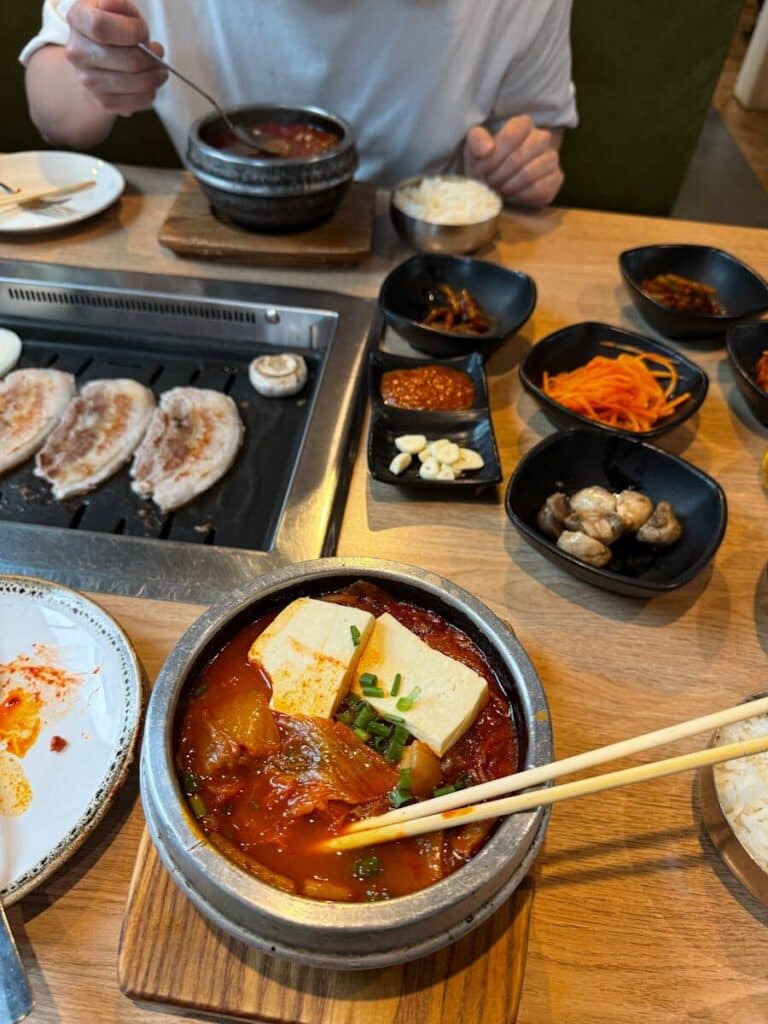
The largest Koreatown outside of Seoul, running along Wilshire and Olympic Boulevards. 24-hour Korean barbecue restaurants, Korean fried chicken, and soju bars. One of the best late-night food destinations in the city — expect to eat well after a late kick-off.
Little Tokyo (downtown):
A concentrated grid of Japanese restaurants, ramen shops, izakayas, and bakeries around 1st and San Pedro Streets. The Japanese American National Museum is here as well. Best visited in the evening when the restaurants are at their most atmospheric.
East LA (Boyle Heights and East Los Angeles):
The heart of LA's Mexican-American food culture — birria tacos, pupusas, tamales, and mariscos (seafood) at prices well below anything comparable in West LA. The connection to Mexico as a co-host nation makes this particularly relevant for the 2026 World Cup. Take the Metro Gold Line to Mariachi Plaza and walk from there.
San Gabriel Valley (Alhambra, Monterey Park, San Gabriel):
The best Chinese food in the United States is arguably in this suburban belt east of downtown — hand-pulled noodles from Xi'an, Sichuan hot pot, dim sum, Taiwanese beef noodle soup, and Shanghainese soup dumplings. Worth the 30-minute Metro ride from downtown.
Mid-City / Pico-Robertson:
LA's Jewish and Israeli food culture — falafel, shawarma, Yemenite soups, and some of the best Israeli restaurants outside of Tel Aviv. Pico Boulevard between Robertson and La Brea is the main strip.
10. Explore the Neighbourhoods Beyond Hollywood
Hollywood is the surface — the neighbourhood that visitors see first and that the rest of the world associates with Los Angeles. But the city's most interesting residential and cultural life happens in the neighbourhoods that most itineraries skip.
Silver Lake and Los Feliz (East of Hollywood)
Silver Lake and Los Feliz together form LA's most creatively dense neighbourhood cluster — independent bookshops, coffee roasters, music venues, and restaurants that reflect the city's strong arts and food culture. Sunset Junction (the intersection of Sunset and Santa Monica Boulevards) is the social centre of Silver Lake. Griffith Park is directly accessible on foot from Los Feliz, making this a natural base for the Observatory visit.
The Arts District (Downtown LA)
The Arts District is the most rapidly changing neighbourhood in Los Angeles — former warehouses in the eastern edge of downtown, now home to galleries, chef-driven restaurants, craft breweries, and independent concept stores. Stumptown Coffee, Bestia (one of the city's most-booked restaurants), and the Hauser & Wirth gallery are all within a few blocks. Best visited on foot; parking is limited.
Leimert Park (South LA)
Leimert Park is the cultural heart of Black Los Angeles — a historic neighbourhood with deep roots in jazz and African-American art. The Vision Theatre and 43rd Place are the main cultural anchors. The neighbourhood is close to Exposition Park and the Memorial Coliseum, making it a natural add-on to a Fan Festival visit.
Pasadena (30 min from downtown)
Old Town Pasadena is one of the most pleasant walkable street grids in the greater LA area — Colorado Boulevard has independent restaurants, bookshops, and good coffee, alongside the Norton Simon Museum (one of the strongest private art collections in the western US, free on Fridays after 5pm). The Metro Gold Line runs directly from downtown to Memorial Park station in Pasadena.
Where to Stay in Los Angeles During the World Cup
Demand for accommodation in LA during the World Cup is high — particularly in the weeks around the June 12 USA vs Paraguay opener and the July 10 quarterfinal. If you haven't booked yet, do it now. Options at most price points are already limited for match weeks.
Best areas to stay
- Downtown LA: Central, well-connected by Metro, and within easy reach of the Arts District, Little Tokyo, and Union Station. Good value relative to the west side, with direct Metro access to SoFi via the E and K Lines.
- Mid-City / Fairfax / West Hollywood: Central to the city's food and entertainment scene, close to the Farmers Market fan zone, and roughly equidistant from both the beach and downtown. Good options at mid-range price points.
- Santa Monica / Venice: The beach option — best if you want the coastal atmosphere and are comfortable with the 35–45 minute Metro or rideshare journey to SoFi. Higher prices, but strong food and neighbourhood scene right outside the door.
- Inglewood (near SoFi): The most practical choice if your trip is focused on multiple matches at SoFi Stadium. Fewer dining and neighbourhood options than central LA, but minimal travel stress on match days.
Book as early as possible — World Cup match weeks in Los Angeles are already showing limited availability at many price points.

Find hotels, apartments, and convenient stays across Los Angeles for your trip and World Cup matches.
What to Budget for a Match Day in Los Angeles
Here is a realistic estimate for a single match day — covering transport, food, and entry:
| Item | Estimated Cost |
|---|---|
| Match ticket (group stage. secondary market) | Varies significantly — check current listings |
| Metro return (E + K Line) | approx. $3.50–7 USD |
| Food and drinks at stadium | $25–50 USD |
| Pre-match meal or drinks in the city | $20–40 USD |
| Rideshare (if used for last mile) | $15–30 USD |
| Total (excluding ticket) | approx. $65–130 USD |
Transport on the Metro is the most reliable way to keep costs down on match days — driving and rideshare in LA during the World Cup will be slower and more expensive than usual. Stadium food and drink prices at SoFi are in line with other major NFL and international sports venues; budget accordingly. The biggest variable is the match ticket itself.
Note: Ticket prices vary widely depending on the fixture, phase, and platform. For current availability and pricing, check verified platforms directly.
Getting Around Los Angeles During the World Cup
Los Angeles is famously car-dependent — but the Metro system is more useful for World Cup fans than the city's reputation suggests, particularly for routes between SoFi Stadium, downtown, and the beach. The Metro runs until midnight on most lines (later on weekends).
Key lines for World Cup visitors:
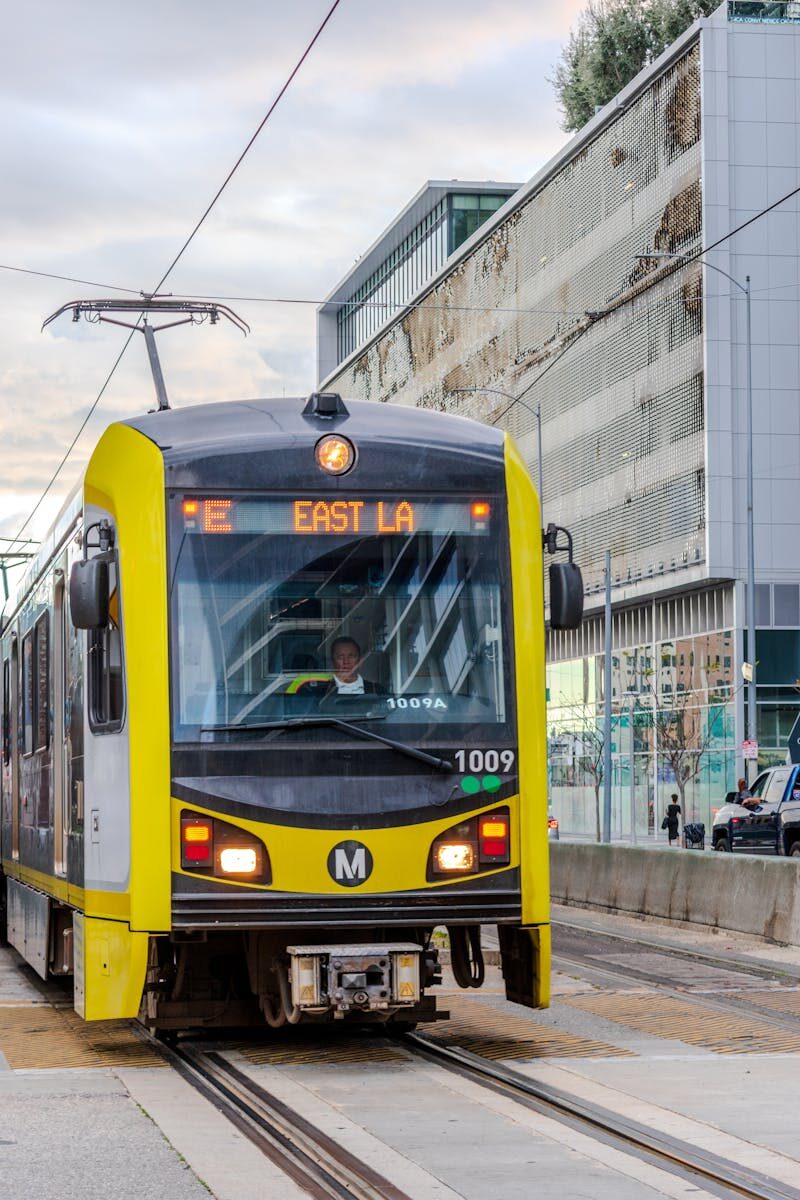
- E Line (Expo Line): Connects downtown LA to Santa Monica, with stops at USC/Exposition Park (Memorial Coliseum), Culver City, and Santa Monica's 4th Street. This is the most useful single line for the tournament.
- K Line (Crenshaw/LAX Line): Connects to SoFi Stadium and LAX. Now connects to the E Line at Expo/Crenshaw station.
- B Line (Red Line): Connects downtown to Hollywood (Hollywood/Highland and Hollywood/Vine stations).
- Gold Line: Connects downtown to Pasadena and East LA.
For travel between the beach, Hollywood, and the west side generally, Metro supplemented by rideshare is the practical combination. Driving in LA during the World Cup — especially on match days around SoFi — is genuinely not recommended.
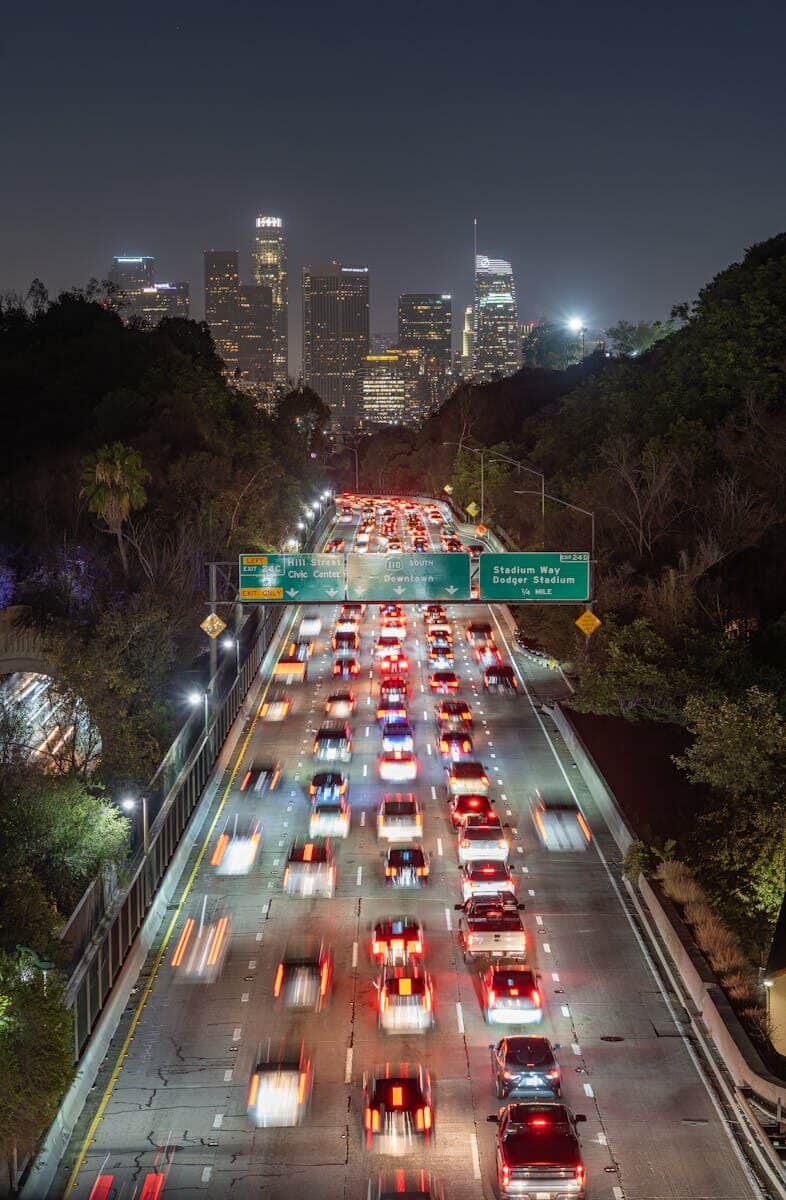
A note on distances: LA appears compact on a map. It is not. Santa Monica to Pasadena is over 45km. Griffith Park to Venice Beach is 30km. Build travel time into every plan, and don't assume that two attractions “nearby on the map” are nearby in practice.
Staying Connected in Los Angeles
Navigating Los Angeles — especially on match days with Metro connections, rideshare bookings, and real-time traffic information — requires reliable mobile data. International roaming on a home SIM in the US is expensive; a day pass from a European or Australian carrier can run $8–15 per day and often provides slow data during peak hours.
A US eSIM installed before you fly gives you a full local data plan — typically unlimited data for around $15–25 for 7–14 days. It activates when you land at LAX, and the same plan works across the entire country, useful if LA is one stop on a multi-city World Cup itinerary. Installation takes around five minutes before you travel.
➡ Best eSIM for World Cup 2026
Frequently Asked Questions
What matches are being played at SoFi Stadium during the World Cup 2026?
SoFi Stadium is hosting eight matches in total. The confirmed group stage fixtures are: USA vs Paraguay (June 12), Iran vs New Zealand (June 15), Switzerland vs UEFA Play-Off A winner (June 18), Belgium vs Iran (June 21), and USA vs UEFA Play-Off C winner (June 25). The stadium also hosts two Round of 32 matches (June 28 and July 2) and a Quarterfinal on July 10. The USA plays two of their guaranteed group stage matches in LA — making this the most significant World Cup venue for US Soccer fans.
Where can I still get tickets for World Cup matches in Los Angeles?
Start with FIFA.com/tickets for any official availability — FIFA periodically releases returned or unsold tickets. For secondary market options, StubHub and SeatGeek are the most established verified platforms with buyer protection. Hospitality packages through On Location (the official FIFA provider) are another route, though at a premium. We recommend avoiding unverified sellers, particularly for high-demand matches like the USA opener and the quarterfinal.
Where is the FIFA Fan Festival in Los Angeles and how do I get there?
The FIFA Fan Festival is at the Los Angeles Memorial Coliseum in Exposition Park, running June 11–15, 2026. It is free to attend without a match ticket. The most reliable way to get there is the Metro E Line (Expo Line) — exit at Expo Park/USC station, a 5-minute walk from the main entrance. The fan festival coincides with the opening matches at SoFi Stadium, making the first week in LA the most concentrated period of World Cup activity in the city.
How do I get from downtown Los Angeles or LAX to SoFi Stadium?
From downtown LA, take the Metro E Line to Expo/Crenshaw, then transfer to the Metro K Line (Crenshaw/LAX Line) to Inglewood/Westchester Pkwy station — SoFi is a short walk from there. The full journey takes 35–50 minutes. From LAX, the new Automated People Mover connects the airport to the Metro K Line directly. On match days, the Metro is significantly faster than driving or rideshare. Budget at least 90 minutes from the city centre to be inside the stadium before kick-off.
What is the best area to stay in Los Angeles for the World Cup?
It depends on your priorities. Downtown LA gives the best Metro access to SoFi Stadium and the fan zones, with good value at most price points. Mid-City and West Hollywood are better for food and neighbourhood exploration. Santa Monica and Venice are ideal if you want the beach within walking distance. If you're attending multiple matches at SoFi specifically, staying in Inglewood cuts travel stress significantly. Wherever you stay, book now — availability during match weeks is limited.
Do I need a car to get around Los Angeles during the World Cup?
For SoFi Stadium, the Memorial Coliseum, Hollywood, the beach, and downtown attractions, the Metro system is sufficient — especially combined with occasional rideshare for last-mile connections. A car is useful for Malibu, the San Gabriel Valley, and exploring residential neighbourhoods not served by the Metro. If you're renting, avoid driving on SoFi match days. Overall, the Metro + rideshare combination works well for a week-long World Cup itinerary and saves both money and the frustration of LA traffic.
What is Cosm and is it worth visiting?
Cosm is an immersive viewing venue in Inglewood, near SoFi Stadium, featuring an 87-foot diameter dome LED screen with 12K resolution. Match footage is captured by pitch-side cameras and projected across the dome, creating the sensation of being on the sideline. It is a premium ticketed experience — not a sports bar, but a new category of live sports viewing. For fans who want the most technologically immersive World Cup experience outside the stadium itself, it is unlike anything else available in any host city.
What are the best beaches to visit during the World Cup?
Santa Monica is the most accessible from central LA (30 minutes by Metro E Line from downtown) and has the best amenities — the pier, the Promenade, strong restaurant options. Venice is immediately south and best for street culture. Malibu requires a car but offers the most scenic coastline. June and July are the best months for the beach in LA — typically 22–27°C at the coast, with morning marine layer that clears by mid-morning.
Final Thoughts
Los Angeles is one of the most ambitious host cities in the 2026 World Cup — not because of the stadium (though SoFi is exceptional) but because of the scale and ambition of the wider city programme. Ten fan zones, a five-day Festival at a landmark stadium, a new immersive venue, and 39 days of events spread across one of the most culturally diverse metropolitan areas in the world.
The key to enjoying things to do in Los Angeles during the World Cup 2026 is understanding the geography early. LA is not New York or London — you cannot walk between its highlights. But once you accept the distances and plan accordingly using the Metro and rideshare, the city becomes one of the most rewarding World Cup destinations on the entire 2026 roster. The beach, the hills, the food, the neighbourhoods — all of them reward the time invested in getting there.
The USA's opening match on June 12 at SoFi is likely to be the loudest atmosphere in any stadium in the tournament. If you can be there, you should be.
➡ World Cup 2026 Travel Guide
➡ Best eSIM for World Cup 2026
➡ How to Get Around at the World Cup
Add your first comment to this post