


Table of Contents
Mexico City is hosting the opening match of the 2026 FIFA World Cup — and the significance of that is hard to overstate. On June 11, Mexico kicks off the tournament against South Africa at the Estadio Azteca, making it the first stadium in history to host three FIFA World Cups. The city that staged Pelé's triumph in 1970 and Maradona's Hand of God in 1986 is now the stage for the largest edition of the tournament ever held.
For fans travelling to Mexico City, the challenge is not a shortage of things to do — it is the opposite. The city has more history, culture, food, and neighbourhoods than most visitors have time to cover. Knowing what is genuinely exceptional, what is worth the journey, and how to navigate a city of over 21 million people is what separates a memorable trip from an overwhelming one.
We've put this guide together to give you the full picture: the five World Cup matches at Azteca, the FIFA Fan Festival at the Zócalo, the cultural unmissables, the neighbourhoods worth your time, the food that makes Mexico City one of the world's great eating destinations — and the practical information, including altitude acclimatisation, that most guides quietly skip.
At a Glance
| # | Thing to Do | Key Takeaway |
|---|---|---|
| 1-Jan | Attend a match at Estadio Azteca | The only stadium to host 3 World Cups — tournament opener June 11. plus 4 more matches |
| 2-Jan | FIFA Fan Festival at the Zócalo | One of the world's great public squares becomes the tournament's official fan hub |
| 3-Jan | Explore Centro Histórico | Aztec ruins. colonial cathedrals. Diego Rivera murals — all within walking distance |
| 4-Jan | Visit Teotihuacán | The Pyramids of the Sun and Moon — one of the most significant ancient sites on Earth. 1 hour from the city |
| 5-Jan | Walk Roma Norte and La Condesa | The best neighbourhoods for eating. drinking. and living like a local during the World Cup |
| 6-Jan | Frida Kahlo Museum in Coyoacán | The Blue House where Frida Kahlo was born and died — one of the most visited museums in Mexico |
| 7-Jan | Xochimilco canals by trajinera | Colourful boats on the ancient floating gardens — one of Mexico City's most distinctive experiences |
| 8-Jan | Chapultepec Park and Castle | The largest urban park in the Americas — castle. museums. lake. and the city's best green space |
| 9 | Eat your way through the city | Mexico City has more Michelin-recommended restaurants than any other city in Latin America |
| 10 | Day trip to Teotihuacán by hot air balloon | The most extraordinary way to see the pyramids — sunrise balloon over the ancient city |
1. Attend a Match at Estadio Azteca — A Place Unlike Any Other in Football
Estadio Azteca is the most historically loaded football venue in the world. It hosted the 1970 World Cup Final (Brazil 4–1 Italy, Pelé's crowning tournament), the 1986 World Cup Final (Argentina 3–2 West Germany), and is now the first stadium ever to host a third World Cup. To attend a match here during the 2026 tournament is to stand in the same venue that witnessed Pelé, Maradona's Hand of God, and the Goal of the Century. That context is real and felt from the moment you walk through the gates.
Mexico City is hosting five matches at Azteca, including the tournament's opening fixture — the first match of the entire 2026 World Cup.

Full Match Schedule at Estadio Azteca
| Date | Match | Phase | Kick-off (Local CT) |
|---|---|---|---|
| 11-Jun | Mexico vs South Africa | Group A — Tournament Opener | 1:00 PM |
| 17-Jun | TBD vs TBD | Group Stage | TBD |
| 24-Jun | Mexico vs UEFA Playoff D Winner | Group A | TBD |
| 30-Jun | Group A Winner vs Best Third-Place Team | Round of 32 | 9:00 PM |
| 5-Jul | TBD vs TBD | Round of 16 | TBD |
The June 11 opening match is the match — the tournament begins here. Mexico's first home World Cup match since 1986 will be played in the same stadium where the 1986 Final was decided, to a crowd of 87,000, with the entire world watching. Tickets for this fixture are among the hardest to obtain in the tournament; if you have one, plan the rest of your Mexico City trip around this day. If you don't have a ticket, the Zócalo Fan Festival (Section 2) will be the most extraordinary viewing experience available anywhere in the 2026 World Cup.
Getting to Estadio Azteca
Azteca is in Coyoacán borough in southern Mexico City, approximately 15km south of the Historic Centre. The specific address is Calzada de Tlalpan 3465.
The best option by public transport:
- Take Metro Line 2 (Blue Line) to Tasqueña station
- Change to the Tren Ligero (Light Rail) at Tasqueña station
- Ride to Estadio Azteca station — the final stop on the line
The journey from the Historic Centre to the stadium takes approximately 40–50 minutes. Metro fare is 7 pesos (under $0.40 USD). On match days the Metro and Tren Ligero will be packed from 2 hours before kick-off — expect queues, standing-room conditions, and the electric pre-match atmosphere of 87,000 fans on the move.
Rideshare alternative: Uber operates widely in Mexico City and is generally reliable. Journey time from Roma Norte or Condesa to Azteca on a normal day is 30–45 minutes; on match days, allow significantly more. Many fans prefer to take public transport to the stadium and Uber home post-match when public transport queues are longest.
Getting Match Tickets for Mexico City
If you don't have tickets yet, there are still legitimate options:
- Official FIFA sales: Check FIFA.com/tickets for any remaining availability. FIFA periodically releases returned or unsold tickets — worth checking regularly.
- FIFA official resale: The fan-to-fan resale platform on FIFA.com allows ticket holders to resell at face value. This is the safest secondary option.
- Verified resellers: Platforms such as StubHub and SeatGeek list tickets from private sellers. Prices on secondary markets are typically well above face value, particularly for the June 11 opening match and any Mexico knockout fixtures. Always use a verified platform with buyer protection.
- Hospitality packages: Premium packages including tickets are available through On Location, the official FIFA hospitality provider. These include stadium access, dining, and dedicated entry — at a significant premium over standard ticket prices.
For price expectations: group stage tickets on the secondary market typically start from several hundred dollars. Knockout rounds are significantly more expensive. We recommend budgeting conservatively and using only verified platforms.
Stadium Bag Policy & Entry Rules
FIFA applies a standard clear bag policy at all 2026 World Cup venues, including Estadio Azteca:
- Transparent bags only — maximum 12″ x 6″ x 12″. No backpacks, no opaque bags.
- No outside food or drink — sealed water bottles may be permitted; check FIFA's guidelines for the specific fixture.
- Arrive early — minimum 90 minutes before kick-off. Security on opening match day (June 11) will be particularly thorough given the global attention on the fixture.
- Prohibited items include selfie sticks, large cameras with detachable lenses, and banners larger than permitted sizes. Check FIFA.com for the full list ahead of your match.
If your bag doesn't meet the clear bag policy, you'll need to leave it somewhere before entering the stadium. Several luggage storage services operate near major World Cup venues — look for options within walking distance of Azteca or near Tasqueña transit hub.
Azteca Practical Tips
- Altitude note: Mexico City sits at 2,240m (7,350 feet) above sea level. If you are flying from sea level, allow at least 24–48 hours before attending a match to acclimatise (see Section on altitude below). Physical activity at altitude — including walking quickly between transport and stadium — is more taxing than it feels at sea level.
- Cash: Many food and souvenir vendors outside Azteca are cash-only. Bring Mexican pesos. Tipping stadium seat-service vendors 20 pesos is standard practice.
- Weather: Mexico City in June is mild — 18–22°C (64–72°F) and frequently overcast. An afternoon match at altitude with a cool breeze is much more comfortable than the Miami or Dallas venues. A light jacket for the evening is worth carrying.
➡ Best eSIM for Mexico 2026
➡ Best eSIM for World Cup 2026
2. FIFA Fan Festival at the Zócalo — The World's Greatest Fan Hub
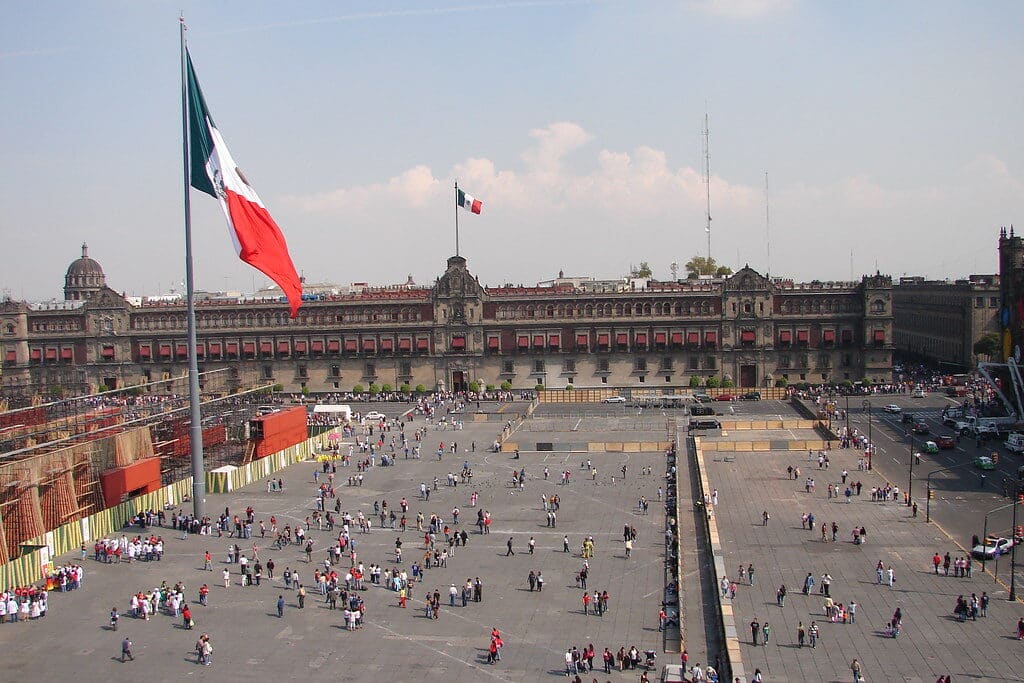
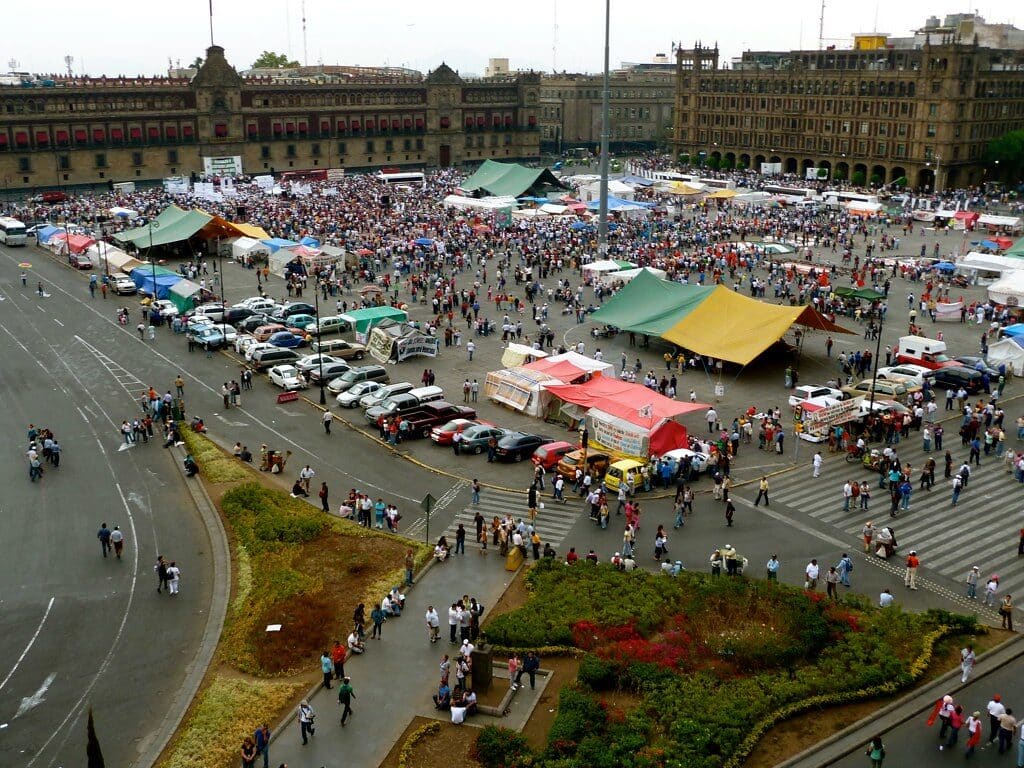
The official FIFA Fan Festival for Mexico City is held at the Zócalo — the Plaza de la Constitución — in the Historic Centre. This is one of the most fitting venue choices in the entire 2026 tournament.
The Zócalo is one of the world's largest city squares: 46,000 square metres of open plaza, framed on all four sides by the Metropolitan Cathedral (the largest in Latin America), the National Palace (where Diego Rivera's most important murals are housed), the Supreme Court, and the city government buildings. It is the symbolic centre of Mexico City, the symbolic centre of the country, and one of the most charged public spaces in the Americas.
On June 11 — the tournament's opening day — the Zócalo Fan Festival is confirmed to be the single largest fan zone event of the entire 2026 World Cup. Mexico's opening match, broadcast live on the big screens, in the square that has witnessed the central events of Mexican history since the Aztec civilisation. The atmosphere will be extraordinary.
The Fan Festival runs across the full tournament window, with 16 additional fan zones spread across the city's 16 boroughs. Entry to all zones is free; no match ticket required.
Getting to the Zócalo
The Zócalo is the most accessible landmark in Mexico City:
- Metro: Line 2 (Blue) to Zócalo/Tenochtitlan station — exit onto the square directly
- Ecobici (bike share) stations on surrounding streets
- Walking from Centro Histórico hotels: the square is the centre of the historic district
3. Explore Centro Histórico — 700 Years of History in One Walk
Centro Histórico is where Mexico City began — built by the Aztecs in 1325 as Tenochtitlan, conquered by the Spanish in 1521, and rebuilt over the ruins of the original city in what became one of the most architecturally layered places in the world. A walk through the Historic Centre covers three distinct civilisations in the space of a few city blocks.
Templo Mayor
The Templo Mayor is the most important Aztec archaeological site in the world — and it sits directly in the Historic Centre, exposed when construction workers accidentally uncovered it in 1978. The main pyramid temple complex is visible from the street; the adjoining Templo Mayor Museum holds thousands of recovered artefacts including the famous Tlaltecuhtli monolith. Address: Seminario 8, next to the Metropolitan Cathedral. Combined museum and site ticket runs approximately 90 pesos.
Metropolitan Cathedral
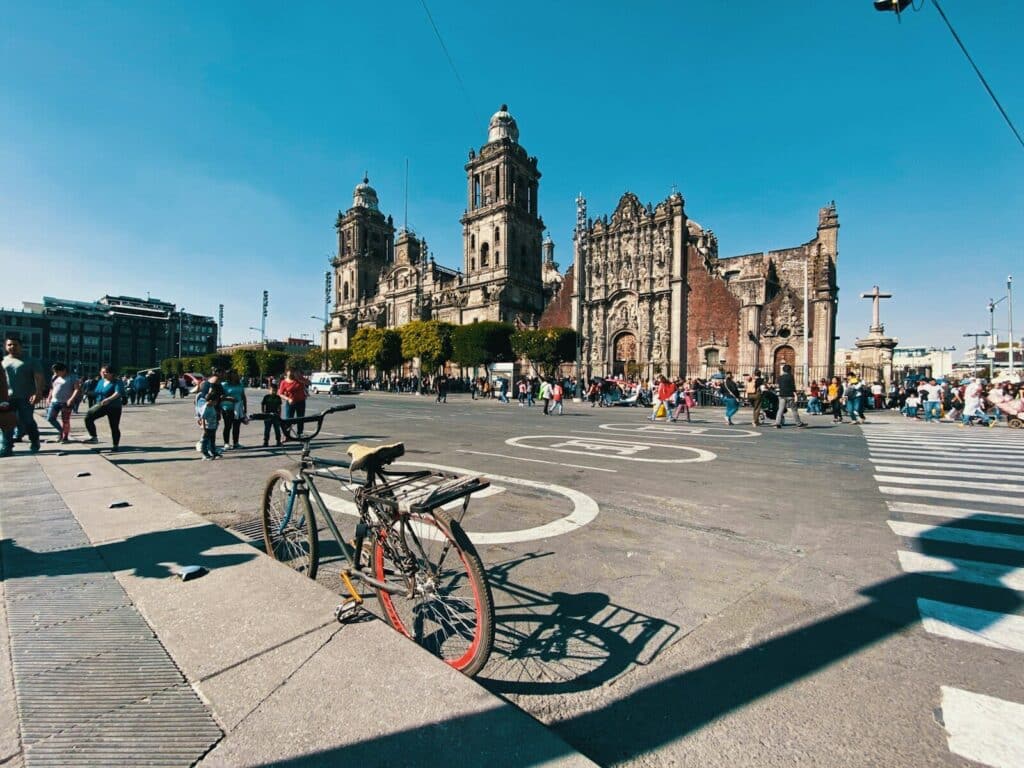
The largest cathedral in Latin America, built between 1573 and 1813 on the foundations of an Aztec temple — the construction spanned 240 years and incorporated architectural styles from Renaissance to Baroque to Neoclassical. Entry is free; the interior is extraordinary in scale and detail.
Palacio Nacional and Diego Rivera Murals
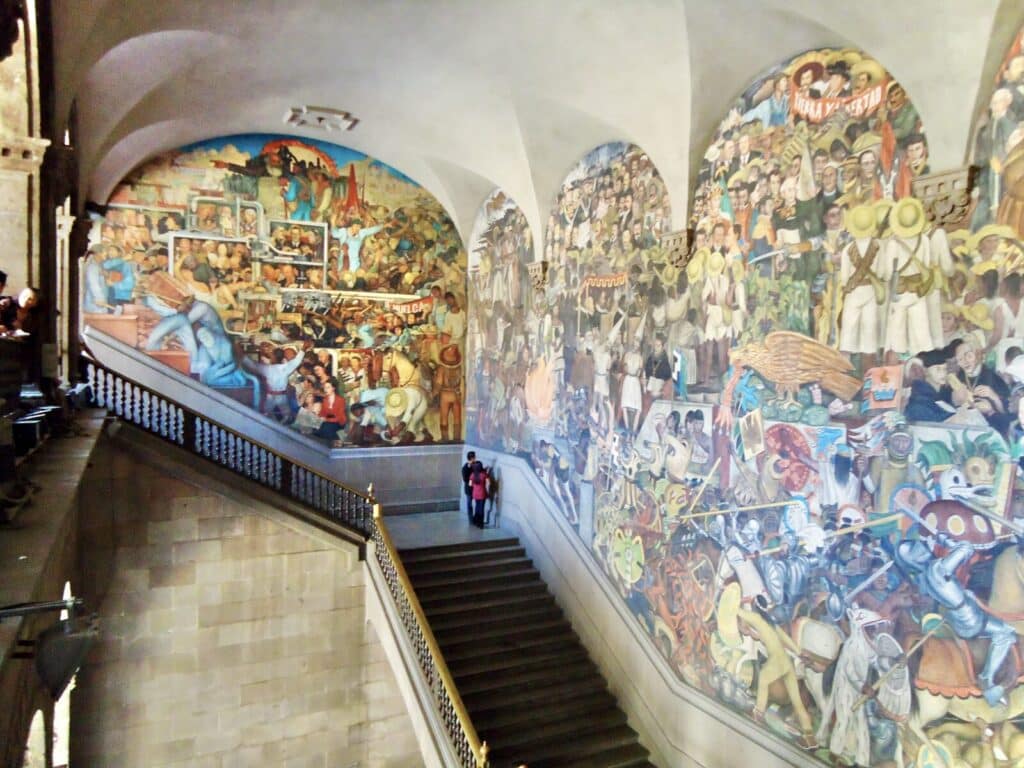
The National Palace on the eastern edge of the Zócalo houses Diego Rivera's most significant public work — a sweeping mural covering the main staircase depicting the history of Mexico from pre-Columbian times through the Revolution to a hopeful future. Entry is free with ID registration. The murals alone justify the visit; combined with the Zócalo Fan Festival, this is a natural full morning.
Torre Latinoamericana
The Torre Latinoamericana at the corner of Madero and Eje Central is a 1956 skyscraper with an observation deck at 44 floors and a terrace restaurant at 37 floors. The view from the top gives the clearest visual sense of the scale and structure of Mexico City — the Historic Centre below, Chapultepec to the west, the mountains (Popocatépetl and Iztaccíhuatl) visible to the southeast on a clear day. Observation deck ticket: approximately 120 pesos.
4. Teotihuacán — The Pyramids an Hour from the City
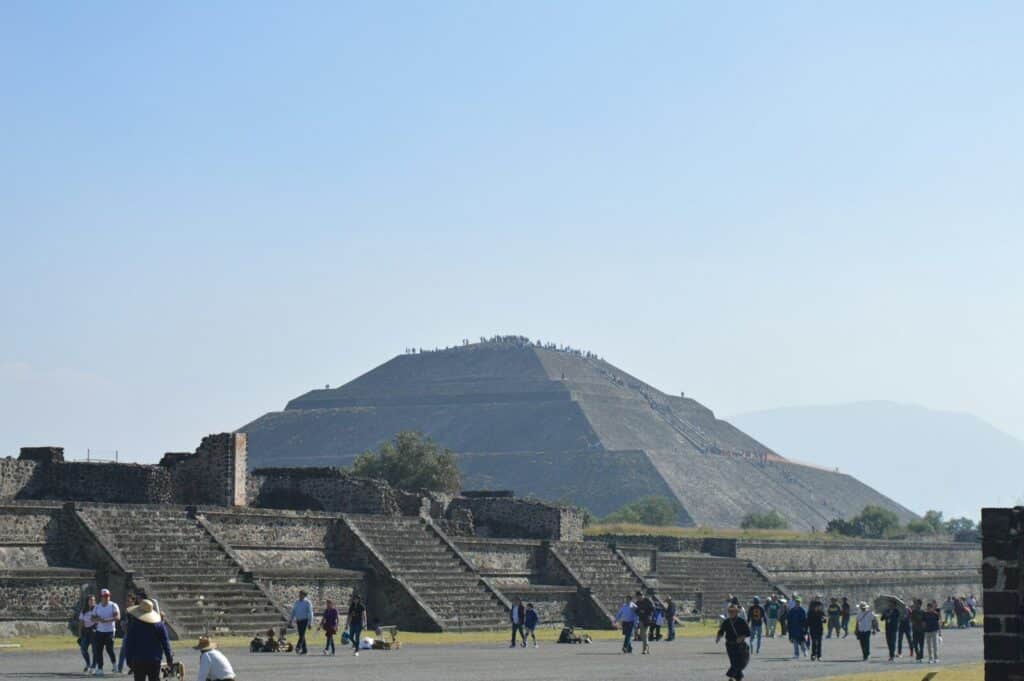
Teotihuacán is not Mexico City — it is a separate archaeological site 50km northeast of the city — but it is an essential addition to any Mexico City World Cup itinerary that includes a rest day. This is one of the most significant ancient cities on Earth: at its peak around 450 CE, it was the largest city in the pre-Columbian Americas, with a population of over 125,000 people.
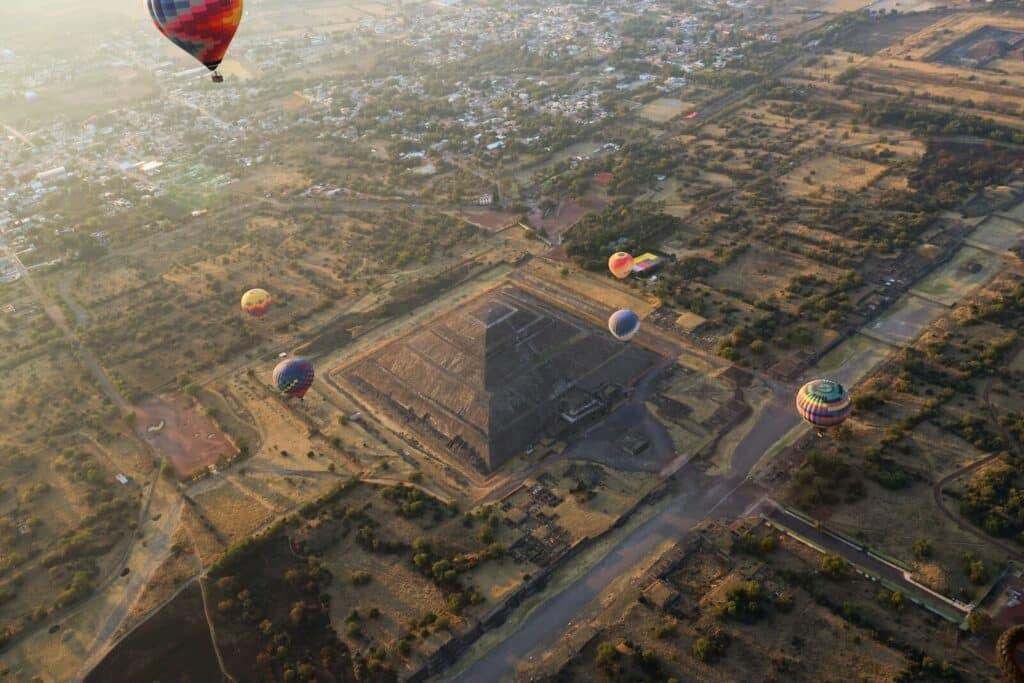
The site covers 83 square kilometres. The centrepiece is the Pyramid of the Sun — the third-largest pyramid in the world, rising to 65 metres. The Pyramid of the Moon at the northern end of the Avenue of the Dead (Calzada de los Muertos) is slightly smaller but commands the better view. Climbing both is permitted and physically demanding — altitude (the site is also at elevation) makes the climb more tiring than the height suggests.
Getting to Teotihuacán
- By coach (most common): Regular direct services from Terminal de Autobuses del Norte (Autobuses México-Teotihuacán). Journey time 45–60 minutes each way. Tickets run approximately 60–80 pesos. The last coach back departs around 6pm.
- By organised tour: Numerous operators in the Historic Centre and Roma Norte run half-day coach tours with a guide, typically including transport, entry, and a commentary. Cost runs $30–60 USD per person. Recommended for first-time visitors who want the historical context explained well.
- By Uber/private driver: A return journey by private car or Uber takes approximately 1 hour each way and costs $40–70 USD depending on negotiation. Allows more flexibility on timing and stops.

5. Roma Norte and La Condesa — The Neighbourhoods to Base Yourself In
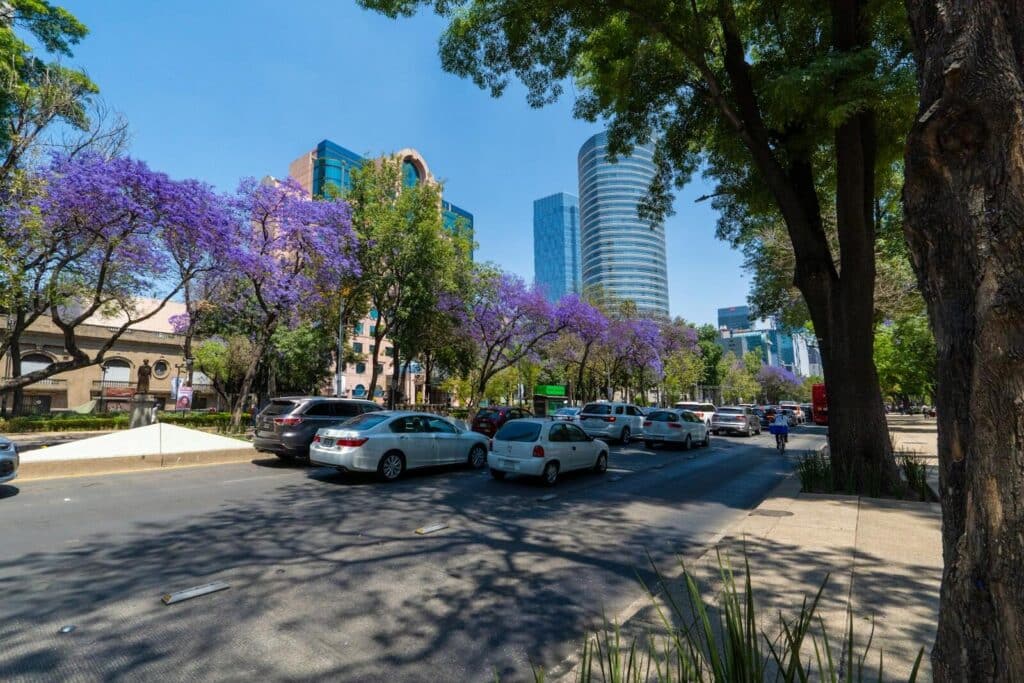
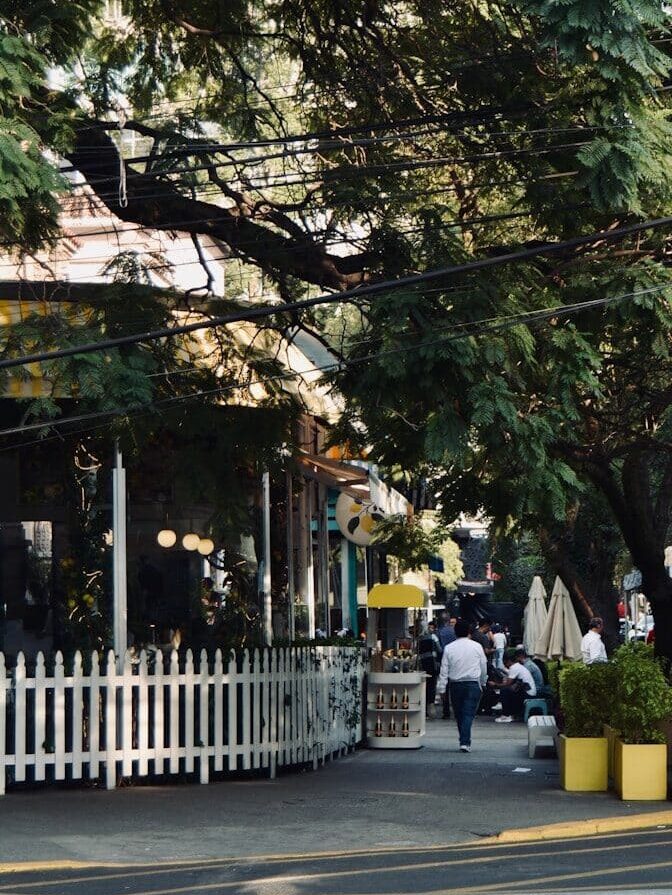
If you're choosing where to stay in Mexico City during the World Cup, Roma Norte and La Condesa are the two neighbourhoods most World Cup visitors should prioritise. They sit side by side in the central western part of the city, separated by Insurgentes Avenue, and together they represent the best of Mexico City's modern café, restaurant, and social culture.
Roma Norte
Roma Norte's street grid is defined by its tree-lined boulevards — Avenida Álvaro Obregón and Avenida Ámsterdam (a circular boulevard around Parque México) are the social arteries. The neighbourhood has a dense cluster of independent coffee shops, bakeries, natural wine bars, taco stands, and sit-down restaurants that collectively make up one of the best food-per-block ratios in Mexico City.
During the World Cup, Roma Norte will be the epicentre of the expat and international football-fan social scene. The outdoor café tables on Obregón and the restaurants around Parque México will be showing matches through the summer. It feels like Europe in layout but unmistakably Mexico City in character.
La Condesa
La Condesa is adjacent to Roma Norte and slightly more residential in feel, centred on Parque México and Parque España — two green squares surrounded by early 20th-century Art Deco apartment buildings. The restaurant and bar scene is strong, slightly more upscale than Roma Norte, and particularly good for evening dining before or after a match at the Zócalo Fan Festival.
Polanco
Polanco is Mexico City's luxury neighbourhood — north of Chapultepec Park, with international hotels, high-end restaurants, and the Masaryk Avenue shopping corridor. La Cervecería de Barrio in Polanco is one of the best venues in the city for watching World Cup matches — a packed beer-hall atmosphere that turns genuinely rowdy when Mexico, the USA, or European teams are playing.

6. Frida Kahlo Museum — Casa Azul in Coyoacán
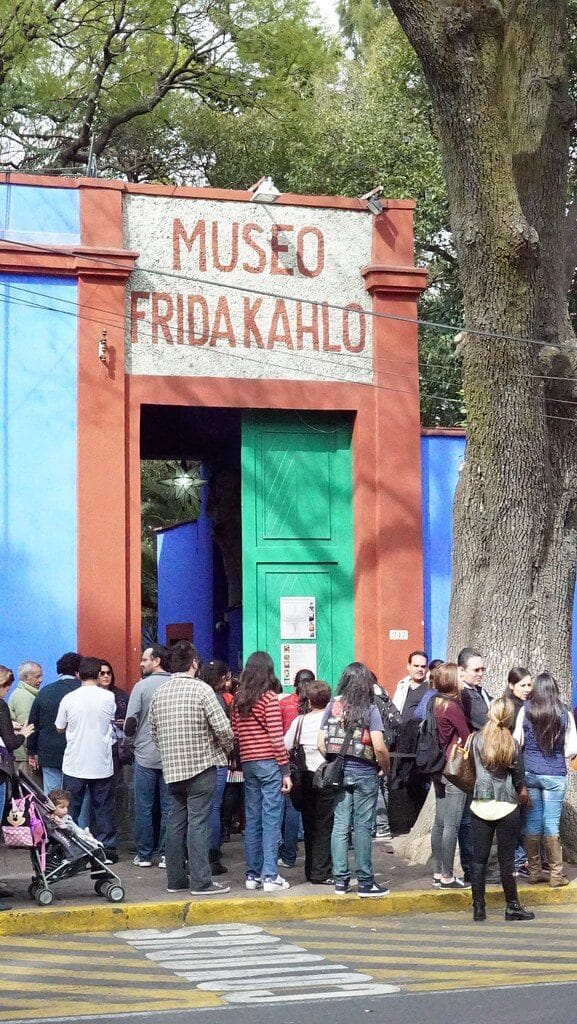
The Frida Kahlo Museum at Calle Londres 247 in Coyoacán — known as Casa Azul (the Blue House) — is the most visited museum in Mexico City and one of the most significant art museums in Latin America. It is the house where Kahlo was born in 1907 and died in 1954, and where Diego Rivera and she spent much of their life together.
The museum contains Kahlo's personal possessions, traditional Tehuana clothing, jewellery, an art studio, her collection of pre-Columbian art, and several original paintings and preliminary drawings. The house itself — intensely painted in cobalt blue inside and out — is as much the subject as the contents.
Practical note: Tickets must be booked online in advance at museofridakahlo.org.mx. Same-day walk-up tickets are rarely available during summer. Book at least 2–3 weeks before your visit, and significantly earlier if you're visiting around the June 11 opening match week when Mexico City will be at peak tourist occupancy. Entry is approximately 300 pesos.
Coyoacán Neighbourhood
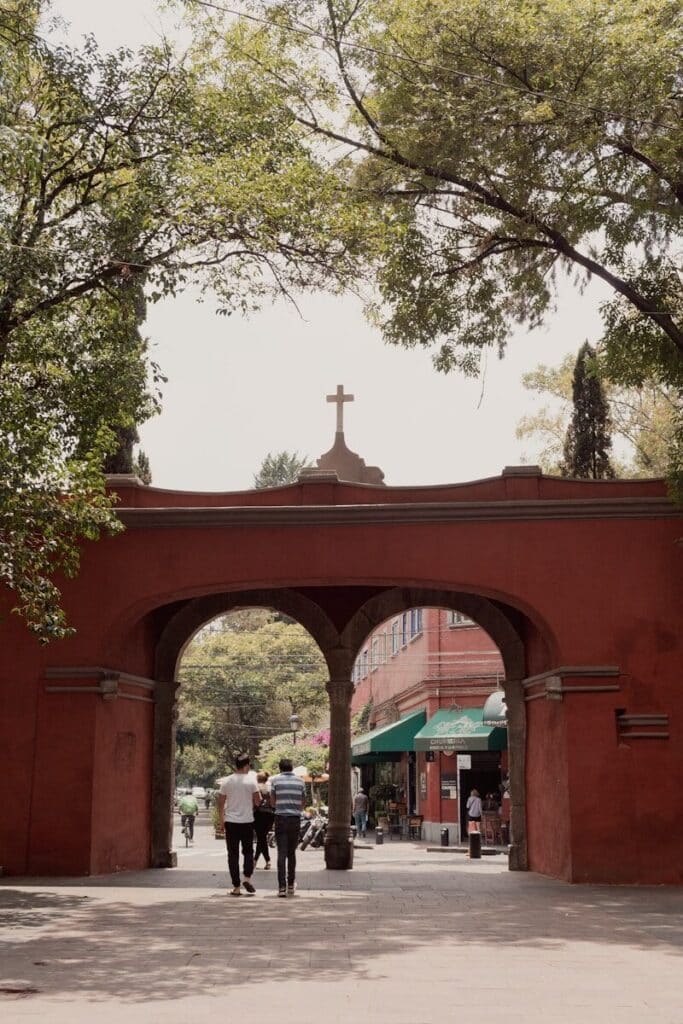
Coyoacán is worth spending a half-day in beyond the museum. The neighbourhood feels like a colonial village absorbed into the city — cobblestone streets, small plazas, local markets, and restaurants with a quieter atmosphere than Roma or the Historic Centre. The Mercado de Coyoacán is one of the best food markets in the city for lunch, with tostadas, quesadillas, and enchiladas prepared by market vendors.
7. Xochimilco — The Ancient Floating Gardens
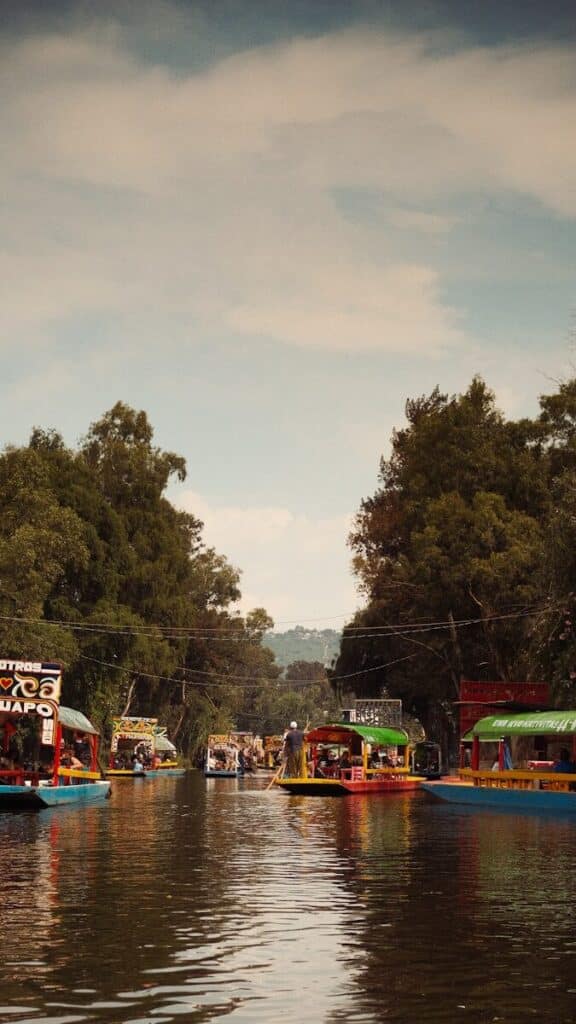
Xochimilco (pronounced “so-chi-MIL-co”) is one of Mexico City's most distinctive and historically significant experiences — a network of canals and artificial islands (chinampas) built by the Aztecs between the 11th and 15th centuries as a form of agricultural land reclamation. The canals are now a UNESCO World Heritage Site and the site of one of Mexico City's most beloved leisure traditions.
The experience is simple: you rent a trajinera — a flat-bottomed, brightly painted boat — and are propelled by a boatman through the canals for typically 2–3 hours. Along the way, other boats come alongside: food vendors selling corn, quesadillas, and tostadas; flower sellers; mariachi bands who will board and play for a negotiated fee. It is colourful, social, and like nothing else in the city.
Xochimilco is in the south of the city, accessible by Metro Line 2 to Tasqueña (the same line used for Azteca), then either a short rideshare or the connecting bus to the main trajinera embarcaderos. The main departure point is the Embarcadero Nuevo Nativitas. Trajinera rental runs approximately 350–500 pesos per hour; negotiate the rate before boarding.
Best time to visit: Weekend mornings (9–11am) when the canals are busy but not overwhelmed. Afternoon visits on weekends are noisier and more crowded. Given that the World Cup runs on a weekday/weekend rotation, a Tuesday or Wednesday visit during a rest day tends to be the most peaceful.

8. Chapultepec Park and Castle
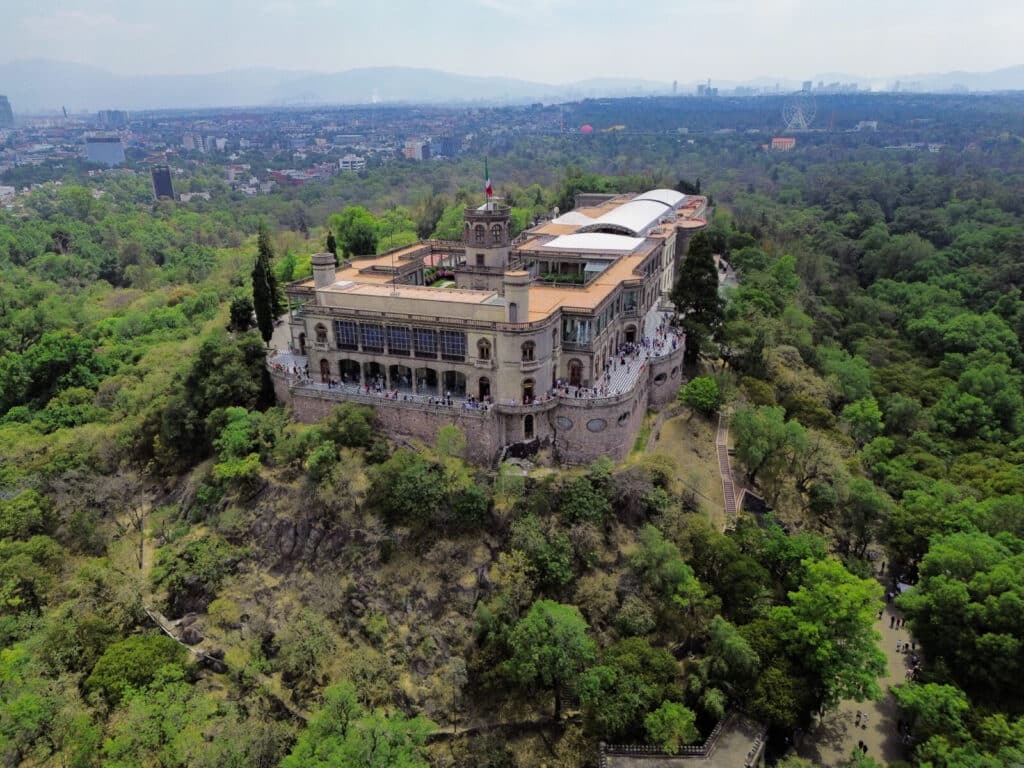
Bosque de Chapultepec is the largest urban park in the Americas — over 686 hectares of woodland, lakes, gardens, and cultural institutions in the middle of Mexico City, less than 2km west of the Reforma corridor and easily accessible from Polanco, Condesa, and Roma.
The park contains several of Mexico City's most important institutions:
- Chapultepec Castle (Castillo de Chapultepec): A 19th-century hilltop castle with 360-degree views of the city, now the National Museum of History (Museo Nacional de Historia). The view from the castle terrace, looking east toward the Historic Centre with the Aztec pyramids visible on a clear day, is one of the best in the city. Entry: 90 pesos.
- National Museum of Anthropology (Museo Nacional de Antropología): Widely considered the finest pre-Columbian archaeology museum in the world. The Aztec Sun Stone (popularly called the “Aztec Calendar”) is here, along with artefacts from every major Mesoamerican civilisation. Entry: 90 pesos. Allow 3 hours minimum — rushing through this museum is a specific mistake that most visitors regret.
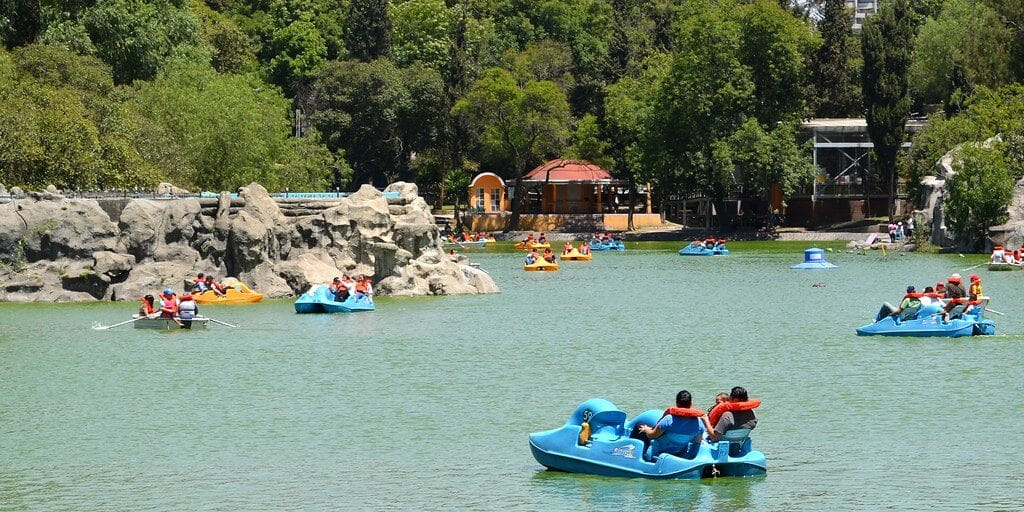
- Chapultepec Lake: Rowing boats are available for rent on the lake in the park's first section. A pleasant hour for rest days between matches.
- Modern Art Museum (Museo de Arte Moderno): Mexican 20th-century art, including works by Diego Rivera, Frida Kahlo, David Alfaro Siqueiros, and Rufino Tamayo. Entry: 90 pesos.
The park is best visited on a weekday morning. Weekends are busy with families, street food vendors, and cyclists on the main paths — pleasant but crowded.
9. Eat Your Way Through Mexico City
Mexico City has more entries in the Latin America's 50 Best Restaurants list than any other city in Latin America, and more Michelin Guide recommendations than any other city in Mexico. But the most extraordinary eating in the city is not in its fine-dining restaurants — it is in its markets, its taco stands, and its cantinas.
Tacos — The Essential Education
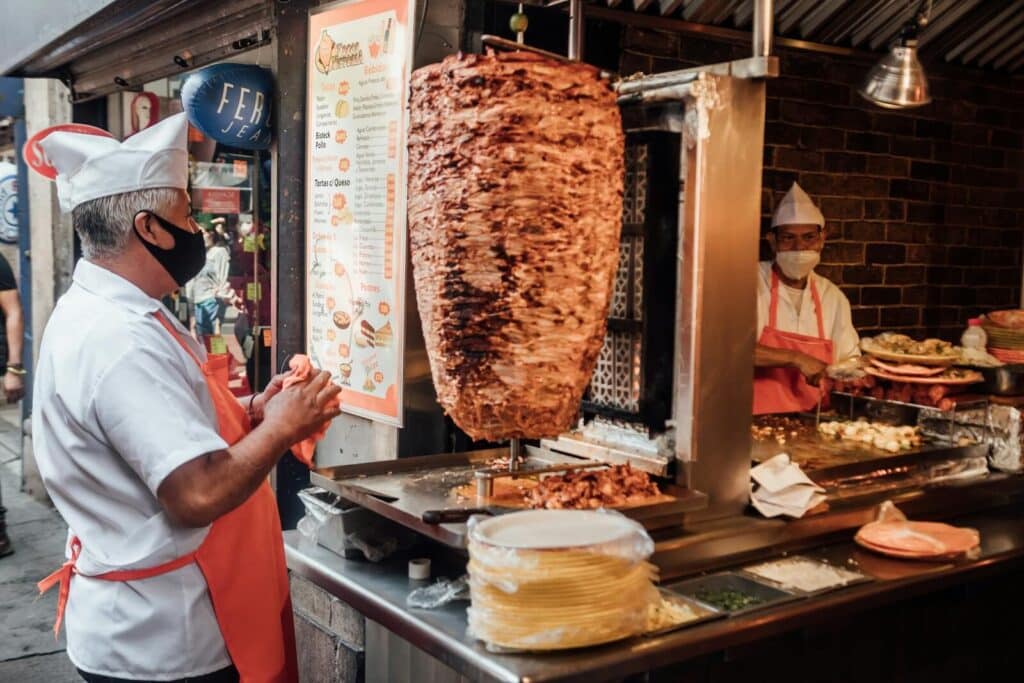
Mexico City tacos are not the Tex-Mex tacos familiar from international fast-food chains. They are typically served on small, double-stacked corn tortillas with a specific filling that comes from a specific tradition: tacos de canasta (steamed tacos from a basket, served from a bicycle), tacos al pastor (pork carved from a vertical spit, served with pineapple), tacos de carnitas (slow-braised pork), and tacos de barbacoa (slow-cooked lamb, served especially on weekends at markets). Each taco costs 15–25 pesos. A meal of 4–5 tacos and a drink runs approximately 100–150 pesos.
The best taco research resource in the city is El Comidista, the food section of El País Mexico — or simply walk into any busy taquería with a line of locals outside and order what they're ordering.
Mercados (Markets)
The city's markets are a parallel food universe to the restaurant scene:
- Mercado de la Merced (Historic Centre): The largest market in Mexico City — overwhelming in scale, cheap, and an authentic working market rather than a tourist attraction. Best visited with a guide or an adventurous approach.
- Mercado Medellín (Roma Norte): A neighbourhood market with good produce, prepared food stalls, and a more accessible scale than La Merced. Excellent tlayudas (Oaxacan flatbread) and tamales.
- Mercado de Coyoacán (Coyoacán): Best paired with the Frida Kahlo Museum visit. Excellent tostadas at the central stalls.
- Mercado de Artesanías La Ciudadela (near Alameda Central): The best fixed-price craft market in the city for football souvenirs, traditional Mexican artisanal products, and textiles.
World Cup Food Connections
Mexico co-hosting the 2026 World Cup means the city's food culture is directly connected to the tournament's central narrative. The international football fan eating tacos al pastor at a market stand in Roma Norte, watching Mexico vs South Africa on a phone, surrounded by local support — that is the specific World Cup experience that only Mexico City offers.

10. Hot Air Balloon Over Teotihuacán at Sunrise
The most spectacular single experience available to a World Cup visitor in Mexico City is a sunrise hot air balloon flight over the Teotihuacán archaeological site. Balloons launch approximately 40 minutes before sunrise from the edge of the pyramid complex and drift over the Avenue of the Dead and the Pyramid of the Sun as the light breaks across the valley.
The flight itself lasts approximately 45–60 minutes in the air. The most established operator is Globos Caminero, which has been running balloon flights over Teotihuacán for over 25 years. The standard flight package (transport from Mexico City, breakfast, and the flight) costs approximately $140–180 USD per person. Advance booking — ideally several weeks before your visit — is essential during the World Cup period.
Logistically: The departure point requires leaving Mexico City around 4–4:30am. Operators typically organise transport from meeting points in Roma Norte and Polanco. The return to the city, including breakfast at a hacienda near the site, puts you back in Mexico City by mid-morning — leaving the rest of the day available for a match or city exploration.
This is the activity that most clearly distinguishes a Mexico City World Cup visit from any other city in the tournament. No other host city has an ancient wonder within an hour of the stadium, viewable from the air before breakfast.
A Note on Altitude — The Practical Advice Most Guides Skip
Mexico City sits at 2,240 metres (7,350 feet) above sea level. This is higher than many mountain resorts in the Alps or Rockies. For visitors arriving from coastal cities — London, Seoul, Buenos Aires, Johannesburg, Sydney — the altitude difference is significant and physical.
Common altitude effects in the first 24–48 hours include: mild headaches, shortness of breath during physical activity, disrupted sleep, and fatigue that feels disproportionate to effort. These symptoms are normal, not alarming, and typically resolve by day 2–3 as your body adjusts.
Practical advice:
- Arrive at least 48 hours before your first match if possible — this is the single most important piece of Mexico City planning advice and the one most commonly ignored
- Drink more water than usual — dehydration is faster at altitude and worsens all symptoms
- Avoid alcohol on your first day — it intensifies dehydration and altitude effects significantly
- Walk slowly for the first day — particularly when climbing stairs or hills. You will feel the effort more than expected
- Diamox (acetazolamide) is available by prescription in many countries and can reduce altitude adjustment time — consult a doctor before your trip if you have concerns
The altitude is not a reason to avoid Mexico City. It is a reason to plan your arrival correctly.
Where to Stay in Mexico City During the World Cup
Accommodation in Mexico City is filling up fast for the June 11 opening match week — and for the June 24 Mexico group match. If you haven't booked yet, this is the most time-sensitive item on your planning list.
Best areas to stay
- Roma Norte: The best all-round base for most World Cup visitors. Well connected by Metro to both the Zócalo Fan Festival (Line 1) and Estadio Azteca (Line 2 via transfer), and home to the city's best concentration of restaurants, cafés, and bars. A good range of hotels and apartments at mid-range prices.
- La Condesa: Adjacent to Roma Norte, slightly quieter and more residential in feel. Well connected to the same Metro lines. A good option if you want to be close to Chapultepec Park and prefer a calmer base for early mornings.
- Polanco: The higher-end option — international hotel brands, Masaryk Avenue, and easy access to Chapultepec. Further from the Zócalo Fan Festival but a short Uber from most match-day and cultural destinations. Best for travellers who want four- and five-star options.
- Centro Histórico: Staying in the Historic Centre puts you walking distance from the Zócalo Fan Festival and Templo Mayor. Less restaurant variety than Roma or Polanco, but a strong choice if the fan zone is your main base.
Book early — the World Cup period is already showing limited availability at most price points across all neighbourhoods.

Find hotels, apartments, and convenient stays across Mexico City for your trip and World Cup matches.
What to Budget for a Match Day in Mexico City
Here is a realistic estimate for a single match day at Estadio Azteca — covering transport, food, and entry:
| Item | Estimated Cost |
|---|---|
| Match ticket (group stage. secondary market) | Varies significantly — check current listings |
| Metro + Tren Ligero return | 14 pesos (approx. $0.80 USD) |
| Food and drinks at stadium | 150–300 pesos ($8–16 USD) |
| Pre-match meal or drinks in the city | 150–300 pesos ($8–16 USD) |
| Uber post-match (optional) | 150–250 pesos ($8–13 USD) |
| Total (excluding ticket) | approx. 450–850 pesos ($25–45 USD) |
Mexico City is one of the most affordable World Cup host cities in the 2026 tournament. Transport is exceptionally cheap by any standard — the Metro and Tren Ligero to Azteca costs under a dollar return. The main variable cost is the match ticket itself. Food and drink inside the stadium and in the city is very reasonable compared to the USA or Canadian host cities.
Note: Ticket prices vary widely depending on the fixture, phase, and platform. For current availability and pricing, check verified platforms directly.
Staying Connected in Mexico City
Mexico City's transport, restaurant reservations, and real-time navigation all depend on reliable data. International roaming charges in Mexico from most European and Asian carriers range from $5-12 per day, with common throttling after daily data limit. A Mexican eSIM or data SIM activated be for arrival at Mex airport gives you a full local data plan – typically 10-20 GB for 102 USD for a 7-14 day period
If your World Cup itinerary includes both Mexico and the USA, check whether your eSIM provider offers a combined North America plan covering both countries. Several providers offer unified US+Mexico plans specifically aimed at World Cup 2026 travellers.
Frequently Asked Questions
What matches are being played at Estadio Azteca during the World Cup 2026?
Estadio Azteca is hosting five matches. Mexico vs South Africa on June 11 is the tournament's opening fixture — the first match of the entire 2026 World Cup. Additional confirmed matches are: a group stage match on June 17, Mexico vs UEFA Playoff D Winner on June 24, a Round of 32 match on June 30 (9pm local time), and a Round of 16 match on July 5. Azteca is the first stadium in history to have hosted three FIFA World Cups — 1970, 1986, and 2026.
How do I get from central Mexico City to Estadio Azteca?
The most reliable route is Metro Line 2 (Blue Line) to Tasqueña station, then the Tren Ligero (Light Rail) to Estadio Azteca station — the end of the line. The full journey takes 40–50 minutes from the Historic Centre. Metro fare is 7 pesos. On match days the carriages will be packed from 2 hours before kick-off. Uber is an alternative but traffic on match days can add significant time.
Where is the FIFA Fan Festival in Mexico City?
The official FIFA Fan Festival is at the Zócalo (Plaza de la Constitución) in the Historic Centre, running for the full tournament window. Entry is free and no match ticket is required. The Zócalo is one of the world's largest city squares, framed by the Metropolitan Cathedral and the National Palace. On June 11 — the opening match day — it is confirmed to host the largest single fan zone event of the entire 2026 World Cup.
Where can I still get tickets for matches at Estadio Azteca?
Check FIFA.com/tickets first for any remaining official availability. FIFA also runs a fan-to-fan resale platform at face value. For secondary market options, verified platforms such as StubHub and SeatGeek list tickets from private sellers — always use a platform with buyer protection, and expect prices significantly above face value for the June 11 opening match.
Does altitude affect visitors to Mexico City and how should I prepare?
Yes, it does. Mexico City is at 2,240 metres above sea level — significantly higher than any other 2026 World Cup host city. Visitors from coastal cities often experience mild headaches, shortness of breath during exertion, and fatigue in the first 24–48 hours. The most practical preparation is to arrive at least 48 hours before your first match, drink more water than usual, avoid alcohol on your first day, and walk at a slower pace initially. Symptoms typically resolve by day 2–3.
What is the best neighbourhood to stay in for the World Cup in Mexico City?
Roma Norte and La Condesa are the best combination of location, atmosphere, and value for most World Cup visitors. They are well connected to the Zócalo Fan Festival (Metro Line 1 or Uber) and to Estadio Azteca (Metro Line 2 via transfer), and they contain the best density of restaurants, cafés, and bars for living alongside the tournament. Polanco is a good alternative for higher-budget travellers wanting international hotel options and easy Chapultepec access.
Do I need a visa to visit Mexico for the World Cup 2026?
Citizens of the EU, UK, USA, Canada, Australia, and most Latin American countries do not require a visa for tourist visits to Mexico of up to 180 days. Citizens of some African and Asian countries may require a visa in advance — check the Instituto Nacional de Migración website or your country's Mexican embassy for current requirements. FIFA is also working with the Mexican government on streamlined entry processes specifically for World Cup ticket holders.
Is Mexico City safe for World Cup visitors?
Mexico City is a large city with variable security across its many neighbourhoods. The areas most relevant to World Cup visitors — Roma Norte, La Condesa, Polanco, Coyoacán, and the Historic Centre around the Zócalo — are considered generally safe for tourists during the day and in the evening. Standard precautions apply: use licensed taxis or Uber rather than street taxis, keep valuables in a money belt in crowded markets and the Metro, and avoid displaying expensive electronics in unfamiliar areas. The World Cup period will bring increased security presence throughout the city.
Final Thoughts
No city in the 2026 World Cup carries the historical weight of Mexico City. The Estadio Azteca has already witnessed the greatest moments in the tournament's history — and when the opening match kicks off on June 11, that weight will be felt across every one of the 87,000 seats and every screen in the Zócalo. Knowing what to do in Mexico City during the World Cup 2026 is the difference between being there and being present.
Beyond the football, Mexico City rewards the visitor who takes the time: the pyramids, the murals, the markets, the altitude sunrise over Teotihuacán. Give yourself more days here than you think you need — most people who spend four days in Mexico City wish they'd booked seven.
The altitude is real; plan your arrival around it. The rest will take care of itself.
➡ World Cup 2026 Travel Guide
➡ Best eSIM for World Cup 2026
➡ Mistakes to Avoid at the World Cup 2026
Add your first comment to this post