


Table of Contents
San Francisco is hosting six FIFA World Cup 2026 matches at Levi's Stadium — and the first thing to know is that Levi's Stadium is not in San Francisco. It is in Santa Clara, in the heart of Silicon Valley, approximately 60 kilometres south of the city. The journey by public transit takes around 75 minutes via Caltrain and VTA Light Rail. This distinction matters for every planning decision: where to stay, how early to leave for matches, and how to structure the rest of your time in the Bay Area around the football.
Once that is clear, the World Cup programme opens up considerably. San Francisco itself — the cable cars, the bay, the fog-draped bridge, Alcatraz, the Mission's burritos, Chinatown, the Beat Generation bookshops of North Beach, the ancient redwoods of Muir Woods 45 minutes north — offers as much cultural and natural variety as any city in the tournament. Fan zones at the Embarcadero, Civic Center, and Union Square mean the match-day atmosphere extends well into the city proper, far from the stadium.
This guide covers everything you need to plan your time in San Francisco during the World Cup 2026: the full match schedule, the transit route to the stadium, the city's fan zones, where to stay, what to budget, and the complete picture of what to do across the Bay Area on rest days. It also covers two things that most guides don't: June Gloom — the marine fog layer that covers San Francisco every June morning — and the Napa Valley and Muir Woods options that no other 2026 host city can match.
At a Glance
| # | Thing to Do | Key Takeaway |
|---|---|---|
| 1 | Attend a match at Levi's Stadium (Santa Clara) | 6 matches — Qatar. Switzerland. Turkey. Paraguay. Jordan. Algeria — plus a Round of 32 |
| 2 | Fan zones at Embarcadero. Civic Center. and Union Square | Watch parties and fan events in SF proper throughout the tournament |
| 3 | Golden Gate Bridge — walk or cycle across | The definitive San Francisco experience — 2.7km across. with Bay and ocean views on both sides |
| 4 | Alcatraz Island | The most atmospheric island prison in the world — book weeks in advance |
| 5 | Ferry Building and Embarcadero | SF's finest food market in an 1898 Beaux-Arts building. with Bay Bridge views and farmers' market |
| 6 | The Mission District — SF's food and culture soul | The best burritos in the world. Clarion Alley murals. and the neighbourhood that defines modern SF |
| 7 | Chinatown and North Beach | Oldest Chinatown in North America and the birthplace of the Beat Generation — four walkable blocks apart |
| 8 | Muir Woods and the Marin Headlands | Ancient coastal redwood forest 45 minutes north — pre-booking required. completely worth it |
| 9 | Day trip to Napa Valley or Sonoma Wine Country | One hour from the city — the most famous wine region in North America |
| 10 | Golden Gate Park. de Young Museum. and Haight-Ashbury | 1.017 acres of urban park. a world-class art museum. and the neighbourhood that defined the 1960s |
1. Attend a Match at Levi's Stadium (SF Bay Area Stadium)
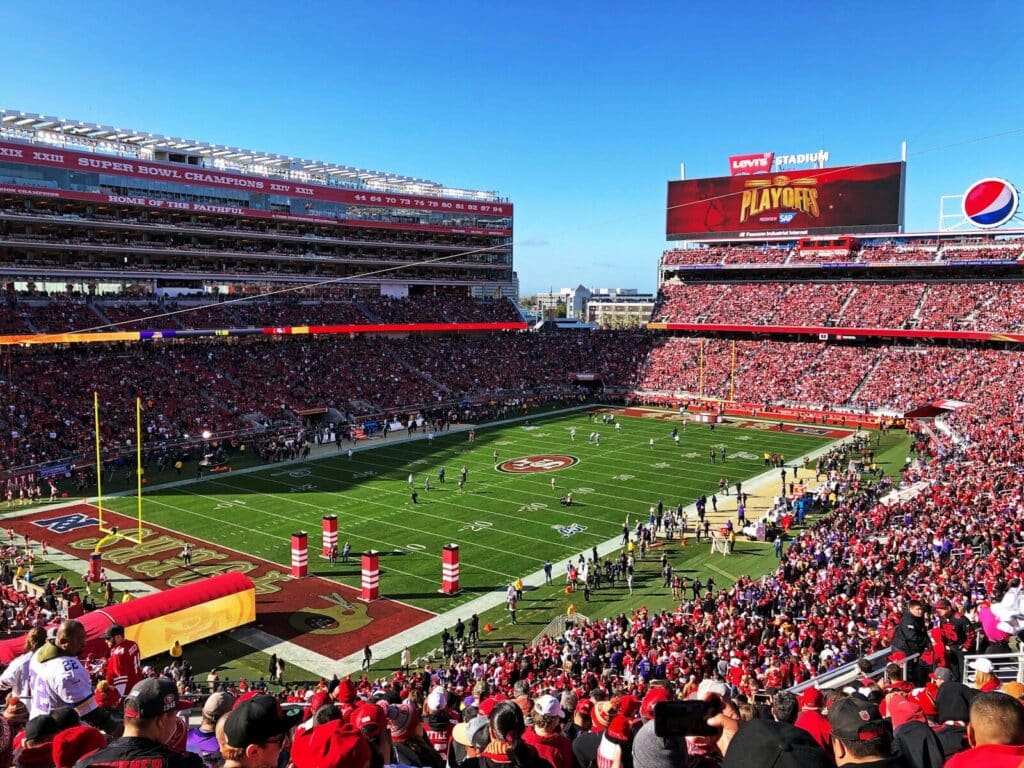
Levi's Stadium is the home of the San Francisco 49ers (NFL), located in Santa Clara — in the southern Bay Area, 60 kilometres from San Francisco and 10 kilometres from San Jose. For the World Cup 2026, it is officially named the SF Bay Area Stadium, hosting six matches between June 13 and July 1.
The stadium seats approximately 68,500 for most events and has a partially covered seating structure — the upper decks are open-air. In June and July, Santa Clara's climate is significantly warmer and sunnier than San Francisco — while SF can be foggy and mild (17–19°C), Santa Clara typically runs 26–32°C (79–90°F) during the day, with low humidity and clear skies. Bring sun protection for matches kicking off in the afternoon.
Full Match Schedule at Levi's Stadium
| Date | Match | Phase | Kick-off (PT) |
|---|---|---|---|
| Sat. June 13 | Qatar vs Switzerland | Group Stage | TBC |
| Tue. June 16 | Austria vs Jordan | Group Stage | TBC |
| Fri. June 19 | Turkey vs Paraguay | Group Stage | TBC |
| Mon. June 22 | Jordan vs Algeria | Group Stage | TBC |
| Thu. June 25 | Paraguay vs Australia | Group Stage | 7:00 PM |
| Wed. July 1 | TBD vs TBD | Round of 32 | TBC |
The June 25 Paraguay vs Australia fixture at 7pm PT is the confirmed evening match — the best matchday planning option for fans who want to spend a full day in San Francisco before travelling to the stadium.
The June 13 Qatar vs Switzerland opener brings a geographically interesting fan mix — Qatar's 2022 World Cup familiarity and Switzerland's strong travelling support from Central Europe. Jordan vs Algeria (June 22) has strong North African and Middle Eastern fan community relevance in the Bay Area, which has large Algerian and Arab-American populations.
Getting from San Francisco to Levi's Stadium
This is the most important practical section in this guide. The journey from San Francisco to Levi's Stadium is approximately 75 minutes by public transit, 60–90 minutes by car (depending on traffic on US-101 or I-280), and requires specific planning on match days.
Recommended public transit route:
- Caltrain from San Francisco 4th and King Station (SFMTA Muni accessible) toward Gilroy — ride to Santa Clara Station or Mountain View Station
- VTA Light Rail from Santa Clara or Mountain View to Levi's Stadium Station — the light rail stops directly at the stadium
Caltrain journey time from SF to Santa Clara: approximately 55–65 minutes. VTA Light Rail from Santa Clara to the stadium: approximately 10 minutes. Total: 75 minutes. Caltrain single-fare approximately $6.25 from SF. VTA Light Rail $2.50
On match days, Caltrain runs additional “baby bullet” express services and the VTA runs stadium-specific shuttle services from multiple points along the rail corridor.
From BART (Oakland / East Bay): BART connects to Caltrain at Millbrae Station (the interchange station) on the BART SFO/Millbrae line — take BART to Millbrae, then switch to Caltrain southbound. Journey from downtown Oakland to Millbrae: approximately 35 minutes. The full Oakland-to-stadium journey takes approximately 90 minutes.
From SFO Airport: The airport is served by both BART (SFO station) and Caltrain (Millbrae station, 10 minutes from SFO by BART or shuttle). From Millbrae Caltrain station to Santa Clara: approximately 45 minutes. The full airport-to-stadium transit journey takes approximately 60 minutes.
Rideshare: Uber and Lyft operate throughout the Bay Area. Surge pricing on match days from San Francisco to Santa Clara can push fares to $70–130 one-way. Many fans drive to a Caltrain station south of SF (Millbrae, San Mateo, Palo Alto) and take Caltrain from there — reducing both driving time and the surge price zone.
Getting Match Tickets for San Francisco
If you don't have tickets yet, there are still legitimate options:
- Official FIFA sales: Check FIFA.com/tickets for any remaining availability. FIFA periodically releases returned or unsold tickets — worth checking regularly.
- FIFA official resale: The fan-to-fan resale platform on FIFA.com allows ticket holders to resell at face value. This is the safest secondary option.
- Verified resellers: Platforms such as StubHub and SeatGeek list tickets from private sellers. Prices on secondary markets are typically well above face value, particularly for knockout rounds. Always use a verified platform with buyer protection.
- Hospitality packages: Premium packages including tickets are available through On Location, the official FIFA hospitality provider. These include stadium access, dining, and dedicated entry — at a significant premium over standard ticket prices.
For price expectations: group stage tickets on the secondary market typically start from several hundred dollars. Knockout rounds are significantly more expensive. We recommend budgeting conservatively and using only verified platforms.
Stadium Bag Policy & Entry Rules
FIFA operates a strict clear bag policy at all World Cup 2026 venues, including Levi's Stadium:
- Bags allowed: transparent bags only, maximum 12″ x 6″ x 12″
- No backpacks and no opaque bags of any size
- No outside food or drink — sealed water bottles may be permitted, but this can vary by match day; check FIFA guidelines before you arrive
- Arrive early: plan to be at the stadium gates at least 60–90 minutes before kick-off; security lines on match days are long
- Prohibited items: selfie sticks, large cameras with detachable lenses, umbrellas (check current FIFA guidelines for the full list), and banners exceeding the approved size
If your bag doesn't meet the clear bag policy, you'll need to leave it somewhere before entering the stadium. Luggage storage services operate near Levi's Stadium and at Santa Clara transit points — useful if you're arriving from San Francisco with a day bag that doesn't comply.
2. Fan Zones at Embarcadero, Civic Center, and Union Square
San Francisco is running official community watch parties and fan zones at multiple locations across the city, confirmed by the City of San Francisco (SF.gov) — filling in the gap between the stadium in Santa Clara and the fan experience the city itself wants to provide.
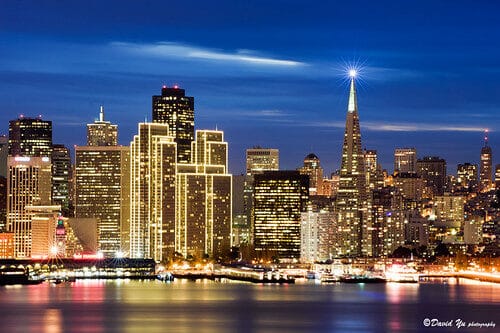
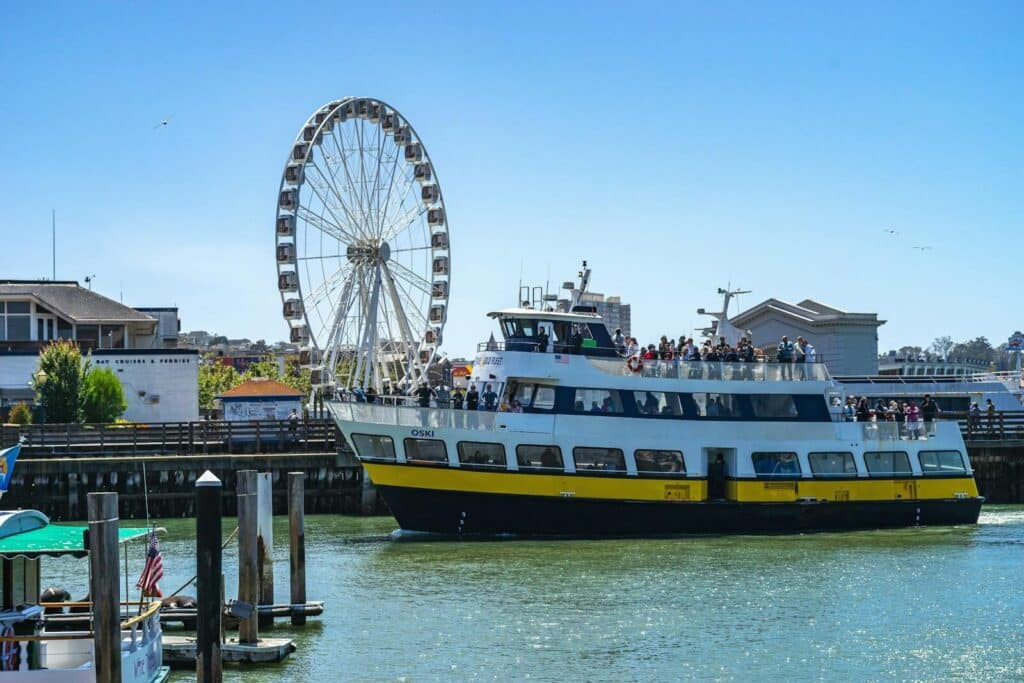
Embarcadero Waterfront: The most atmospheric outdoor viewing location in the city — the Ferry Building and the Embarcadero promenade, with Bay Bridge views and the full expanse of the bay as backdrop. Fan events and watch parties on the waterfront are confirmed for match days.
Civic Center Plaza: The plaza in front of San Francisco City Hall — one of the most architecturally significant public squares in the USA, with the gold-domed Beaux-Arts city hall as its backdrop. The Civic Center is the most likely site for the primary FIFA-affiliated fan event in San Francisco, confirmed as a community watch party location.
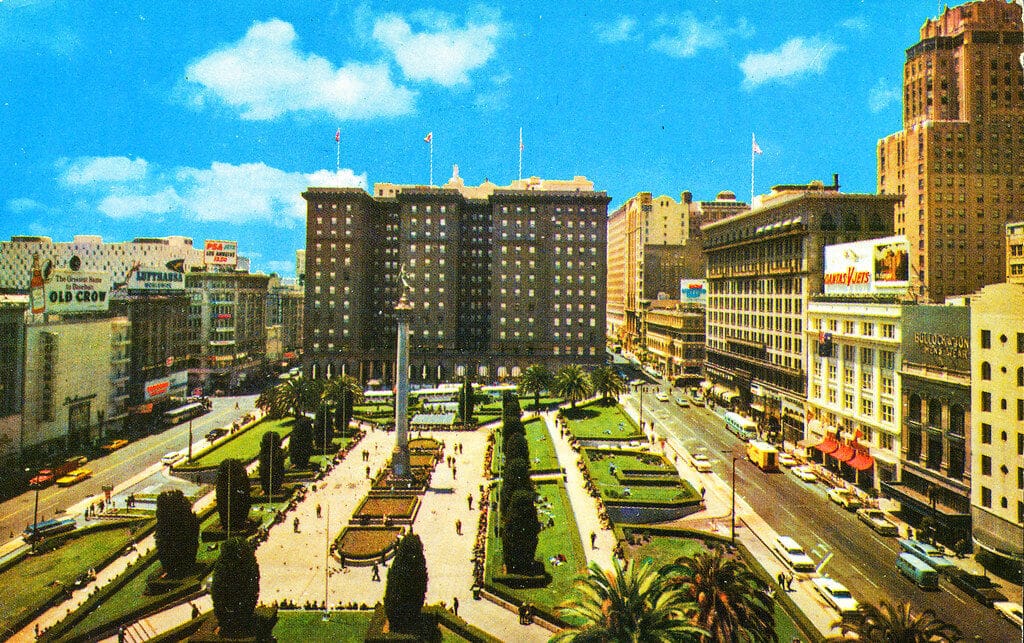
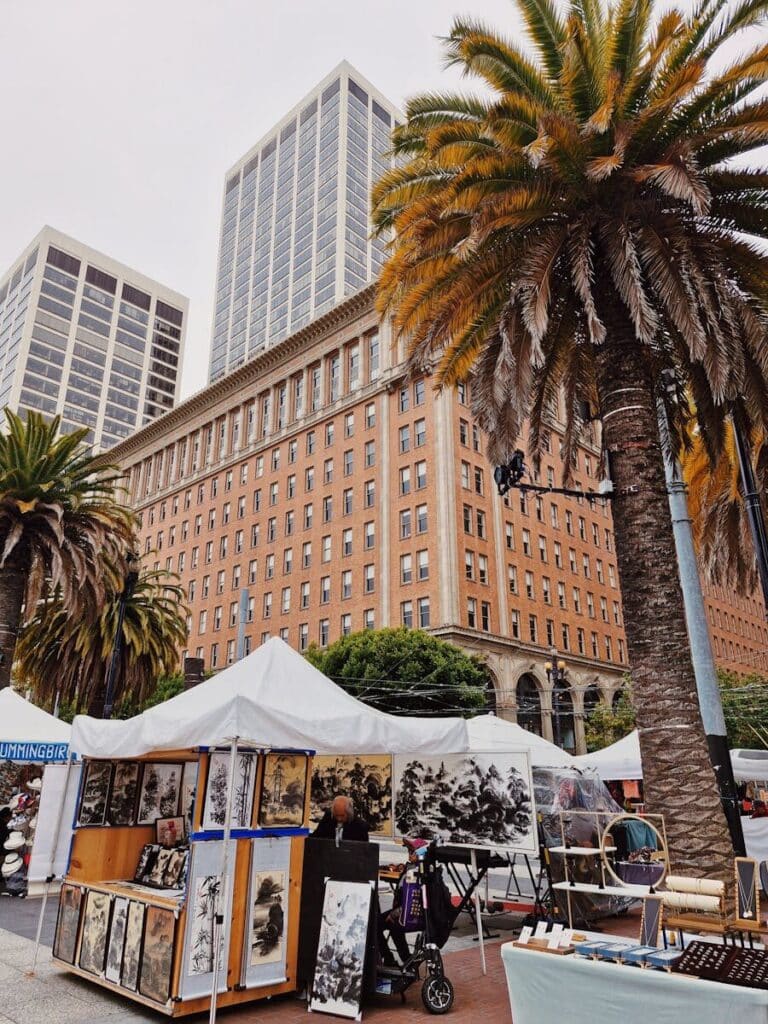
Union Square: Central, well-served by Muni, and surrounded by the city's best hotel density — Union Square is the most accessible fan gathering point for visitors staying in the downtown core.
Golden Gate Park: The park's open meadows (Sharon Meadow, Hellman Hollow) have hosted major outdoor events and are confirmed as potential watch party sites for community organisations during the World Cup.
3. Golden Gate Bridge — Walk or Cycle Across
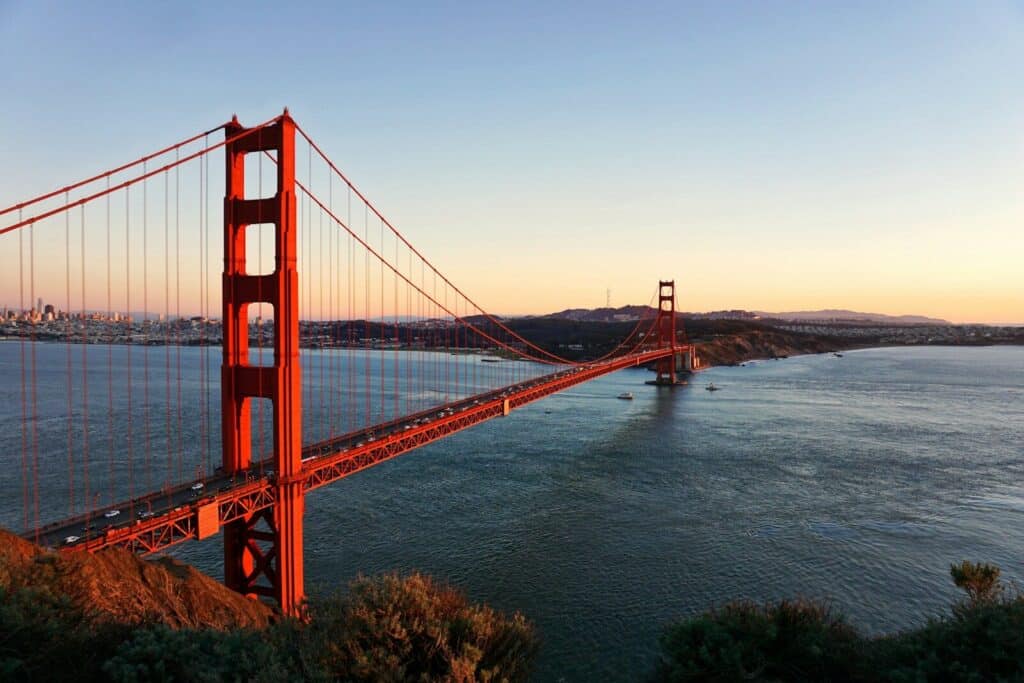
The Golden Gate Bridge is the most photographed bridge in the world and the defining image of San Francisco — a 2.7-kilometre suspension bridge connecting the city to the Marin Headlands across the Golden Gate strait, completed in 1937 after four years of construction.
Walking or cycling across the bridge is free and is the definitive San Francisco experience for any first-time visitor. The pedestrian path on the east side of the bridge is open daily (hours vary by season — check goldengatebridge.org before visiting). The cycling path on the west side is accessible via bike rental from multiple operators near the bridge's southern entrance.
Bridge Timing — The June Gloom Reality
This is the most important practical note for Golden Gate Bridge visits during the World Cup: San Francisco experiences a phenomenon called “June Gloom” — a persistent marine fog layer that rolls in from the Pacific each morning in June and early July, typically covering the bridge from around 8am to 11am–1pm. Photographs of the Golden Gate Bridge in classic clear conditions require specific timing.
The clearest conditions for the bridge are typically:
- Late afternoon and early evening (from 3–4pm onward, after the fog burns off)
- Early morning before 8am (before the marine layer builds)
- Late June and July (as the pattern improves, though it never fully disappears)
The classic view of the bridge from the Marin Headlands (the north side, looking back at the bridge and city) requires crossing to Marin — either by car/rideshare to the Vista Point parking area, or cycling across the bridge and continuing 1.5km to the Conzelman Road viewpoints. This is the photographer's angle; the view from the southern San Francisco side (Baker Beach, Battery Spencer area) shows the city behind the bridge.
Cycling tour: Multiple operators rent bikes near Fisherman's Wharf and the bridge's southern parking area. The most popular route: cycle across the bridge, descend to Sausalito (15 minutes downhill from the north end of the bridge), have lunch in Sausalito, and return by ferry to the Ferry Building. Total time: 4–5 hours, approximately $30-40 for bike rental and $16 for a ferry return.

4. Alcatraz Island
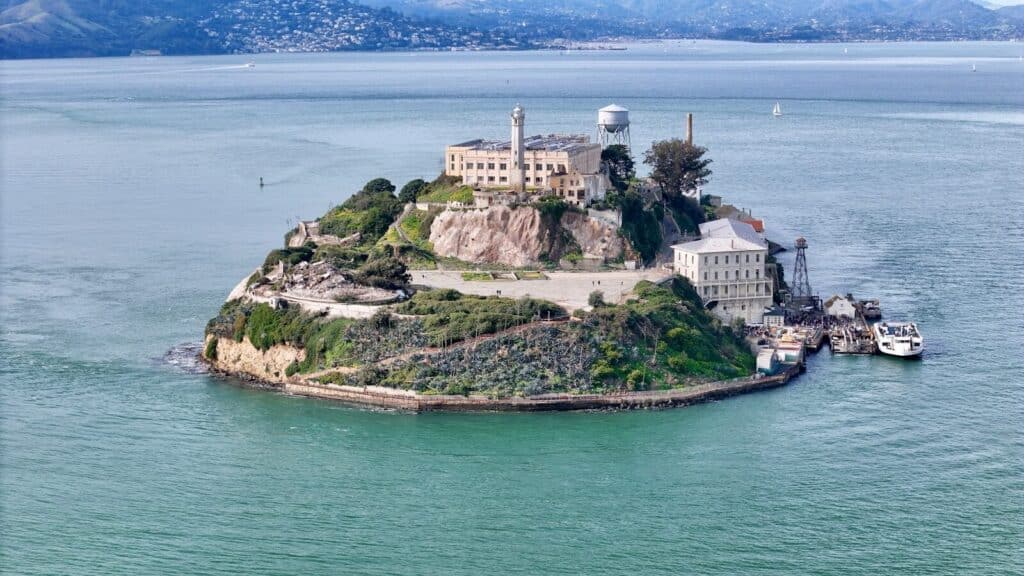
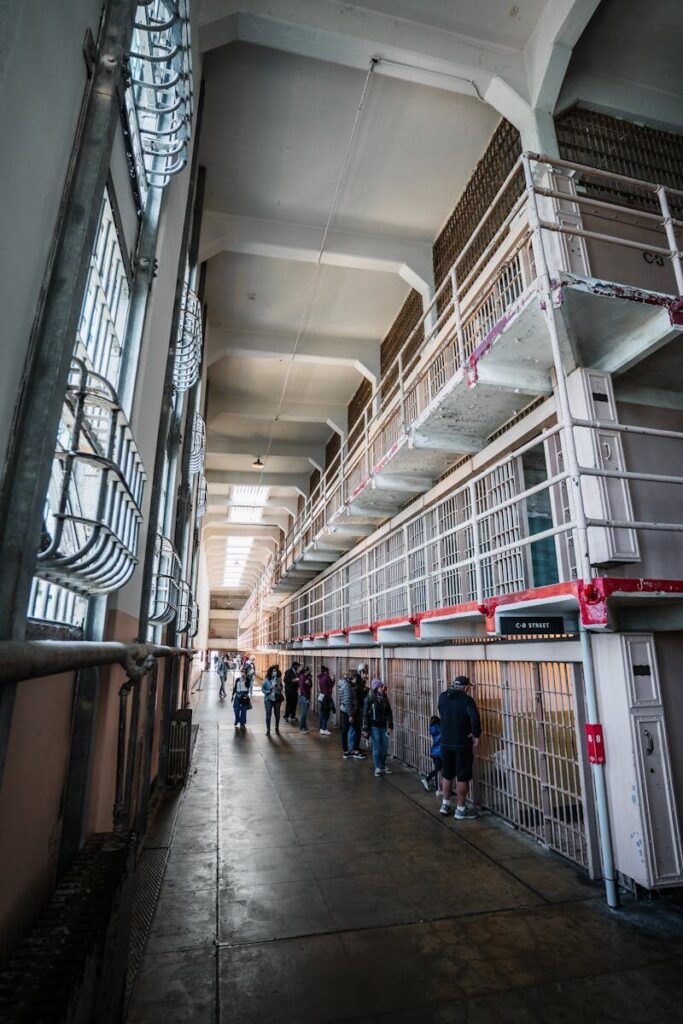
Alcatraz Island is 2.4 kilometres offshore in San Francisco Bay — a former federal penitentiary operating from 1934 to 1963, housing Al Capone, George “Machine Gun” Kelly, and Robert Franklin Stroud (the “Birdman of Alcatraz”) before being closed due to the deterioration of its saltwater-eroded structure. It is now operated by the National Park Service as part of the Golden Gate National Recreation Area.
The ferry to Alcatraz departs from Pier 33 on the Embarcadero, operated by Alcatraz City Cruises. The round trip includes a self-guided audio tour of the cell blocks, narrated by former guards and inmates. The night tour (available on Friday and Saturday evenings) provides a significantly more atmospheric experience than the daytime visit.
Advance booking is essential — and urgently so during the World Cup period. Alcatraz tickets sell out weeks, sometimes months, in advance during peak summer. As of April 2026, the June and July dates during the World Cup window are likely already heavily booked. If tickets are still available, book immediately at alcatrazcruises.com.
Ticket prices: approximately $46 for adults (daytime), $55 for the evening tour. Ferry departure times from 9am; last night tour departs around 5:55pm.
5. Ferry Building and the Embarcadero
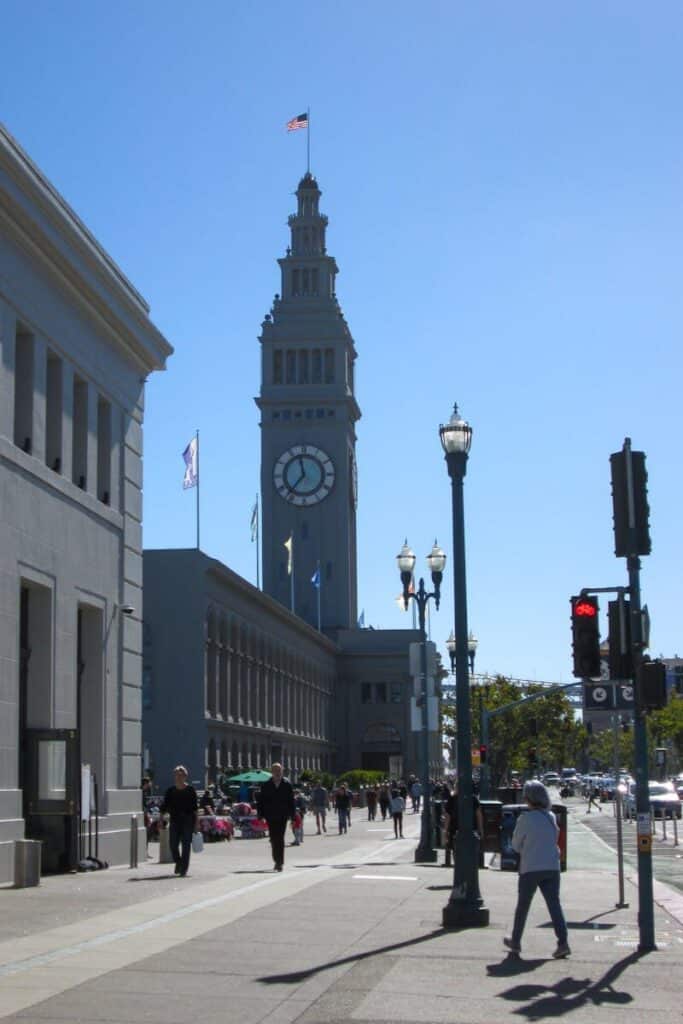
The Ferry Building at 1 Ferry Building on the Embarcadero waterfront is the most refined food destination in San Francisco — an 1898 Beaux-Arts ferry terminal building converted into a permanent marketplace of approximately 30 artisan food vendors, with a farmers' market on Tuesday, Thursday, and Saturday mornings that extends the offer to over 100 producers.
The permanent vendors are among the best food retailers in the city: Acme Bread Company (the most respected bread bakery in the Bay Area), Cowgirl Creamery (farmstead cheese from Point Reyes), Blue Bottle Coffee (the San Francisco specialty roaster that started here), and Hog Island Oyster Company (Pacific Coast oysters from their Tomales Bay farm, available at the bar with mignonette and hot sauce).
The Saturday farmers' market outside the Ferry Building from 8am to 2pm is one of the best in the country — a mix of California produce, artisan preserves, fresh fish, and prepared food from vendors who represent Northern California's extraordinary agricultural diversity. For World Cup visitors whose match schedule includes a Saturday, this is the strongest single morning food experience available in the city.
The Embarcadero promenade north of the Ferry Building runs 2km to Pier 39 and Fisherman's Wharf — a flat waterfront walk with Bay Bridge views, the Bay itself, and passing cargo traffic and leisure sailboats throughout the day.
6. The Mission District — SF's Food and Cultural Soul
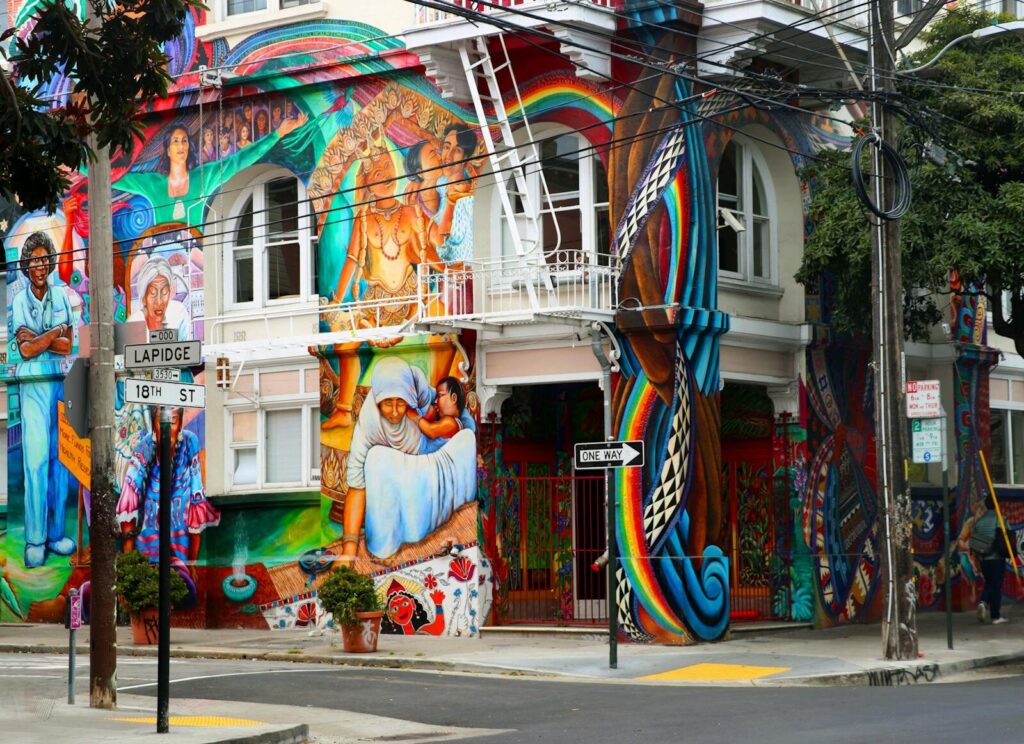
The Mission District is the most rewarding neighbourhood in San Francisco for World Cup visitors — a working-class Latino neighbourhood that has generated some of the city's most celebrated food culture while maintaining a genuine street character that the more gentrified areas of the city have lost.
The Mission runs roughly between 14th and 30th Streets south of Market Street, centred on Mission Street and Valencia Street. It is accessible by BART (16th St Mission or 24th St Mission stations) from downtown in approximately 10 minutes.
The Mission Burrito
The Mission District invented the large, foil-wrapped, fully loaded burrito that has since been adapted globally — and the original still outperforms its imitators. The ingredients: a large flour tortilla, rice, beans (black or pinto), your choice of meat (carnitas, carne asada, al pastor, pollo), pico de gallo, guacamole, sour cream, and salsa. Wrapped tightly, the size and integration of ingredients produces something qualitatively different from smaller or deconstructed equivalents. The canonical Mission burrito spots:
La Taqueria (2889 Mission St): A James Beard Award-winning taqueria that has been making burritos since 1973. No rice in the burrito (a La Taqueria distinction that purists argue produces a more flavourful result). Consistently cited as the single best burrito in San Francisco by food journalists, chefs, and regular customers. Queue outside; cash preferred.
El Farolito (2779 Mission St): Open until 3am on weekends — the late-night option for fans returning from evening matches at Levi's Stadium. The carne asada super burrito is the standard order.
Taqueria Cancún (2288 Mission St): The third member of the Mission burrito triumvirate — lighter and cheaper than La Taqueria, faster than El Farolito, and underrated by comparison with both.
Clarion Alley
One block west of Mission Street between 17th and 18th, Clarion Alley is a 100-metre laneway covered end to end in political and social murals updated continuously by a rotating collective of local artists since 1992. It is the most significant surviving example of the Mission's mural tradition — more immediate and politically charged than the prettier but less urgent murals on 24th Street. Free and accessible at all hours.

7. Chinatown and North Beach
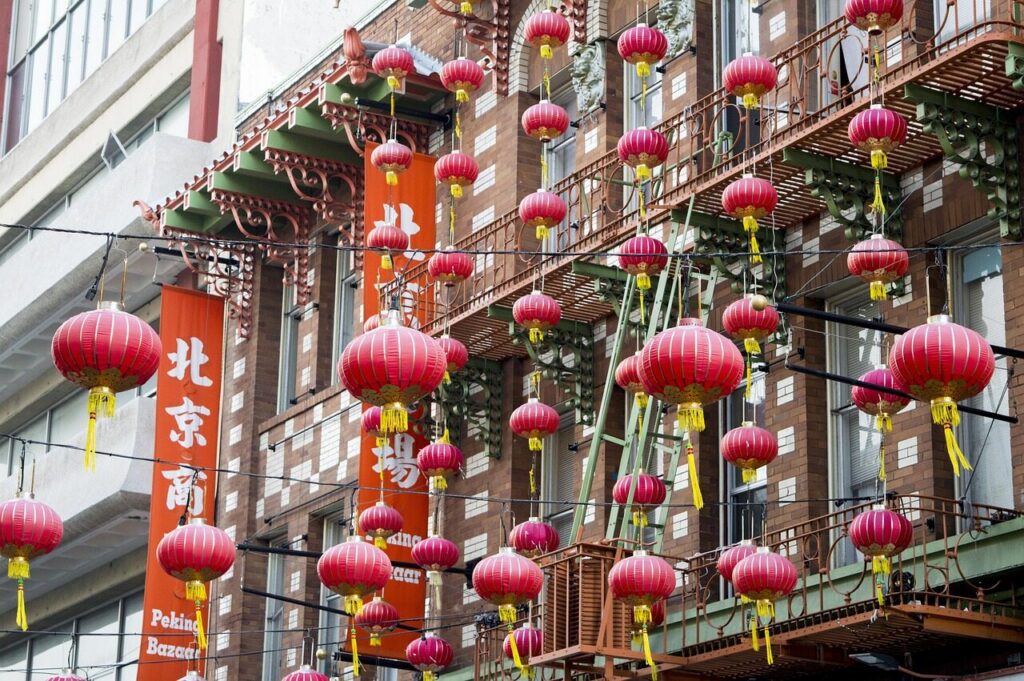
San Francisco's Chinatown is the oldest in North America — established in 1848, covering 24 square blocks north of Union Square, and home to a genuine working community of approximately 15,000 residents as well as one of the highest densities of restaurants, bakeries, herbal medicine shops, and produce markets in any urban neighbourhood in the USA.
The main tourist entry point is the Dragon's Gate on Grant Avenue at Bush Street — but the neighbourhood's best experiences are on Stockton Street (the working shopping street used by residents, not tourists) and in the alleys. Ross Alley hosts the Golden Gate Fortune Cookie Factory, where fortune cookies are still made on small rotating irons — the factory sells bags of misfortune cookies (with blunt, non-inspirational fortunes) alongside the standard versions.
Dim sum: The best dim sum in Chinatown is at City View Restaurant (662 Commercial St) — cart service, reliably fresh, and popular enough with locals that it functions as a genuine restaurant rather than a tourist attraction. Arrive at 11am on a weekday for the shortest wait.
North Beach
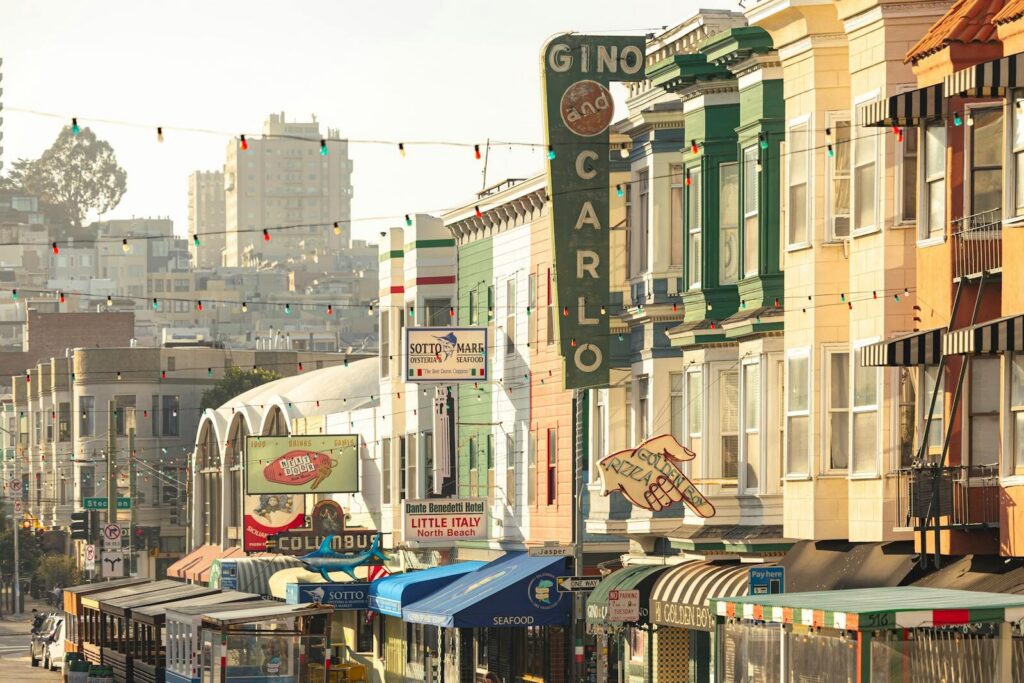
From Chinatown, a 5-minute walk north on Columbus Avenue enters North Beach — San Francisco's Italian neighbourhood and the birthplace of the Beat Generation literary movement of the 1950s.
City Lights Bookstore (261 Columbus Ave): Founded by Lawrence Ferlinghetti in 1953, City Lights is the spiritual home of Beat poetry — the publisher of Allen Ginsberg's Howl, the gathering place of Kerouac, Ginsberg, Ferlinghetti, and Corso. It remains an independent bookshop operating on three floors, with the best selection of poetry, political philosophy, and radical literature in San Francisco. Open until midnight most days.
Vesuvio Café (255 Columbus Ave): Directly across Jack Kerouac Alley from City Lights — a bar that Kerouac and Ginsberg drank in during the Beat era, still operating with the same wooden booths and layers of artistic memorabilia. A strong Anchor Steam or an espresso upstairs while watching Columbus Avenue through the window is the most atmospheric drink available in the neighbourhood.
Coit Tower (1 Telegraph Hill Blvd): A 64-metre tower on Telegraph Hill above North Beach, with panoramic city views and a lobby decorated with 1930s WPA murals covering California industrial and agricultural life. The walk up from North Beach (approximately 20 minutes, steep) passes wild parrots and garden-terraced cliffside homes. The drive up is faster; rideshare is available.
8. Muir Woods and the Marin Headlands
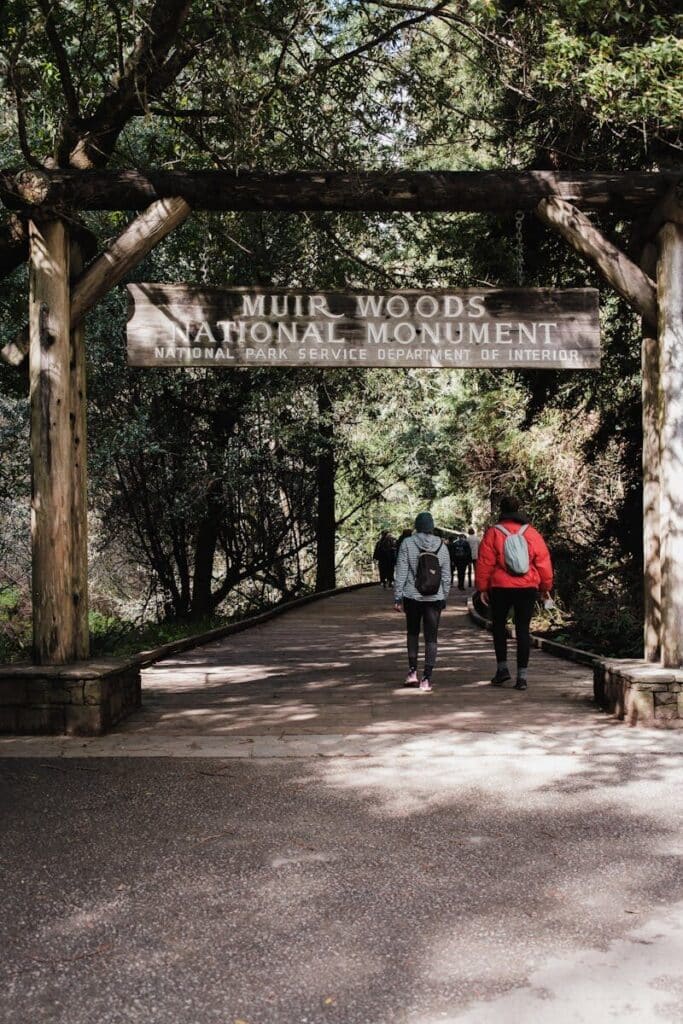
Muir Woods National Monument is a 240-hectare stand of ancient coastal redwood forest in the Marin Headlands, 45 minutes by car from San Francisco. The trees — Sequoia sempervirens, the coastal redwood — are among the oldest living organisms in the world: many of the trees in the Cathedral Grove section of the park are between 600 and 1,200 years old and rise to over 80 metres.
Walking among them is one of the most genuinely affecting natural experiences accessible from any World Cup host city. The scale — trees wider than a car, canopy closing at 60–80 metres above the forest floor, the quality of light and silence in the grove — is not something that photographs convey.
Advance reservation is required. The National Park Service requires reservations for both parking and shuttle access to Muir Woods — demand consistently exceeds supply during summer, and the World Cup period will be at peak demand. Reservations open 90 days in advance at recreation.gov. Book immediately for your target date.
The Muir Woods Shuttle runs from Sausalito Ferry Terminal (arriving from SF Ferry Building, 30 minutes) and from Marin City and Mill Valley park-and-ride locations — eliminating the need for a rental car. The shuttle fare is approximately $4 each way. Combined ferry + shuttle + park entry ($17 per adult) runs approximately $40–50 per person for the full day, roundtrip.
Timing advice: Enter the park before 10am. The Cathedral Grove (the most ancient and most impressive section) becomes crowded from mid-morning. The main loop trail (Fern Creek Trail to the Cathedral Grove loop) is 3.4km and takes 60–90 minutes at a relaxed pace. A longer loop incorporating the Dipsea Trail adds 2–3 hours.

9. Day Trip to Napa Valley or Sonoma Wine Country
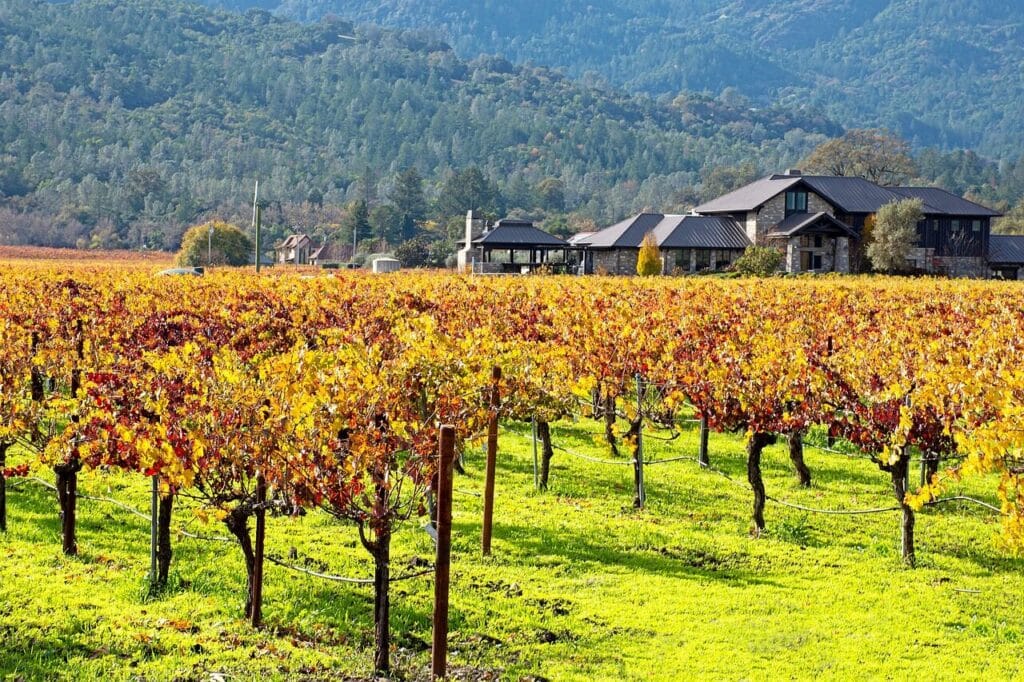
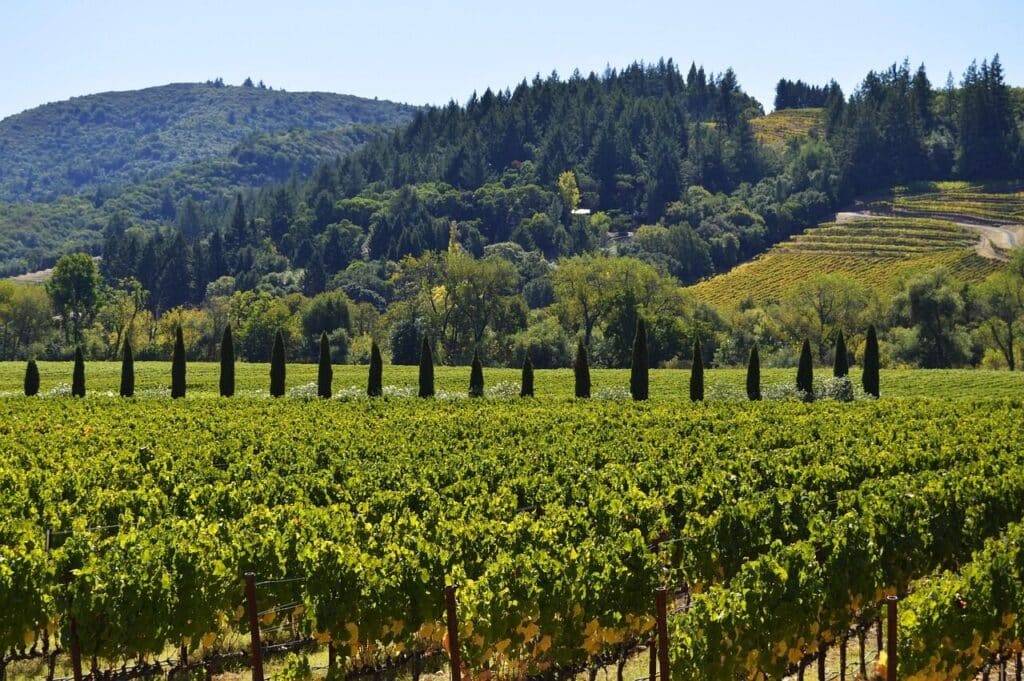
Napa Valley and Sonoma County together constitute the most celebrated wine-producing region in North America — approximately 90 kilometres north of San Francisco, producing Cabernet Sauvignon, Chardonnay, Pinot Noir, and Zinfandel that compete with the best European producers.
Napa Valley is the more formal and internationally recognised of the two regions — a 50-kilometre valley with over 400 wineries, the historic Silverado Trail, and the town of Yountville (home of Thomas Keller's French Laundry, the most decorated restaurant in the USA). The style is polished and expensive; the wines are among the best in the world.
Sonoma County is more relaxed — a larger, more geographically diverse appellation with a stronger emphasis on organic farming, smaller production, and accessible tasting room experiences. The town of Healdsburg in Sonoma is the best single base for a wine country visit without the formality of Napa.
Getting to Wine Country from San Francisco
- Rental car: The most flexible option — 75 minutes to Napa, 60 minutes to Sonoma town. Self-drive allows multiple winery stops. Book well in advance for the World Cup period.
- Organised day tours: Multiple operators run wine country day tours from San Francisco picking up from Union Square hotels — typically $140–200 per person including transport, winery entry, and a hosted lunch. This is the recommended option for visitors without a rental car and without familiarity with the region.
- Public transit (Sonoma): The SMART (Sonoma-Marin Area Rail Transit) train runs from San Rafael (accessible from SF by Golden Gate Ferry + bus) to Rohnert Park and Windsor — limited but functional for Sonoma Valley access without a car.
10. Golden Gate Park, de Young Museum, and Haight-Ashbury
Golden Gate Park is a 1,017-acre rectangle of urban parkland stretching from the inner Richmond District to the Pacific Ocean — larger than Central Park in New York, narrower in profile, and containing a more diverse set of cultural institutions within its boundaries.
Key Destinations in and Around the Park
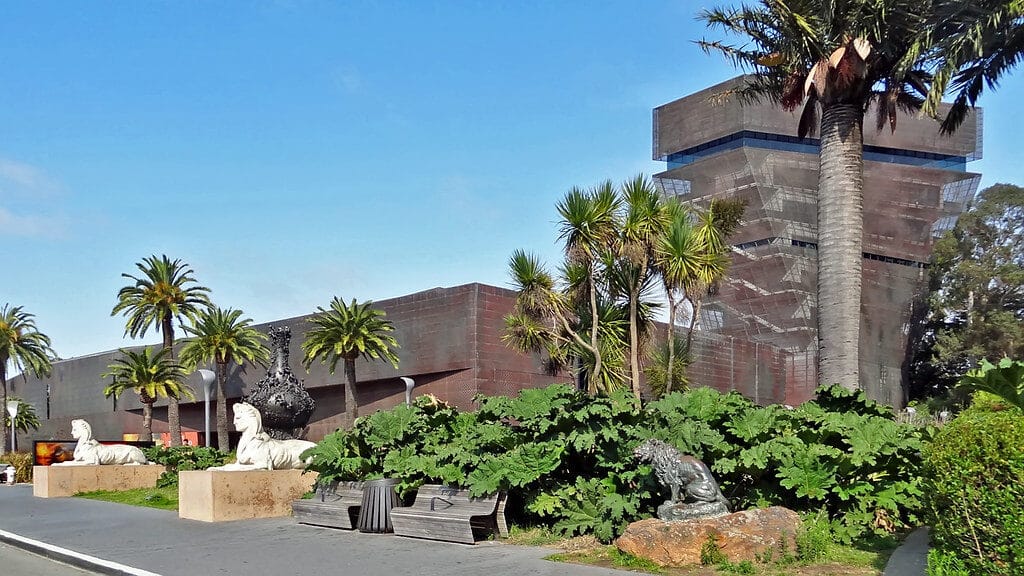
de Young Museum (50 Hagiwara Tea Garden Dr): The primary art museum of San Francisco — a striking copper-clad building by architects Herzog & de Meuron, housing a strong collection of American art from colonial to contemporary, plus African, Oceanic, and the Americas collections. The observation tower (free with museum admission) provides a 360-degree view of the park, the city, and the ocean horizon. Admission approximately $15–20; free on the first Tuesday of each month.
California Academy of Sciences (55 Music Concourse Dr): Directly across the concourse from the de Young, the Academy is an extraordinary combined natural history museum, planetarium, and aquarium under a living roof of native California plants. The rainforest dome — a four-storey enclosed tropical ecosystem with free-flying birds and butterflies — is the standout installation. Admission approximately $40.
Japanese Tea Garden (75 Hagiwara Tea Garden Dr): The oldest public Japanese garden in the USA, established in 1894, with pagodas, arched bridges, koi ponds, and a traditional tea house serving matcha and wagashi. Entry approximately $12; free on Mondays, Wednesdays, and Fridays before 10am.
Haight-Ashbury
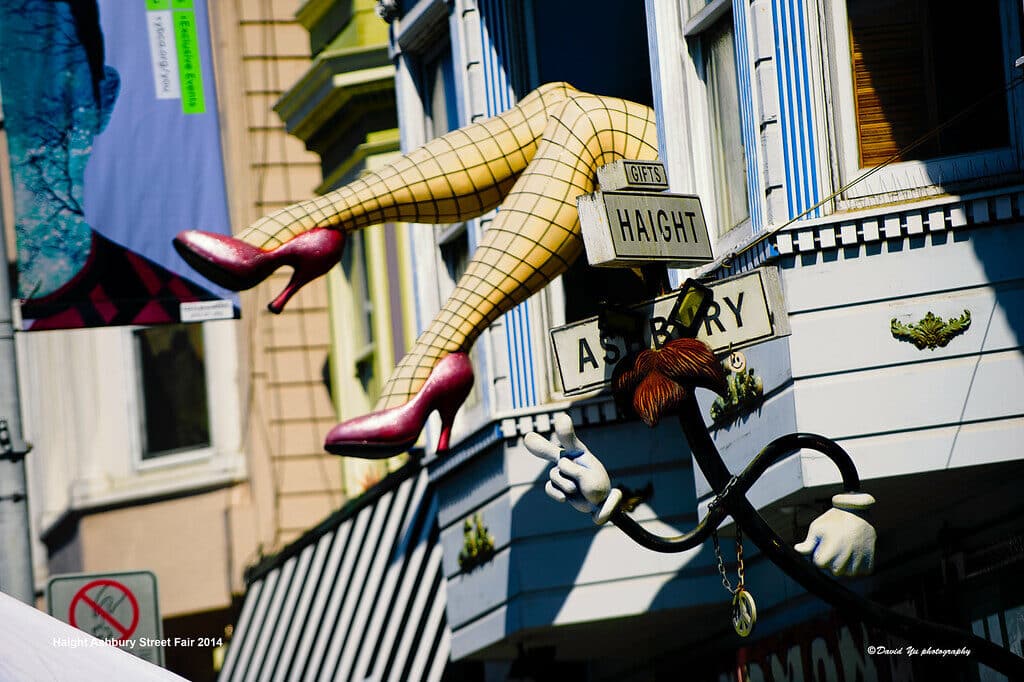
The Haight-Ashbury neighbourhood — at the eastern edge of Golden Gate Park — was the epicentre of the 1967 Summer of Love and remains the most historically preserved expression of 1960s counterculture in the USA. The Victorian houses, the independent shops, and the social character of the Haight Street corridor make it worth a 90-minute walk regardless of interest in the era's history.
Amoeba Music (1855 Haight St): The largest independent record store in the world, with an extraordinary collection of new and used vinyl, CDs, and memorabilia across all genres. For music fans, it is the single best record shop in any World Cup host city.
Planning Around June Gloom — San Francisco's June Weather Reality
San Francisco's most distinctive weather pattern is the marine layer — a low coastal fog that forms over the Pacific during the coastal upwelling season and rolls into the bay through the Golden Gate each morning from roughly May through July. The effect locally is called “June Gloom”: mornings that begin overcast, foggy, and 14–17°C (57–63°F) even when the rest of the Bay Area is clear and warm.
Practical implications for World Cup visitors:
- The bridge: Walk or cycle the Golden Gate Bridge in the afternoon (from 2pm) for the highest probability of fog-free visibility. Morning visits can feel eerie and beautiful — but you may not see much of the bay.
- Alcatraz: The crossing is short (15 minutes) and fog does not cancel ferry service, but the island's atmosphere is actually enhanced by morning fog.
- Santa Clara matches: Drive or take Caltrain out of the city into sunshine. The stadium area is typically 6–10°C warmer than SF on match days.
- Pack layers: The temperature difference between a foggy SF morning (14°C) and a late afternoon Golden Gate Bridge walk (20°C) can be significant. Light layers are standard San Francisco practice year-round.
July is clearer than June on average — the marine layer typically becomes less persistent from mid-July, which aligns with the Round of 32 (July 1) being the clearest match day.
Where to Stay in San Francisco During the World Cup
Accommodation in San Francisco during the World Cup 2026 is in high demand. June match weeks are filling up quickly across all price points — if you haven't booked yet, do it now.
Best areas to stay
- Union Square: The best all-round base for most visitors — central, well-served by Muni, BART, and cable cars, and the largest concentration of hotels in the city. Everything in this guide is reachable from Union Square within 20–30 minutes. It is also a short Muni or walk to the Caltrain station at 4th and King for Levi's Stadium match days.
- SoMa (South of Market): The best neighbourhood for stadium logistics — the Caltrain departure point at 4th and King is in SoMa, making early departures on match days easier. SoMa also has the city's best modern restaurant and arts scene.
- The Mission: The best option for visitors who prioritise food culture and neighbourhood atmosphere over central location. BART access at 16th St Mission or 24th St Mission keeps you well connected. Slightly further from the tourist core — which is part of the appeal.
- Avoid Fisherman's Wharf: The most tourist-facing hotel corridor in the city. It is disconnected from genuine city life and inconvenient for both stadium access and the neighbourhoods covered in this guide.
Book as early as possible — World Cup match weeks in San Francisco are already showing limited availability at most price points.

Find hotels, apartments, and convenient stays across San Francisco for your trip and World Cup matches.
What to Budget for a Match Day in San Francisco
Here is a realistic estimate for a single match day — covering transport from SF, food, and entry to Levi's Stadium:
| Item | Estimated Cost | |
|---|---|---|
| Match ticket (group stage. secondary market) | Varies significantly — check current listings | |
| Caltrain + VTA Light Rail return (SF to stadium) | approx. $17–18 | |
| Food and drinks at the stadium | $25–50 | |
| Pre-match meal in San Francisco | $15–35 | |
| Rideshare (if used instead of Caltrain) | $70–130 one-way (surge pricing) | |
| Total (excluding ticket. using Caltrain) | approx. $55–100 |
The Caltrain + VTA option is the most cost-effective way to get to the stadium — and avoids post-match traffic entirely. Stadium food and drink prices are on the higher end; eating before you leave San Francisco reduces the matchday spend significantly. Ticket prices vary widely depending on the fixture and platform — for current availability, check verified platforms directly.
Getting Around the Bay Area During the World Cup
The Bay Area has excellent regional transit — BART, Caltrain, Muni, ferries, and VTA — but the combination of systems and the geographic scale requires more planning than compact cities like Atlanta or Toronto.
Key connections:
- BART: Bay Area Rapid Transit connects San Francisco (Civic Center, Powell, Embarcadero, 16th/24th Mission) to Oakland, Berkeley, and the East Bay, and to Millbrae (Caltrain interchange) and SFO Airport. Single fare from SFO to downtown SF: approximately $10.25.
- Caltrain: From 4th and King Station in SoMa (SFMTA Muni accessible) to the South Bay — Santa Clara, Mountain View, Palo Alto, San Jose. Key for stadium access. Clipper card or digital ticket via the Caltrain app.
- Muni (SFMTA): San Francisco's internal transit — cable cars ($8 per ride, or included in Muni Passport day passes), historic streetcars on the F-Market line, buses, and metro rail underground. Clipper card or single-fare ticket.
- Bay Ferries: Golden Gate Ferry from the Ferry Building to Sausalito (30 minutes, $16) and Larkspur. Blue & Gold Fleet from Pier 41 to Angel Island. Alcatraz City Cruises from Pier 33.
- Clipper Card: The universal transit smart card covering BART, Muni, Caltrain, VTA, Golden Gate Transit, and most Bay Area transit agencies. Available at BART station machines and online.

Staying Connected in San Francisco
San Francisco's mobile coverage is strong in all central areas, but the Bay Area's scale — San Francisco to Santa Clara is a 60km journey — means you need reliable data across multiple network zones. AT&T, Verizon, and T-Mobile all perform well throughout the Bay Area corridor. A US eSIM installed before arrival gives full-speed coverage from SFO to Levi's Stadium without roaming charges.

Covers USA, Canada, and Mexico on a single eSIM. No swapping, no reactivation when you cross a border.
Frequently Asked Questions
What matches are being played at Levi's Stadium during the World Cup 2026?
Levi's Stadium in Santa Clara is hosting six matches in total — five group stage and one Round of 32. The confirmed group stage fixtures are: Qatar vs Switzerland (June 13), Austria vs Jordan (June 16), Turkey vs Paraguay (June 19), Jordan vs Algeria (June 22), and Paraguay vs Australia (June 25, 7pm PT). The Round of 32 takes place July 1. Kick-off times for June 13–22 are TBC; Paraguay vs Australia at 7pm PT is the only confirmed evening kick-off.
Is Levi's Stadium in San Francisco?
No. Levi's Stadium is in Santa Clara, in Silicon Valley — approximately 60 kilometres south of San Francisco. The journey by public transit (Caltrain from SF 4th and King Station to Santa Clara, then VTA Light Rail to the stadium) takes approximately 75 minutes. By car or rideshare on a clear traffic day, approximately 60 minutes. This is one of the most significant geographic distinctions of any 2026 World Cup host city — many visitors only discover this when they begin planning the journey.
How do I get from San Francisco to Levi's Stadium?
The recommended route is Caltrain from San Francisco 4th and King Station (or any South Bay station) to Santa Clara, then VTA Light Rail to Levi's Stadium Station — a 2-minute walk from the main gates. Journey time approximately 75 minutes total; cost approximately $8.75 combined. On matchdays, Caltrain runs additional services. Rideshare from central SF costs $70-130 on match days due to surge pricing. Consider driving to a Caltrain station south of SF to reduce both driving time and surge pricing.
Where can I still get tickets for matches at Levi's Stadium?
Check FIFA.com/tickets first for any remaining official availability — FIFA periodically releases returned tickets. For secondary market options, platforms like StubHub and SeatGeek offer tickets with buyer protection. Prices vary significantly by fixture — the Jordan vs Algeria and Qatar vs Switzerland matches attract strong regional interest in the Bay Area. Always use a verified platform and avoid buying from individuals outside the stadium.
Do I need to pre-book Muir Woods?
Yes. The National Park Service requires advance reservations for parking and shuttle access to Muir Woods National Monument. Demand consistently exceeds supply during summer, and World Cup June-July dates will be at peak demand. Book at recreation.gov immediately for your intended visit date. Reservations open 90 days in advance. Entry fee is $17 per adult. The most convenient option for visitors without a car is the Muir Woods Shuttle from Sausalito ferry terminal.
What is “June Gloom” and how does it affect a San Francisco World Cup visit?
June Gloom is the marine fog layer that covers San Francisco each morning from roughly May through July. It typically clears by midday to 2pm but can persist all day in cooler or windier periods. Practically: plan outdoor activities (Golden Gate Bridge, skyline photography, waterfront events) for afternoon and evening rather than morning. Santa Clara, where Levi's Stadium is located, is typically 6–10°C warmer and clearer than San Francisco on the same day. The fog is part of the city's character — many visitors find it beautiful — but pack light layers regardless of the forecast.
What is the best area to stay in San Francisco during the World Cup?
Union Square is the best all-round base — central, well-served by Muni, BART, and cable cars, close to Chinatown and North Beach, and the largest concentration of hotels in the city. SoMa is better for access to the Caltrain station at 4th and King (the departure point for Levi's Stadium). The Mission is the best option for visitors who prioritise food culture and neighbourhood atmosphere. Avoid the Fisherman's Wharf hotel corridor — it is the most tourist-facing and least connected to genuine city life.
Is Napa Valley worth a day trip during the World Cup?
Yes, if you have a match-free day — Napa Valley is 75–90 minutes from San Francisco by car and is one of the world's great wine regions. The recommended approach is an organised day tour (approximately $140–200 per person including transport, winery entry, and lunch) if you don't have a rental car. Self-drive allows more flexibility between wineries but requires a designated driver. Sonoma is slightly closer and more relaxed in character — better for visitors who find Napa's formality off-putting.
Final Thoughts
San Francisco's role in the 2026 World Cup is somewhat paradoxical: the stadium is 60 kilometres away, in a suburban Silicon Valley city that could not be more different from the fog-wrapped, Victorian-terraced, bay-drenched city that gives the tournament its name. But this does not diminish what San Francisco brings to the things to do in San Francisco during the World Cup 2026. The fan zones on the Embarcadero, the watch parties in Civic Center, the collective energy of the most globally diverse city in North America responding to football — these are real and genuinely atmospheric.
And the city itself needs no tournament to justify the visit. The Golden Gate Bridge at 4pm when the fog has lifted. A Mission burrito from La Taqueria at noon. Muir Woods before 9am when the light comes through the redwood canopy and the Cathedral Grove is quiet. City Lights at midnight. The Ferry Building farmers' market on a Saturday morning with Bay Bridge views.
San Francisco does not perform for events. It is simply itself — which turns out to be more than enough.
➡ World Cup 2026 Travel Guide
➡ Best eSIM for World Cup 2026
➡ How to Get Around at the World Cup
Add your first comment to this post