


Table of Contents
The FIFA World Cup 2026 is coming to New York — and the city is pulling out everything it has. MetLife Stadium is hosting eight matches, including the tournament final on July 19. From mid-June to mid-July, New York will be one of the most charged cities on Earth, with fans from dozens of countries arriving for the biggest sporting event in a generation.
That creates a specific opportunity and a specific challenge. New York is enormous. Knowing where to go, when to go, and what is actually worth your time — especially when you have a match to get to and limited days in the city — is not obvious. Most guides either cover the World Cup schedule or the city's attractions. Few do both in a way that's actually useful for planning.
We've put this guide together to cover everything you need for things to do in New York City during the World Cup 2026: the official fan zones, the best matchday bars, the landmarks and neighbourhoods worth your time, and how to make the most of the city between games. Whether you're in New York for two days or two weeks, here is how to spend that time well.
At a Glance
| # | Thing to Do | Key Takeaway |
|---|---|---|
| 1 | Attend a match at MetLife Stadium | 8 matches including the World Cup Final — book early. allow 90 min travel from Manhattan |
| 2 | Rockefeller Center Fan Village | Official Manhattan fan hub with big screens and a football pitch at the iconic Rink |
| 3 | FIFA Fan Festival at Liberty State Park | Official free FIFA event across the Hudson — live matches. music. family activities |
| 4 | Fan Zone Queens at the USTA Tennis Center | Second NYC fan zone (June 17–28) — less crowded. great for families |
| 5 | Watch at a soccer bar (Legends. Smithfield Hall) | NYC's best football bars — expect early crowds on match mornings |
| 6 | Explore Central Park | 843 acres in the middle of Manhattan — great between matches or on rest days |
| 7 | Walk the Brooklyn Bridge and explore Brooklyn | 30-minute walk with skyline views. Brooklyn has the best food scene in the city |
| 8 | See the skyline from the top | Empire State Building or Top of the Rock — both have World Cup photo ops this summer |
| 9 | Eat your way through the city's food scene | NYC has more Michelin-starred restaurants than almost any city in the world |
| 10 | Discover a neighbourhood on foot | SoHo. West Village. Harlem. and Chinatown each reward slow walking — no tickets needed |
1. Attend a Match at MetLife Stadium
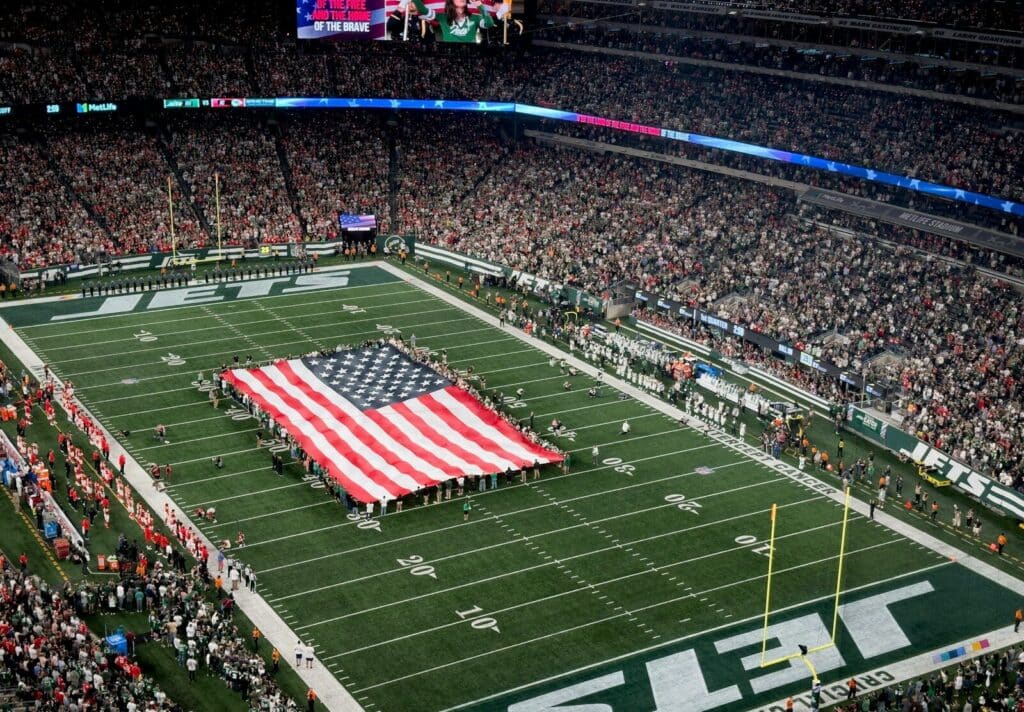
MetLife Stadium in East Rutherford, New Jersey, is the centrepiece of the New York World Cup 2026 experience — and one of the most significant venues in football history this summer. The stadium is hosting eight matches in total: five Group Stage games, a Round of 32, a Round of 16, and the World Cup Final itself on July 19, 2026.
The confirmed group stage matches at MetLife include Brazil vs Morocco (June 13), France vs Senegal (June 16), Norway vs Senegal (June 22), Ecuador vs Germany (June 25), and Panama vs England (June 27). The Final has already generated extraordinary demand — this will be one of the most expensive tickets in the history of international football.
Getting to MetLife Stadium from Manhattan
MetLife Stadium is in New Jersey, approximately 30km from central Manhattan. The journey takes around 75–90 minutes door to door from midtown. There are two main options:
- NJ Transit from Penn Station: The most reliable option. Trains run directly to Meadowlands Station, adjacent to the stadium, on match days. Buy a ticket before you travel — queues at the station on matchdays are significant. Allow at least 90 minutes from Manhattan.
- Bus: Official shuttle services will run from designated points in Manhattan on match days. Check the NYNJ Host Committee website closer to each match for the confirmed departure points.
Driving is not recommended. Parking around MetLife is expensive and traffic on match days is severe. Using public transport is both faster and cheaper.
Getting Match Tickets for New York
If you don't have tickets yet, there are still legitimate options:
- Official FIFA sales: Check FIFA.com/tickets for any remaining availability. FIFA periodically releases returned or unsold tickets — worth checking regularly.
- FIFA official resale: The fan-to-fan resale platform on FIFA.com allows ticket holders to resell at face value. This is the safest secondary option.
- Verified resellers: Platforms such as StubHub and SeatGeek list tickets from private sellers. Prices on secondary markets are typically well above face value, particularly for knockout rounds. Always use a verified platform with buyer protection.
- Hospitality packages: Premium packages including tickets are available through On Location, the official FIFA hospitality provider. These include stadium access, dining, and dedicated entry — at a significant premium over standard ticket prices.
For price expectations: group stage tickets on the secondary market typically start from several hundred dollars. Knockout rounds — and especially semi-finals and the Final — are significantly more expensive. We recommend budgeting conservatively and using only verified platforms.
Stadium Bag Policy & Entry Rules
MetLife Stadium follows FIFA's standard clear bag policy. Here is what you need to know before you arrive:
- Bags: Transparent bags only, maximum 12″ x 6″ x 12″. No backpacks. No opaque bags of any size.
- No outside food or drink is permitted. Sealed water bottles may be allowed — check FIFA's updated guidelines before your match.
- Arrive early: The stadium recommends arriving at least 2 hours before kick-off. Security queues can run 45–60 minutes, particularly for high-demand fixtures.
- Prohibited items include selfie sticks, large cameras with detachable lenses, and banners exceeding FIFA's permitted size. Check the official FIFA stadium guide for the full list.
If your bag doesn't meet the clear bag policy, you'll need to leave it somewhere before entering the stadium. Luggage storage services operate near MetLife and at Penn Station in Manhattan — worth booking in advance on busy match days.
Navigating match days at MetLife — from transport to communication with your group — is much easier with a reliable local data connection. A US eSIM installed before you fly activates the moment you land, with no roaming charges and no airport queues.

Covers USA, Canada, and Mexico on a single eSIM. No swapping, no reactivation when you cross a border.
2. Rockefeller Center Fan Village (Manhattan's Official Fan Hub)
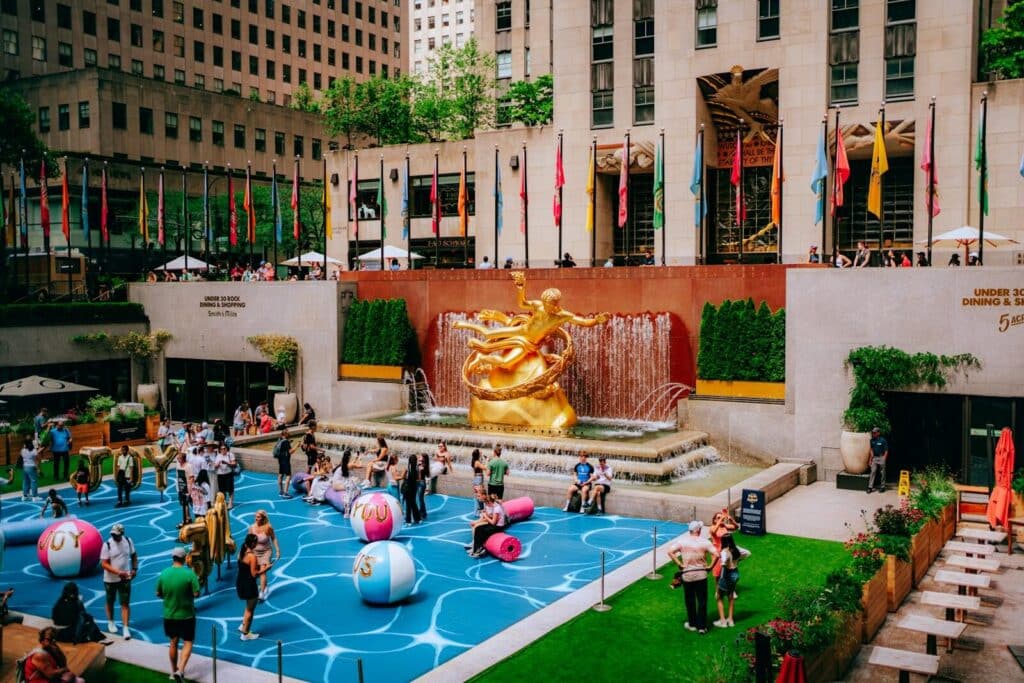
The NYNJ Host Committee's flagship Manhattan fan experience is the Rockefeller Center Fan Village — running from July 4 to July 19, 2026, covering the knockout stages and the Final. This is the most central and most spectacular of the official fan spaces in New York.
The centrepiece is the Rink at Rockefeller Center, which will be transformed into a working football pitch surrounded by large screens for live match broadcasts. The Channel Gardens — the famous promenade leading to the Rink — will be renamed Champions' Garden, featuring tributes to the eight nations that have lifted the World Cup trophy. The entire three-block Rockefeller Center campus will be part of the event, including the observation deck at Top of the Rock (running World Cup programming from July 4–19).
The event is produced by the Host Committee in partnership with Telemundo and Rockefeller Center. Entry is expected to be free, but check the official NYNJ Host Committee site for specific programming, ticketed events within the venue, and any capacity limits closer to July.
What Makes This Worth Your Time
Rockefeller Center is already one of Manhattan's most visited locations. During the World Cup Final period, it will be transformed into something genuinely extraordinary — the combination of the architecture, the screens, the crowds, and the on-pitch activations makes this a fan experience that few major cities could replicate. If you're in New York for the later stages of the tournament, this is the centrepiece of the city's celebration.
➡ World Cup 2026 Fan Zones Guide
3. FIFA Fan Festival at Liberty State Park, New Jersey
The official FIFA Fan Festival is not in Manhattan — it's at Liberty State Park in Jersey City, just across the Hudson River from Lower Manhattan. And for many fans, it will be the highlight of the New York World Cup experience.
Liberty State Park is a 1,200-acre waterfront park with one of the most photographed views in the world: the Manhattan skyline from across the water, with the Statue of Liberty visible to the south. The FIFA Fan Festival at this location is free, open to all fans (no match ticket required), and runs throughout the tournament with live match screenings, concerts, food, and family programming.
Getting to Liberty State Park from Manhattan
The most straightforward route is the PATH train from the World Trade Center or 33rd Street stations in Manhattan, which runs directly into Jersey City. The journey takes approximately 15 minutes and costs $2.75. From Grove Street or Newport stations, the park is a short bus or taxi ride away. Allow 30–45 minutes total from central Manhattan.
Alternatively, the NYC Ferry runs directly from Lower Manhattan to Paulus Hook in Jersey City, with views of the skyline along the way — one of the best short ferry journeys in the city and a scenic way to approach the park.
What to Expect at the Festival
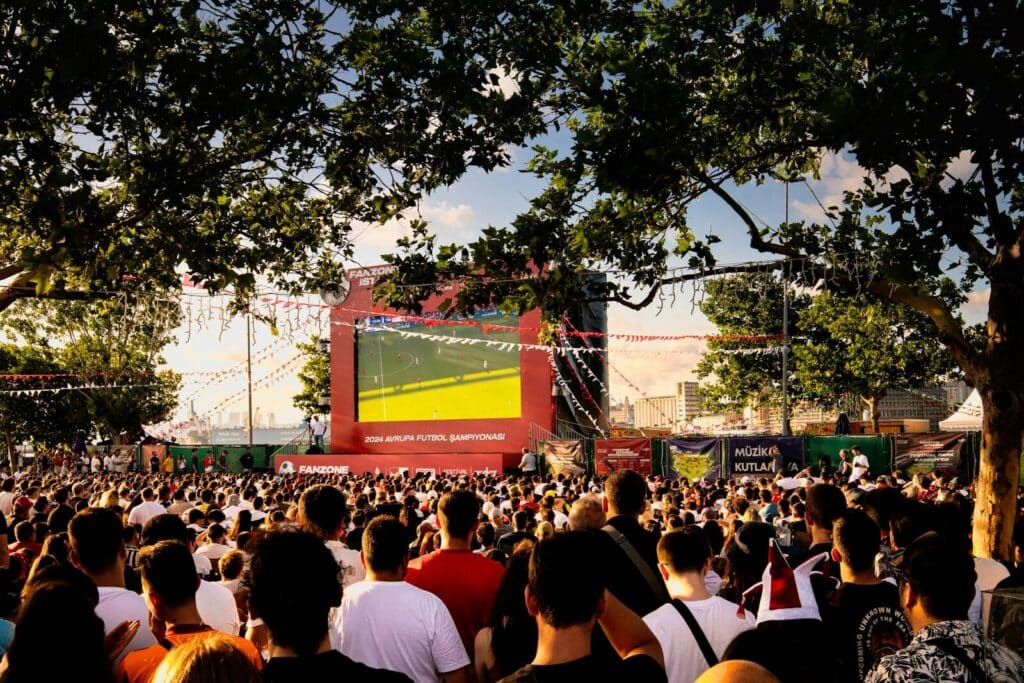
The FIFA Fan Festival is a full-day experience on match days. Expect live music between matches, food stalls representing cuisines from around the world, interactive football activities, and the shared spectacle of thousands of fans from dozens of countries watching the same match on a huge outdoor screen. This is the place to come if you want the full World Cup atmosphere without being inside the stadium.
➡ World Cup 2026 Travel Checklist
4. Fan Zone Queens at the USTA Billie Jean King Tennis Center
A second official NYC fan zone runs at the USTA Billie Jean King National Tennis Center in Queens, from June 17 to June 28, 2026 — covering the group stage matches. The venue is produced by Live Nation at Louis Armstrong Stadium, a 14,000-seat arena that regularly hosts world-class events.
The Queens fan zone is a good option if the Rockefeller Center experience feels overwhelming, or if you're arriving in June and the Fan Village hasn't opened yet. Queens is also one of New York's most diverse boroughs — the surrounding neighbourhood of Flushing-Corona Park has some of the best street food and ethnic cuisine in the city, making the area worth a longer half-day visit.
How to Get There
The USTA Tennis Center is directly accessible by subway: take the 7 train from Manhattan to Mets-Willets Point station. The journey from midtown takes around 35 minutes. The station is adjacent to the venue.
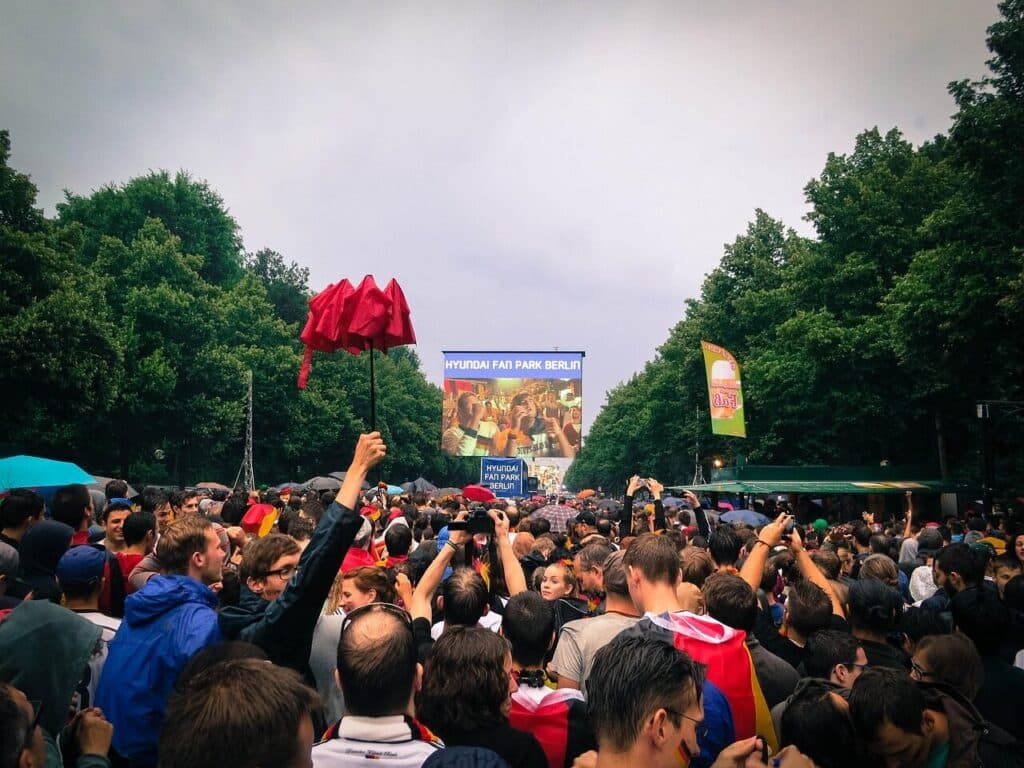
5. Watch at a Soccer Bar — Legends, Smithfield Hall, and Carragher's
Not everyone wants to fight through outdoor crowds to watch a match. New York has a small number of genuinely excellent football bars — places that were built for exactly this kind of occasion, with multiple screens, match-day atmosphere, and communities of international fans who watch together regularly.
These are the three most consistently recommended:
Legends Bar / The Football Factory (Midtown, 6 W 33rd St)
This is the main hub for New York's football supporter culture — home to over 30 official fan groups, from Arsenal and Liverpool to the US Men's National Team supporters. Legends has been the go-to venue for international matches in New York for over a decade. On World Cup matchdays, it will be absolutely packed. The practical approach: arrive 45–60 minutes before kick-off to guarantee a seat. The venue is a short walk from Penn Station, which is useful for groups travelling from New Jersey after matchdays at MetLife.
Smithfield Hall (Chelsea, 138 W 25th St)
Slightly less known than Legends but with a loyal crowd. Smithfield Hall is particularly well-regarded for Champions League and international matches — expect a knowledgeable, mixed international crowd. Less chaotic than Legends on the biggest match days, and with a good food menu.
Carragher's (Midtown, 229 W 39th St)
Named after former Liverpool and England defender Jamie Carragher, this bar is newer but has established itself as a serious football venue. Good screens, good staff knowledge, and a more intimate feel than Legends for smaller group stage matches.
Practical note: For the biggest matches (Brazil, Germany, England, France) these bars will fill up before kick-off. Reservations are not always available for match screenings — the standard approach is to arrive early and be prepared to wait. For the World Cup Final, go earlier than you think you need to.
➡ World Cup 2026 Guide to Watching Without a Ticket
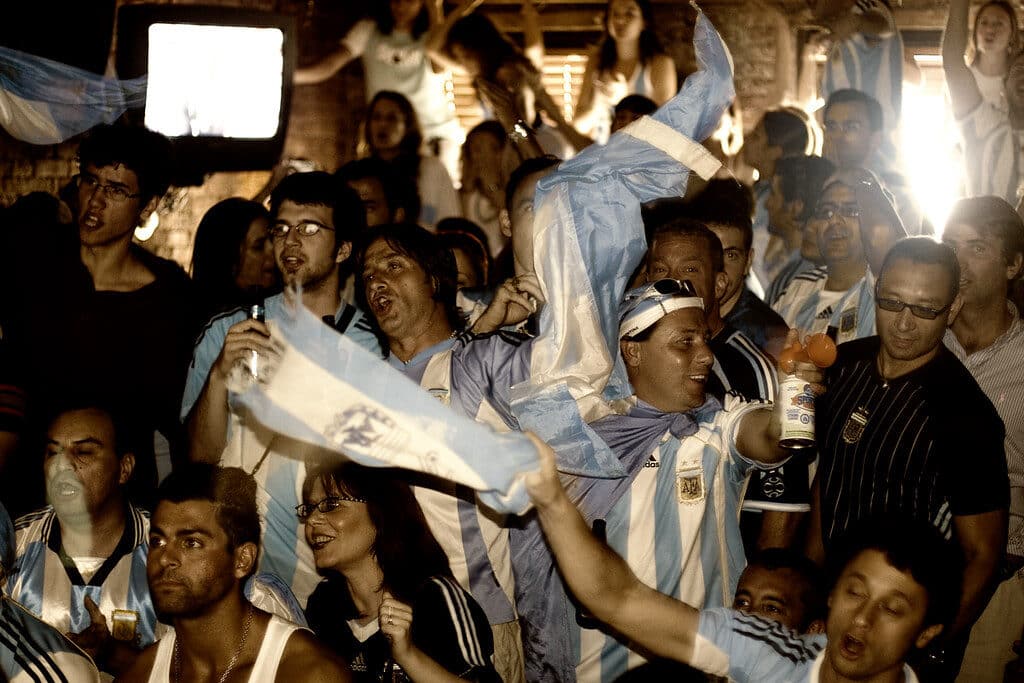
6. Explore Central Park
Central Park sits at the heart of Manhattan — 843 acres of lawns, walking paths, lakes, and gardens stretching from 59th Street to 110th Street. For World Cup fans, it serves as the city's best rest-day or between-match space: somewhere to decompress, walk without an agenda, and experience New York at a pace that doesn't require a reservation or a ticket.
During the World Cup period (June–July), Central Park is at its peak summer state — trees in full leaf, outdoor concerts, street performers, cyclists, and joggers throughout. Key spots worth seeking out:
- Bethesda Terrace and Fountain: The most photographed spot in the park, with a terrace overlooking the lake — accessible from the 72nd Street transverse
- Sheep Meadow: The park's main open lawn, used by New Yorkers for picnics, sunbathing, and informal football kick-abouts — a natural gathering point
- The Reservoir (Jackie Kennedy Onassis Reservoir): A 106-acre body of water in the middle of the park, with a running track around it — the midday view of the Manhattan skyline from here is one of the best in the city
- The Ramble: A 36-acre wild garden in the middle of the park, used by serious birdwatchers — genuinely peaceful in the middle of one of the densest cities on Earth
Central Park is accessible from multiple subway stations on the A, B, C, D, and 1 lines along its perimeter. You can enter and exit at multiple points, making it easy to pass through on the way between attractions rather than treating it as a dedicated stop.

7. Walk the Brooklyn Bridge and Explore Brooklyn
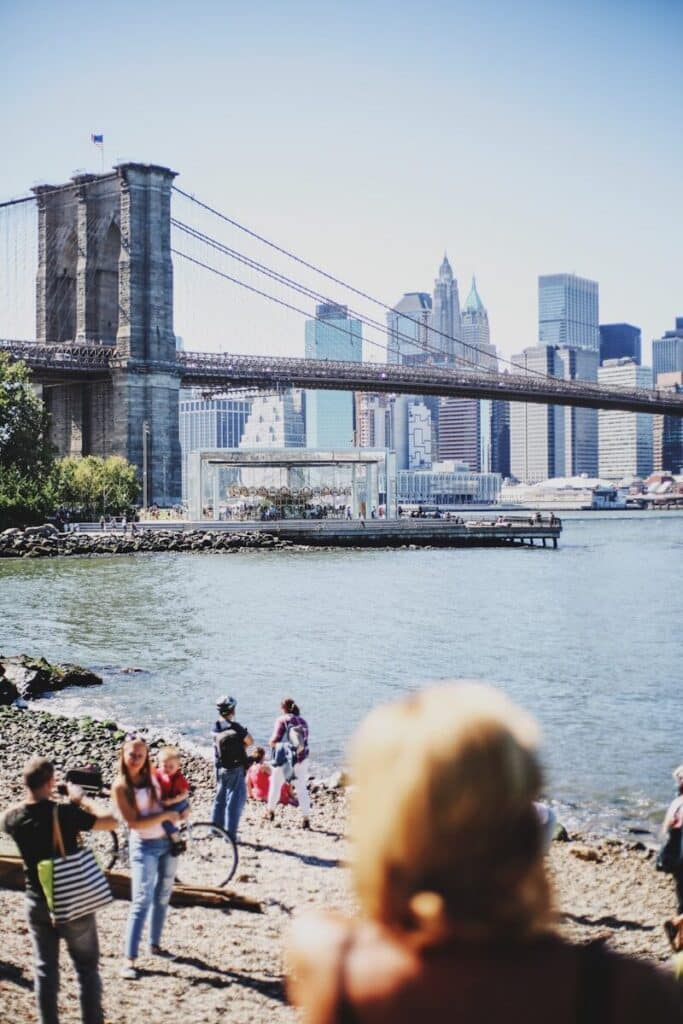
The Brooklyn Bridge walk is a 30-minute crossing between Manhattan and Brooklyn with unobstructed views of the Lower Manhattan skyline, the harbour, and the East River. It is free, open 24 hours, and one of the most satisfying walks available in the city — particularly in the early morning or late evening when the light is good and the pedestrian walkway is less crowded.
The walk itself starts from the Manhattan side near City Hall (accessible by the 4, 5, 6, and J/Z subway lines) and ends in the DUMBO neighbourhood on the Brooklyn side. DUMBO is worth spending time in: it has some of the best views back toward the bridge and Manhattan, good coffee and restaurant options, and an easy onward path to Brooklyn Bridge Park along the waterfront.
Brooklyn Neighbourhoods Worth Exploring
Brooklyn has become arguably the best food and culture borough in New York over the last decade. From DUMBO, it's easy to reach:
- Cobble Hill and Carroll Gardens: Quiet brownstone streets with excellent Italian-American restaurants and neighbourhood cafés — a significant contrast to the midtown tourist experience
- Park Slope: Residential, leafy, and home to Prospect Park (Brooklyn's answer to Central Park, and some argue the better one)
- Williamsburg: The most internationally known Brooklyn neighbourhood — dense with bars, music venues, vintage shops, and street art. Takes around 30 minutes by subway from midtown

8. See the Skyline from Above
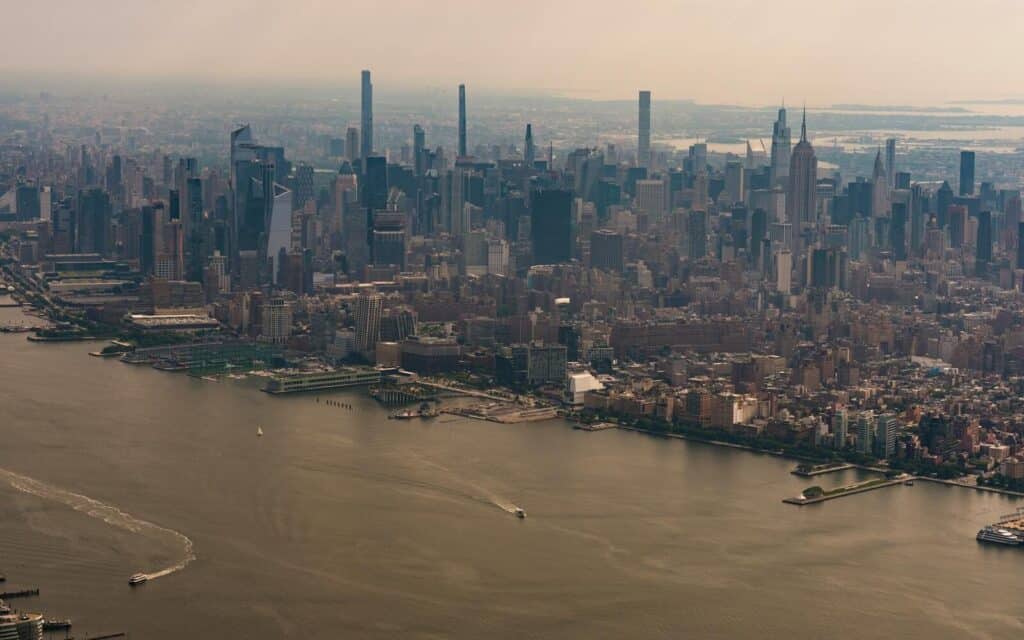
New York's skyline is one of the most recognisable images in the world. Seeing it from ground level is inevitable; seeing it from above adds a specific layer of perspective on the scale and density of the city.
There are two primary options:
Empire State Building (Midtown Manhattan)
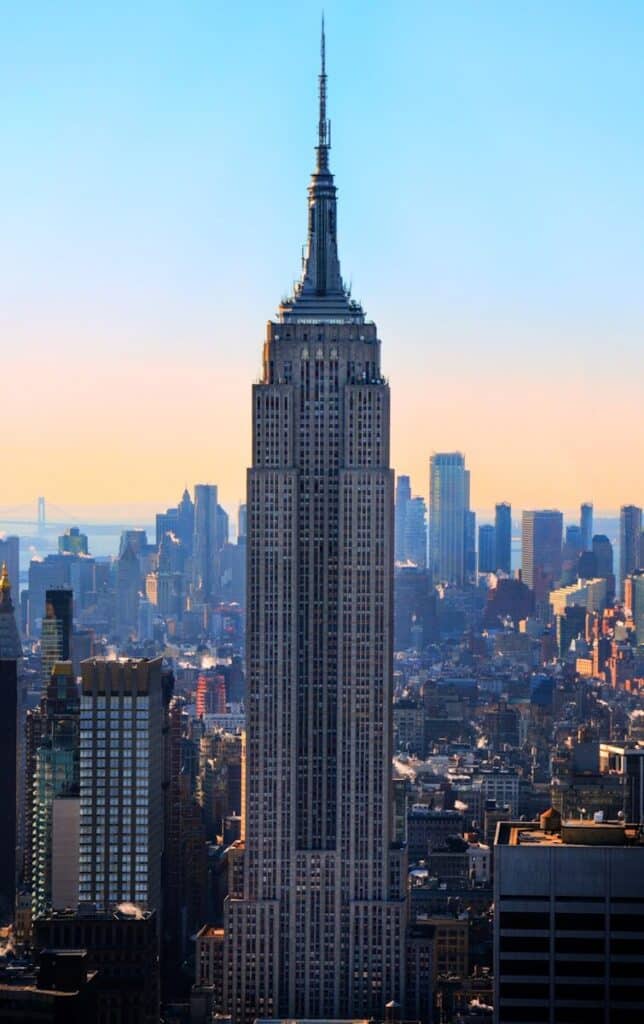
The Empire State Building has two observation decks: the Main Deck on the 86th floor and the Top Deck on the 102nd floor. The 86th floor is the classic New York observation experience — the open-air terrace with 360-degree views of Manhattan, looking out to New Jersey, Brooklyn, Queens, and, on a clear day, beyond. The Empire State Building is busiest between 11am and 4pm; early morning and evening visits are significantly less crowded and the light is better.
World Cup note: During the tournament, the Empire State Building is expected to light up in the colours of nations competing on match days — a tradition that has run for major international sporting events. Worth checking the schedule on the official ESB website.
Both observation decks benefit from pre-booking tickets online. Walk-up queues can run 45–75 minutes during summer. Book at least 24 hours in advance.
Top of the Rock (Rockefeller Center)
Top of the Rock offers a slightly different perspective from the Empire State Building — positioned in the middle of midtown rather than at its southern edge, and famously offering the only observation deck in New York from which you can see the Empire State Building itself. During the World Cup period (July 4–19), Top of the Rock is incorporated into the Rockefeller Center Fan Village, with specific World Cup programming on the deck.

9. Eat Your Way Through New York's Food Scene
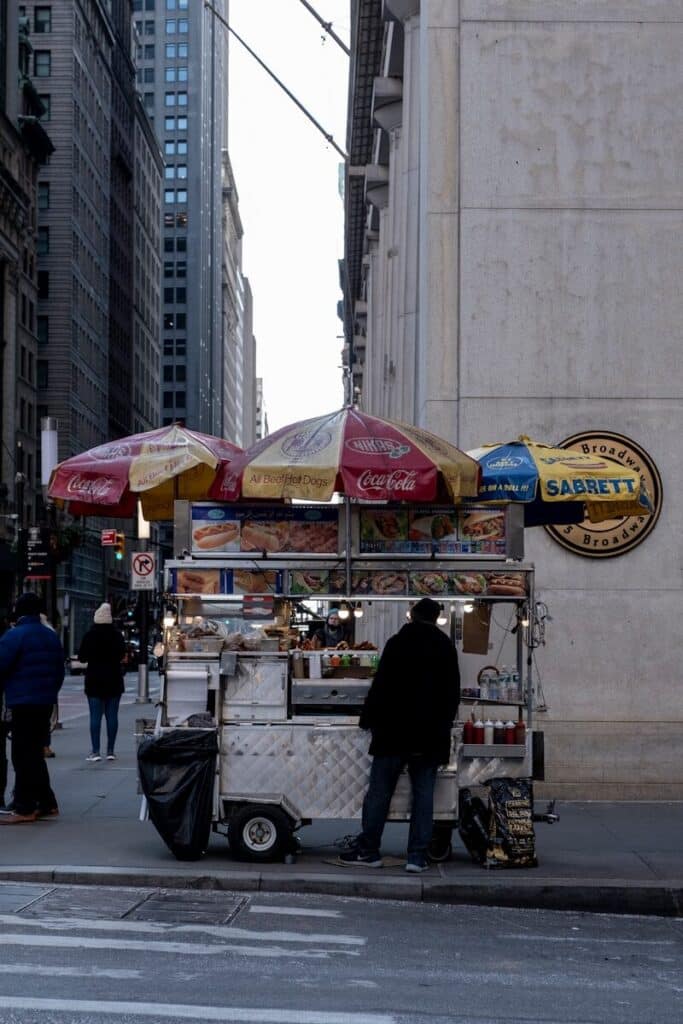
New York City has more Michelin-starred restaurants than almost any city in the world — currently more than 80 — alongside an extraordinary variety of affordable, world-class food at every price point. The World Cup period brings an additional layer: restaurants and food vendors from the competing nations will be operating at their highest profile all summer.
Here is how to approach eating in NYC during the World Cup:
By Neighbourhood for Budget and Mid-Range Eating
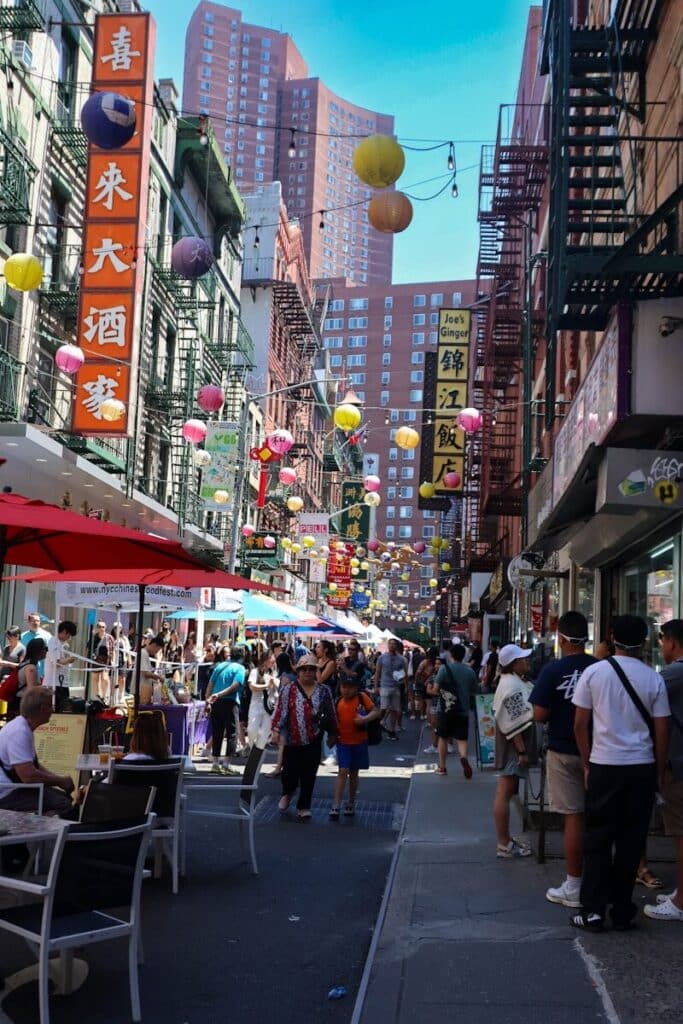
- Chinatown (Lower Manhattan): Some of the cheapest and best-value eating in New York — dim sum, hand-pulled noodles, and Cantonese roasts for $8–15 per dish
- Jackson Heights, Queens: The most diverse food neighbourhood in the city — Nepali, Colombian, Indian, Mexican, and Thai restaurants within a few blocks, almost all affordable. Take the 7 train to the 74th Street-Broadway stop.
- Arthur Avenue, The Bronx: The original Little Italy, and widely considered to have better Italian-American food than Manhattan's tourist-oriented version. Worth the journey for pasta, bread, and cheese
- Astoria, Queens: Strong Greek and Middle Eastern food culture — mezze, grilled meats, and good coffee, all at prices well below Manhattan equivalents
World Cup Food Connections
One of the specific pleasures of a World Cup in a city like New York is that the cities and nations competing on the pitch are represented in the restaurants on the street. Brazil's churrascaria culture, France's bistro tradition, Morocco's tagine, Germany's beer halls — all have genuine, high-quality representations in New York. Jackson Heights alone covers most of South America.
➡ What to eat in each World Cup host city
10. Discover a Neighbourhood on Foot
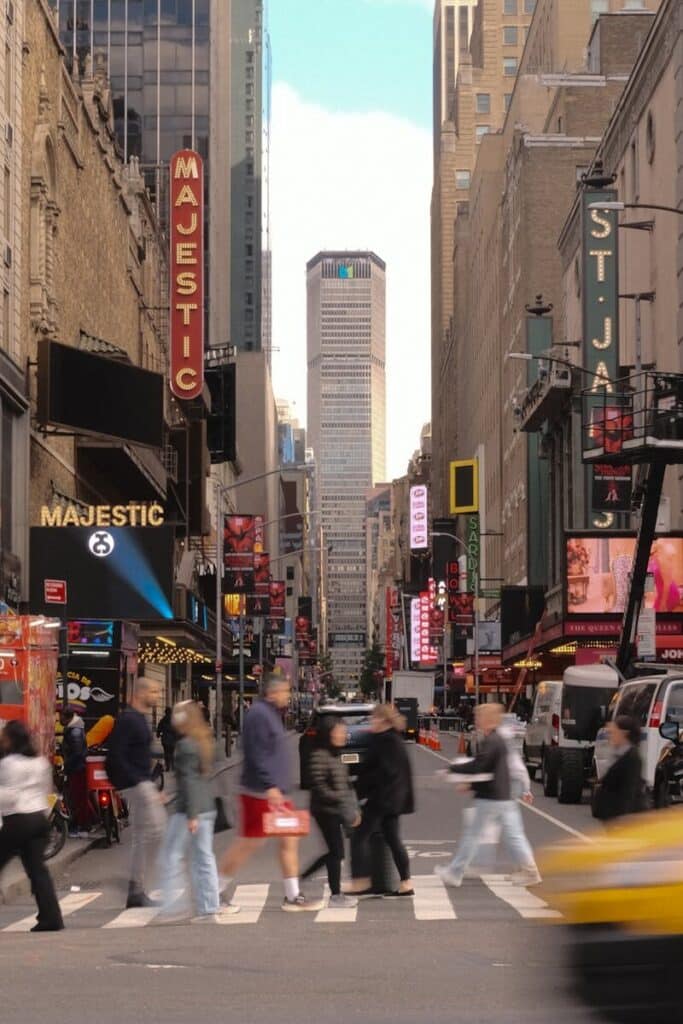
New York's neighbourhoods are its strongest argument against the idea that cities are interchangeable. The distance between the tourist-facing midtown and the residential character of the West Village, or between Times Square and Harlem, is not primarily geographical — it's experiential. Walking through a neighbourhood that isn't centred on tourism is one of the best things to do in New York City during the World Cup, particularly if you have a rest day between matches.
Four Neighbourhoods Worth a Slow Walk
West Village (Manhattan)
A grid of narrow streets south of 14th Street in Manhattan, lined with Federal-style townhouses and small independent restaurants. This is the New York that precedes the skyscrapers — quieter, slower, and best experienced by walking without a specific destination. The food options range from classic French bistros to a James Beard-nominated pizza slice. Hudson Street and Bleecker Street are the main commercial arteries.
SoHo (Manhattan)
SoHo stands for South of Houston (pronounced “HOW-ston” by New Yorkers) — a grid of 19th-century cast-iron buildings that now houses flagship stores, galleries, and restaurants. Tourist-facing and expensive, but genuinely beautiful architecturally. Worth an hour of walking for the buildings even if the shopping isn't a priority.
Harlem (Upper Manhattan)
Harlem is in the middle of a long transformation — historically the centre of African-American culture in New York, now a neighbourhood of brownstones, new restaurants, and the Apollo Theater (129 W 125th St), which has been staging live performance since 1934. The food scene in Harlem — soul food, Ethiopian, West African, and newer American restaurants — is one of New York's most interesting. Take the A, B, C, or D train to 125th Street.
Astoria (Queens)
Directly across the East River from Manhattan, Astoria is one of the most genuinely diverse neighbourhoods in the world — Greek tavernas alongside Egyptian grocery stores alongside Brazilian churrascos. It has the Museum of the Moving Image (the best film museum in the US), good waterfront parks with Manhattan views, and a price point significantly below anything comparable in Manhattan or Brooklyn.

Where to Stay in New York City During the World Cup
Accommodation in Manhattan during June and July 2026 will be in high demand. World Cup visitors, regular summer tourists, and business travellers are all competing for the same rooms — and prices reflect that. Book as early as possible. For most match weeks, availability at mid-range Manhattan hotels is already tightening.
Best Areas to Stay
- Midtown (around Penn Station): The most practical base for matchdays at MetLife. NJ Transit to Meadowlands Station runs directly from Penn Station — no transfers, no guesswork. The area is dense with hotels at every price point, though not always the most atmospheric neighbourhood to spend time in.
- West Village / Lower Manhattan: Better for experiencing the city day to day. Slightly further from Penn Station, but the subway connections are fast. Accommodation here tends to be boutique hotels or short-term rentals rather than large chains.
- Brooklyn (Williamsburg or DUMBO): Significantly cheaper than Manhattan equivalents and well-connected by subway. Williamsburg in particular has a strong bar and restaurant scene — a good base if you're spending more time in the city than at the stadium. Allow around 35–45 minutes to Penn Station on match days.
- Queens (Astoria or Long Island City): The budget-conscious option — cheaper hotels, direct subway access to Manhattan, and close to the USTA Fan Zone. Long Island City is one subway stop from Midtown on the E and M lines.
Book as early as possible — World Cup match weeks in New York are already showing limited availability at most price points.

Find hotels, apartments, and last-minute stays across World Cup 2026 host cities in the USA, Canada, and Mexico.
What to Budget for a Match Day in New York
Here is a realistic estimate for a single match day at MetLife Stadium — covering transport, food, and entry:
| Item | Estimated Cost |
|---|---|
| Match ticket (group stage. secondary market) | Varies significantly — check current listings |
| NJ Transit return (Penn Station ↔ Meadowlands) | approx. $20–30 |
| Food and drinks at stadium | $20–40 |
| Pre-match meal or drinks in the city | $20–50 |
| Subway in Manhattan (OMNY tap) | $3–6 |
| Rideshare (if used) | $15–40 |
| Total (excluding ticket) | approx. $80–130 |
The biggest variable is the match ticket. Transport and food costs are predictable and manageable — packing snacks and eating before you arrive at the stadium reduces in-venue spend significantly. The NJ Transit return fare is fixed and the cheapest way to reach MetLife. Rideshares to the stadium on match days are not recommended due to traffic — the time and cost savings from public transport are significant.
Note: Ticket prices vary widely depending on the fixture, phase, and platform. For current availability and pricing, check verified platforms directly.
Getting Around New York During the World Cup
The New York City subway is the backbone of the city — 24 hours a day, connecting every major neighbourhood and attraction. A single ride costs $2.90 in 2026. The best value for a multi-day visitor is the OMNY card (tap-to-pay system) or a MetroCard loaded with multiple rides. The subway can be crowded on major match days, particularly on the lines running toward Penn Station (for the NJ Transit connection to MetLife) — build extra time into any matchday journey.
For match days at MetLife specifically: Leave Manhattan at least 2.5 hours before kick-off to account for subway, Penn Station queues, NJ Transit, and the walk from Meadowlands station to the stadium entrance.
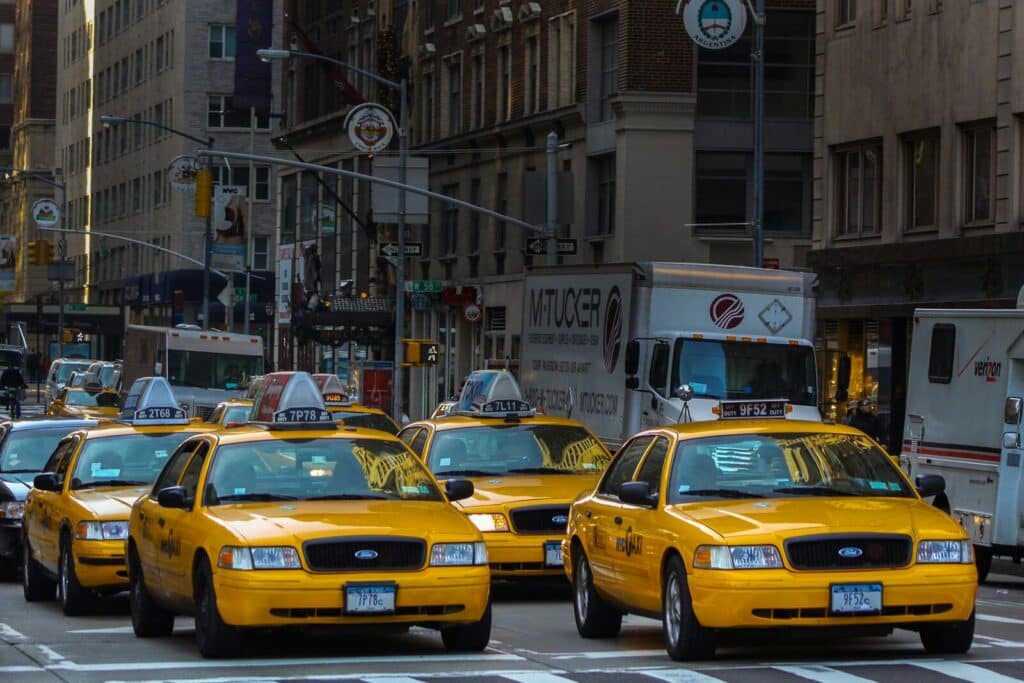
Taxis and rideshares: Uber, Lyft, and yellow taxis are all available throughout the city. Rideshares are useful late at night when subway wait times increase. Avoid taxis to MetLife on match days — traffic on the NJ Turnpike can add 45–60 minutes to the journey unpredictably.

Staying Connected in New York During the World Cup
Navigating New York during the World Cup — match-day transport, fan zone locations, last-minute restaurant bookings, group communication — requires a reliable data connection from the moment you land. International roaming charges on a home SIM card can add up quickly over a 5–7 day trip, particularly with the heavy data usage that comes with live navigation and map-checking in an unfamiliar city.
A US eSIM installed before you fly is the most cost-efficient solution. eSIM data plans for the USA are widely available and significantly cheaper than day-pass roaming fees from most European and Asian carriers. The installation takes a few minutes and the SIM activates as soon as you land at JFK, EWR, or LGA.
Covers USA, Canada, and Mexico on a single eSIM. No swapping, no reactivation when you cross a border.
Planning Your Time: A Practical NYC World Cup Week
If you're in New York for a week, here's how we'd suggest structuring the time to cover both the football and the city:
| Day | Main activity | Also consider |
|---|---|---|
| Day 1 | Arrive — walk midtown. Times Square. Bryant Park | Get your subway card and data sorted early |
| Day 2 | Match at MetLife Stadium | Pre-game: Legends Bar in midtown |
| Day 3 | Brooklyn Bridge walk. DUMBO. Williamsburg | Dinner in Williamsburg |
| Day 4 | Central Park. Upper West Side. Natural History Museum | Evening at a West Village restaurant |
| Day 5 | FIFA Fan Festival at Liberty State Park | Ferry back across the Hudson for the view |
| Day 6 | Queens — Jackson Heights food. USTA Fan Zone | Astoria for dinner |
| Day 7 | Empire State Building or Top of the Rock | SoHo or Chinatown on the way back |
Frequently Asked Questions
What matches are being played at MetLife Stadium during the World Cup 2026?
MetLife Stadium in East Rutherford, New Jersey, is hosting eight matches in total. The confirmed group stage fixtures are: Brazil vs Morocco (June 13), France vs Senegal (June 16), Norway vs Senegal (June 22), Ecuador vs Germany (June 25), and Panama vs England (June 27). The stadium also hosts a Round of 32 match (June 30), a Round of 16 match (July 5), and the World Cup Final on July 19, 2026. All times are Eastern Time.
How do I get from Manhattan to MetLife Stadium on match day?
The recommended route is NJ Transit from Penn Station (at 33rd Street and 8th Avenue in Manhattan) to Meadowlands Station, directly adjacent to MetLife. The journey takes around 20 minutes on the train once you're on board, but allow 90 minutes total from midtown Manhattan to account for subway time, Penn Station queues, and the walk from the stadium station. Trains run frequently on match days. Do not drive — parking is expensive and traffic is severe.
Where are the official fan zones in New York for the World Cup 2026?
There are three confirmed fan experience locations in the New York area. The FIFA Fan Festival at Liberty State Park in New Jersey (free, open throughout the tournament) is the official FIFA event — accessible by PATH train from Manhattan. The Fan Zone Queens at the USTA Billie Jean King Tennis Center runs from June 17–28 (accessible by 7 train to Mets-Willets Point). The Rockefeller Center Fan Village runs from July 4–19 in Midtown Manhattan, covering the knockout stages and the Final.
Do I need a match ticket to attend the fan zones?
No. All three fan zones — Liberty State Park, the USTA Tennis Center, and the Rockefeller Center Fan Village — are open to fans without match tickets. They feature live big-screen match broadcasting, food vendors, entertainment, and interactive football activities. The FIFA Fan Festival at Liberty State Park is specifically designed for fans who don't have stadium tickets.
Where can I still get tickets for World Cup matches in New York?
Check FIFA.com/tickets first for any official remaining availability. For secondary market options, platforms like StubHub and SeatGeek offer tickets from verified sellers with buyer protection. Prices on the secondary market are significantly above face value, particularly for knockout rounds and the Final. Only use platforms with secure buyer protection — never transfer money directly to private sellers.
What is the best area to stay in New York for the World Cup?
For matchday convenience, Midtown around Penn Station is the most practical base — it's the direct departure point for NJ Transit to MetLife. For a better day-to-day city experience, the West Village, Brooklyn (Williamsburg or DUMBO), or Queens (Astoria or Long Island City) are all well-connected and more atmospheric. Brooklyn and Queens are noticeably cheaper than Manhattan for accommodation.
How much does it cost to visit New York for the World Cup?
Costs vary significantly depending on accommodation, timing, and choices. Hotel rates in Manhattan during the World Cup period (June–July 2026) are elevated above normal summer rates, with mid-range options running $200-400/night for a central location. Budget options in outerborough sorvia Airbnb run lower. Food costs range accommodation, transport to Metlife (around $20-30 return on NJ transit), food, and any paid attractions.
What is the weather like in New York in June and July?
New York in June and July is warm to hot. Average temperatures run 24–30°C (75–86°F) in June, rising slightly in July. Humidity can be significant, particularly in late July. Rain is possible throughout — afternoon thunderstorms are common in summer. Pack light clothing, comfortable walking shoes, and consider UV protection for outdoor fan zones and stadium days.
Final Thoughts
New York is hosting eight matches including the World Cup Final — and the city is not underplaying the moment. From the transformation of Rockefeller Center to the FIFA Fan Festival at Liberty State Park to the electric atmosphere in the city's football bars, the World Cup will be visible and felt across the entire metropolitan area from June through July.
What makes New York genuinely exceptional for things to do in New York City during the World Cup 2026 is that the city functions independently of the football. You can spend a week here entirely without attending a match and still leave having experienced something significant. Central Park, the Brooklyn Bridge, the neighbourhoods, the food — these are not fillers between games. They are their own reason to be here.
Use this guide as a starting point. Plan the match-day logistics early — particularly transport to MetLife, accommodation, and tickets. Leave the rest flexible. New York rewards the unplanned afternoon more than almost any city in the world.
➡ World Cup 2026 Travel Guide
➡ Best eSIM for World Cup 2026
➡ How to Get Around at the World Cup
Add your first comment to this post